

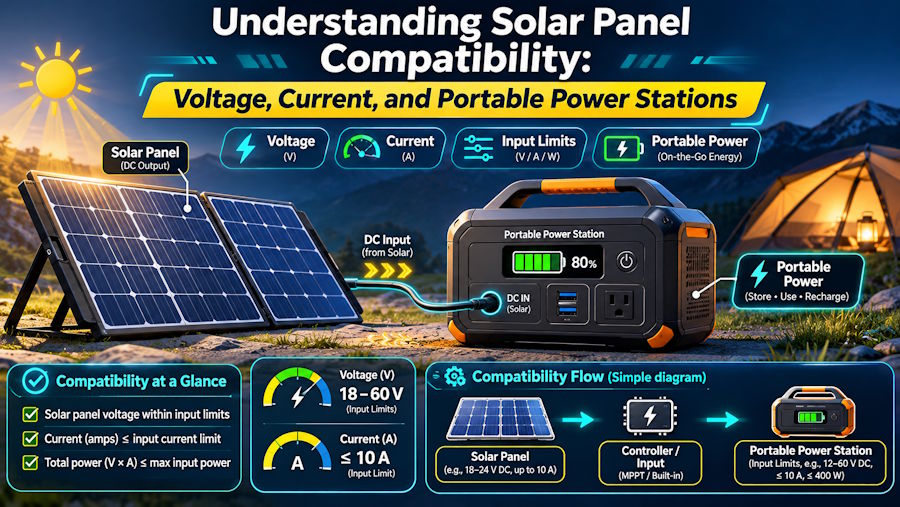
Portable solar power systems offer a practical way to generate electricity during camping trips, outdoor activities, emergencies, and off-grid living. However, choosing a solar panel involves more than comparing wattage ratings. The panel must match the electrical requirements of the portable power station. Voltage, current, connector types, and charging limits all influence whether two devices work safely and efficiently together.
Why Solar Panel Compatibility Matters
A portable power station receives electricity from solar panels through a built-in charge controller. This component regulates incoming power and converts it into a suitable form for charging the battery. If the panel's electrical specifications fall outside the station's supported limits, charging might become inefficient or fail altogether.
Before purchasing equipment, users should review a solar panel compatibility guide to understand the relationship between panel specifications and power station requirements. This helps prevent common purchasing mistakes and makes it easier to build a reliable portable energy setup.
Understanding Voltage and Its Role
Voltage, measured in volts (V), describes the electrical pressure that moves current through a circuit. Solar panels produce a specific operating voltage, while portable power stations accept electricity within a defined input range.
Two important measurements appear on solar panel specification sheets:
- Open-circuit voltage (Voc): The maximum voltage produced when the panel is not connected to a load.
- Voltage at maximum power (Vmp): The voltage at which the panel produces its rated maximum power under standard testing conditions.
The power station's solar input range must accommodate the panel's operating voltage. Its maximum permitted voltage must also remain above the panel's open-circuit voltage, including potential increases in cold weather.
For example, connecting a panel with a Voc of 50V to a power station with a maximum solar input of 40V creates a compatibility problem. Exceeding the supported voltage limit risks damaging the equipment.
Current Determines Charging Capacity
Current, measured in amperes (A), represents the flow of electrical charge. Portable power stations also have maximum input-current limits.
A panel producing more current than the station accepts does not automatically mean faster charging. The station's charge controller regulates the incoming electricity according to its specifications. However, exceeding the manufacturer's permitted input limits, particularly when connecting panels in parallel, creates a potential safety issue.
Users should check two measurements:
- Short-circuit current (Isc), which measures current when the panel's positive and negative terminals are connected.
- Current at maximum power (Imp), which indicates the current produced at the panel's rated operating point.
These figures help determine whether a solar panel suits the power station's charging requirements.
How Wattage Affects Solar Charging
Wattage measures the electrical power a solar panel produces. It is calculated by multiplying voltage by current.
Power (W) = Voltage (V) × Current (A)
For instance, a panel operating at 40V and 10A produces 400W under the stated conditions.
However, buying a higher-wattage panel does not guarantee faster charging. The portable power station determines the maximum solar input it accepts. A 500W panel connected to a station with a 300W solar input limit will not deliver its full rated output.
Weather, temperature, sunlight angle, shading, and panel positioning also influence actual production.
Choosing Panels for Portable Power Stations
Panel design and construction affect performance, portability, and long-term usability. Traditional rigid panels suit fixed outdoor installations, while folding and portable models offer greater flexibility for travel.
Bifacial panels provide another option. They collect sunlight from both the front and rear surfaces. When positioned above reflective surfaces such as light-coloured concrete or sand, they can capture additional reflected sunlight.
For users exploring higher-output portable equipment, the 480W bifacial portable solar panel offers an example of a high-capacity panel design. Its rated output makes checking the receiving power station's voltage, current, and maximum wattage limits especially important before connecting the equipment.
Series and Parallel Connections
Connecting multiple solar panels can increase the available charging capacity, but the wiring arrangement changes the electrical output.
In a series connection:
- Voltage increases.
- Current remains approximately the same.
- The combined voltage must stay within the power station's maximum input limit.
In a parallel connection:
- Current increases.
- Voltage remains approximately the same.
- The combined current must respect the station's input specifications.
Both arrangements require compatible panels, suitable connectors, and correctly rated cables. Users should follow the manufacturer's wiring instructions rather than experimenting with different configurations.
Check These Details Before Connecting
A few simple checks help prevent compatibility issues:
- Read the portable power station's solar input specifications.
- Compare the panel's Voc and Vmp with the accepted voltage range.
- Check Isc and Imp against the supported current limits.
- Confirm the maximum solar charging wattage.
- Verify connector type and polarity.
- Use cables with appropriate ratings.
- Account for temperature and changing sunlight conditions.
Building a Reliable Portable Solar Setup
Solar panel compatibility determines how effectively a portable power station uses available sunlight. Understanding voltage, current, and wattage helps users select equipment that works within safe operating limits.
Rather than choosing a panel based on its advertised output alone, compare its complete electrical specifications with the power station's requirements. This approach supports dependable charging, protects valuable equipment, and makes portable solar energy more practical for everyday use and off-grid applications.

