

You have two or three realistic cities in mind for a month away. The dates and budget work, and each destination has something going for it. If you enjoy astrology, you may also have opened an astrocartography map to explore the places. Yet separate readings leave an awkward question: which differences actually matter for the purpose of this trip?
One city’s description emphasizes career, another’s feeling at home. Both sound appealing, but they answer different questions. Asking AI to recommend a destination adds little clarity if the conversation lacks the map findings you are comparing. What is missing is a common basis for the shortlist, followed by an explanation of the trade-offs.
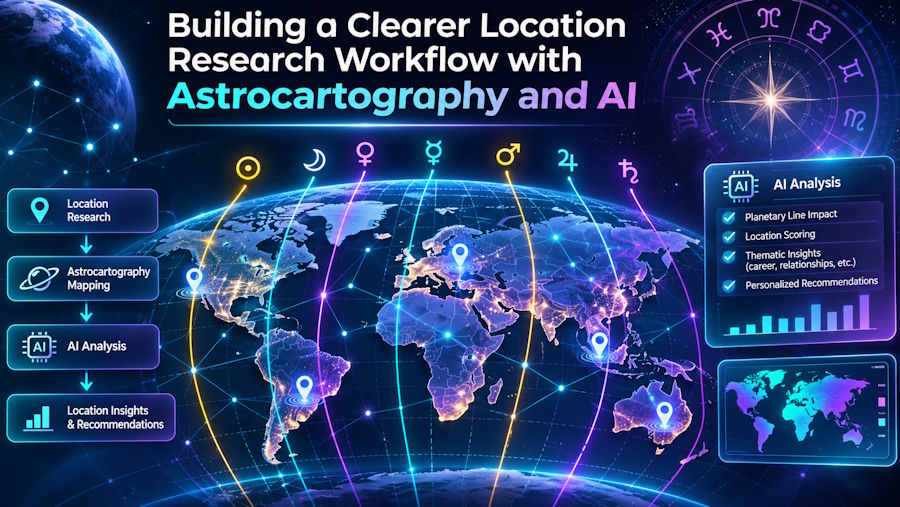
AstroCarto’s map-based city research brings those steps into one browser-based process. The online astrocartography tool helps you discover candidates, compare your chosen cities around the same goal, and explore the findings through AI interpretation. You can see why a place deserves attention and carry its unresolved trade-off into a focused question. That makes it easier to turn separate readings into a shortlist you can explain.
AstroCarto’s map and place-research controls. This demonstration chart is separate from the synthetic teaching example below.
Give Each Stage a Clear Job
Consider a hypothetical remote developer choosing a month-long base. Two destinations are already feasible, and staying in the current city remains an option. The developer wants to explore professional themes while keeping a settled daily routine. A useful comparison needs to reveal how those priorities differ across the options.
Give each stage a job: discovery opens up possibilities, comparison examines feasible options, and interpretation explains a difference worth investigating. With a shortlist ready, start at comparison. If the options feel unconvincing, discovery offers another route into the research. This keeps the process focused on the decision in front of you.
Generate the map with your birth date, time, and birthplace. Keep the same birth details throughout, and identify an estimated time as estimated. Your separate notes on working hours, accommodation, and dates establish which possibilities remain feasible.
Connecting Discovery, Comparison, and Closer Reading
1. Find Candidates with a Reason to Investigate
When the destination list is still open, Find My Best Places starts with a goal and region. Choosing Career and Europe, for example, returns candidates from the supported city pool, with supporting signals and cautions that help explain their positions.
This is useful when familiar destination names have exhausted your ideas. Instead of adding another place because it appeared in a generic list, you have a specific interpretation to explore. Check practical feasibility separately before carrying a candidate forward. If you already have realistic alternatives, you can go directly to comparison.
2. Put Feasible Cities on the Same Basis
Compare Cities evaluates two to four selected places using the same birth details and one goal. The developer could include the current city and two feasible alternatives, then choose Career & recognition. Support, cautions, and ranking reasons make the differences visible together.
Including the current city brings a familiar option into the same comparison. You can identify the strongest reason to investigate each alternative and the caution that deserves a closer look. A city with a mixed reading may still warrant attention when it offers a practical opportunity. The side-by-side explanation helps you decide what to investigate before removing it from the list.
3. Examine the Trade-off Behind the Favorite
A strong career reading does not answer the developer’s second question about feeling settled. AstroCarto’s trade-off matrix shows support across several goals, so you can notice when the leading city has weaker home-related support.
That difference makes the next question specific: does the appeal of the career reading outweigh the weaker home theme for this particular stay? If feeling settled becomes the priority, run a new comparison under Home & emotional stability. You can then examine the new reasons alongside your original purpose, rather than relying on the first favorable description you found.
Use Discovery to Expand, Comparison to Choose What to Research
AstroCarto’s teaching material shows how the two tools complement each other. With fictional birth details—January 15, 1990, at 12:00 in London, entered as exact—Paris ranked sixth in a Career discovery run for Europe. A separate career comparison using the same birth details placed Paris first among Paris, Lisbon, and Berlin. These are actual outputs for synthetic inputs, separate from the imagined developer’s situation.
The discovery result supplies other places to explore. The three-city comparison answers a narrower question about the selected options: Paris had strong career support, while Lisbon combined lighter support with moderate caution and Berlin had weak support despite low caution. Those distinctions provide different reasons to continue investigating each place.
For someone whose feasible options are Paris, Lisbon, and Berlin, the three-city result is the relevant starting point. If they want more possibilities, discovery can expand the search. AstroCarto supports both stages: finding candidates you might otherwise overlook and examining the ones you could actually visit. Each ranking stays tied to its own candidate set.
Turning Results into More Useful AI Questions
Once a specific difference catches your attention, AstroCarto’s AI follow-up can help explain it. Start beside the comparison results and include the city names, selected goal, and the actual support and cautions you want to discuss. This gives the conversation a concrete subject.
A useful question might be: “Using the results I supplied, explain what makes the second city more mixed than the first, and which finding I should investigate further.” The developer could also ask how a favorable career reading differs from weaker home support. These suggested questions turn an unfamiliar label into a discussion of the actual choice.
The benefit is being able to work through the reason you hesitated, instead of starting another general conversation about the destination. Check the response against the original result; use a fresh comparison to calculate changes of goal or cities. If you want the selected comparison developed into a longer written explanation, the full city-comparison report brings together city analyses, trade-offs, and practical next steps.
Carrying the Findings into a Practical Shortlist
The developer can now keep a compact note for each feasible city: the main supporting theme, the unresolved trade-off, and the next practical question. If a reading raises questions about professional visibility, investigate actual coworking communities or events. Those are separate checks; the chart has not verified local opportunities, internet quality, or housing availability.
Discovery covers a supported pool rather than every possible destination. Comparisons, reports, and AI follow-ups also have their own access and usage conditions. Astrocartography provides symbolic interpretation, not a prediction of employment outcomes or a substitute for practical planning.
For readers curious about that perspective, AstroCarto offers a clear first experiment: generate your map, compare your current city with two realistic alternatives around one goal, and examine the strongest reason and main trade-off. You finish with something more useful than another saved destination: a shortlist with questions worth pursuing.

