

Launching a new product involves more uncertainty than many businesses realise. A company may invest in packaging, photography, advertising, website development and promotional campaigns before discovering whether its intended audience actually understands the product's value. Even experienced marketing teams can misjudge customer expectations because internal opinions do not always reflect the way real buyers think. A product description that sounds convincing to its creators may leave potential customers confused, while an advertising concept that looks attractive in a meeting may fail to communicate a meaningful reason to purchase.
Traditional market research can reduce some of this uncertainty, but collecting useful feedback takes planning, time and money. Interviews, surveys and focus groups provide valuable information, yet they may not always capture the full range of questions customers have before making a purchase. Businesses also face difficulties when testing several creative directions at once. They may need to compare different headlines, product presentations, promotional offers and visual concepts before deciding which approach deserves a larger budget. Artificial intelligence introduces additional ways to explore these possibilities before a campaign reaches the public.
Understanding ai marketing in the context of pre-launch research means looking beyond content production and automated advertising. Intelligent systems can help organise customer research, examine product positioning, simulate possible reactions and develop alternative campaign concepts. Generative technologies can also turn early ideas into visual material that makes a proposed product or offer easier to evaluate. These methods cannot guarantee market success or replace genuine customer feedback, but they can help businesses identify weaknesses and improve their preparation before committing substantial resources.
Why Product Launch Decisions Often Begin With Incomplete Information
Many product launches begin with assumptions about what customers want, how much they are willing to pay and which benefits will influence their purchasing decisions. These assumptions may come from competitor research, previous sales or conversations with a small number of existing customers. Although these sources can provide direction, they do not necessarily represent the wider market. A business may focus heavily on a product feature that its internal team considers impressive while overlooking a simpler benefit that matters more to potential buyers.
Another difficulty is that customers do not always express their expectations in the same language businesses use to describe their products. A company might promote a technical specification, whereas customers may be more interested in convenience, reliability or the amount of time a product saves. If the marketing message focuses on the wrong benefit, even a well-funded campaign may struggle to generate interest. Pre-launch research should therefore investigate not only whether people like an idea but also how they understand it, what concerns they have and what information they need before considering a purchase.
How Synthetic Customer Personas Can Expand Early Market Research
Customer personas are commonly used to represent different groups of potential buyers. They describe characteristics such as purchasing motivations, interests, challenges and decision-making priorities. Traditionally, marketing teams create these profiles from interviews, surveys, customer records and market research. AI can help organise these findings into more detailed profiles and explore how different types of buyers might respond to a product or promotional message. This can make early planning more structured, particularly when a business is evaluating several possible audiences.
A company introducing an ergonomic office chair, for example, might investigate the needs of remote employees, corporate procurement teams and independent professionals. Each group could evaluate the same product differently. Remote employees may care about comfort during long working hours, while procurement managers may focus on durability, warranty terms and bulk purchasing costs. AI can help marketers develop research questions and explore these different perspectives using available evidence. However, synthetic personas are not actual customers. Their responses should be treated as hypotheses for further investigation rather than proof that a particular audience will purchase the product.
How Virtual Focus Groups Can Help Explore Customer Objections
One of the most useful stages of market research is understanding why someone might reject a product. Customers may hesitate because of pricing, unfamiliar features, unclear instructions, perceived risks or a lack of trust in the company. These objections are not always obvious when marketing teams evaluate their own products. A virtual focus group exercise can help explore possible questions and identify areas where the proposed messaging may be incomplete. AI can support this process by generating structured discussion scenarios based on different audience profiles and research findings.
For example, a business preparing to introduce a premium skincare range might want to examine how customers respond to its ingredient claims, packaging, price and product benefits. A simulated discussion could highlight questions about suitability, expected results and differences from existing alternatives. These observations can help the team prepare more useful explanations before conducting real customer interviews. However, virtual discussions cannot reproduce the full complexity of human behaviour, emotional reactions or spontaneous group interactions. Businesses should use them to prepare better research, not as a replacement for genuine conversations with their target market.
Why Testing the Product Message Matters Before Designing Advertisements
A product can have several selling points, but presenting all of them in one advertisement often creates an unclear message. Customers need to understand what the product does, who it is intended for and why it may be worth considering. A campaign that highlights too many unrelated features can make the offer difficult to remember. Before investing in creative production, businesses should determine which central message communicates the product's most meaningful benefit.
AI can help marketing teams explore different positioning statements and compare the language used to explain the same product. A company selling project management software might test whether its main message should focus on reducing administrative work, improving team visibility or helping managers organise deadlines. Each direction appeals to a different potential concern. The team can then develop interview questions or survey variations to discover which benefit resonates with actual customers. The strongest message should be selected using real evidence, commercial priorities and a clear understanding of the product rather than relying entirely on AI-generated preferences.
How Generative Visuals Can Make Unlaunched Products Easier to Evaluate
Before a product is manufactured or fully prepared for sale, businesses may have limited visual material available for marketing research. This creates a challenge because people often find it difficult to evaluate an idea using a written description alone. Early visual concepts can help communicate the proposed appearance, packaging, environment and intended use. Generative image technology provides a way to explore these concepts using text prompts, design references and existing product information.
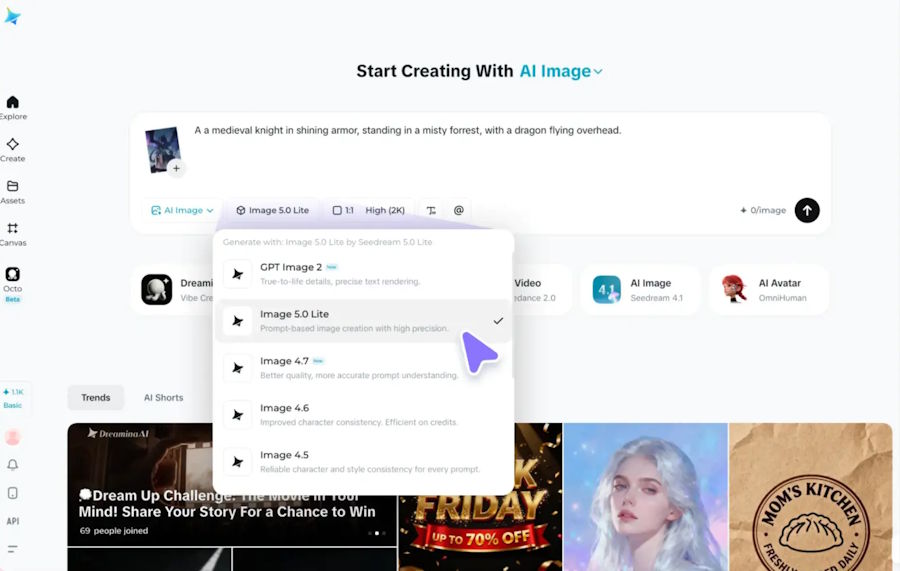
Imagine a company planning a new range of reusable kitchen containers. It could develop several packaging directions, explore different lifestyle settings and prepare visual concepts showing how the containers might appear in a modern kitchen. These images could support internal discussions or carefully labelled concept-testing activities. Dreamina's image-generation and visual editing capabilities can help creative teams explore such directions using prompts and references. The important distinction is that concept visuals should not be presented as photographs of a finished product when they do not accurately represent the final item. Material, dimensions, colours and other important characteristics must be checked before any promotional claims are made.
How AI Can Help Identify Weaknesses in a Product's Value Proposition
A value proposition explains why a customer should consider choosing one product or service instead of another. It should connect the product's capabilities with a meaningful customer benefit. Businesses sometimes struggle to communicate this connection because they become too familiar with their own products. Internal teams understand technical details that an ordinary buyer may not recognise, resulting in promotional language that sounds impressive but lacks practical clarity.
AI can help review product descriptions, sales messages and campaign drafts from different communication perspectives. It can identify vague statements, repeated claims, unexplained terminology and missing information that may prevent customers from understanding the offer. A company selling business cybersecurity services, for instance, might describe its technology using technical terms without explaining how it protects everyday operations. Reviewing the message for a non-technical audience could reveal the need for clearer examples and more accessible explanations. The resulting recommendations should be checked against the actual service capabilities to ensure that simplified marketing language does not create unrealistic expectations.
How Competitor Research Can Reveal Opportunities for Differentiation
A new product rarely enters a market without existing alternatives. Customers may already use competing products, follow established brands or rely on solutions that do not require purchasing anything new. Understanding these alternatives helps businesses identify the areas where their offer may provide a meaningful difference. Competitor research should examine more than product prices. It can include positioning, customer reviews, distribution, service quality, product limitations and the questions customers repeatedly raise.
AI can assist with organising publicly available competitor information and identifying recurring themes across product descriptions and customer feedback. A company entering the home fitness market might discover that buyers frequently complain about complicated assembly, limited storage options or unclear warranty information. These observations can help the company investigate whether its own product addresses an overlooked concern. However, competitor analysis should rely on accurate, current and legally accessible information. AI-generated summaries may omit context or misinterpret customer comments, so important findings should be checked against the original sources.
How Businesses Can Design Better Pre-Launch Experiments
Research becomes more useful when businesses move from general opinions to specific questions that can be tested. Instead of asking whether customers like a proposed product, a company could investigate which of three benefits they consider most valuable, what price range they find reasonable or which product description they understand most easily. These questions provide clearer information for marketing decisions. They also make it easier to compare responses from different audience groups and identify areas where further investigation is needed.
AI can support the preparation of survey questions, interview guides and alternative campaign concepts. Marketing teams can use these materials to develop controlled tests in which one important element changes while other conditions remain reasonably consistent. For example, a business might compare two landing-page headlines while keeping the product description, audience and offer unchanged. If the test is conducted with a suitable audience and enough responses, the results may provide useful evidence about message clarity or interest. The team should avoid drawing strong conclusions from very small samples or treating simulated responses as actual purchasing behaviour.
Why Pre-Launch Research Must Include Pricing and Perceived Value
A product may attract attention but still fail to convert because customers do not believe its benefits justify the asking price. Pricing decisions therefore need to consider more than production costs and competitor rates. Buyers evaluate what they receive, how the product compares with available alternatives and whether the purchase feels appropriate for their circumstances. A premium product may appeal to a smaller audience if its quality, service or convenience offers a convincing difference.
AI can help businesses organise competitor pricing information, examine customer feedback and explore different pricing scenarios. A company introducing a premium water filtration system, for example, may need to understand whether buyers value lower maintenance requirements, replacement filter availability or long-term operating costs. These factors could influence how the product should be positioned and which benefits deserve emphasis in the campaign. However, willingness-to-pay estimates produced from limited information should never be treated as guaranteed demand. Real customer research, cost analysis and controlled market tests remain essential before finalising a commercial pricing strategy.
Turning Pre-Launch Insights Into a More Confident Marketing Plan
Research only creates value when its findings influence practical decisions. After reviewing customer objections, competitor activity, product messaging and visual concepts, businesses should identify which changes are necessary before launching. This might involve improving product descriptions, adjusting packaging, clarifying warranty information or changing the central advertising message. Some findings may also reveal that a particular audience is less suitable than originally expected, allowing the company to revise its targeting before spending heavily on promotion.
The final stage should involve a small-scale launch or pilot campaign where possible. A limited release can provide real information about customer engagement, enquiries, sales and common support questions. These results can be compared with the earlier research to identify which assumptions were correct and which need revision. AI can help organise the resulting information and prepare alternative creative material for the next stage. The objective is to create a continuous learning process in which early research informs the launch, actual customer behaviour informs later decisions and future campaigns become more closely aligned with market needs.
Conclusion
AI marketing can provide businesses with additional ways to investigate product ideas before committing significant resources to a launch. Synthetic customer personas, virtual discussion exercises, message evaluation, competitor research and generative visual concepts can all support the early stages of campaign preparation. These applications are particularly useful when teams need to explore several possible directions and identify weaknesses before beginning expensive creative production or large-scale advertising.
Nevertheless, simulated research should never be confused with verified customer demand. AI-generated personas do not represent actual buyers, and attractive product visuals cannot establish whether people will purchase an item. Businesses should combine these tools with genuine interviews, reliable market information, pricing research and controlled experiments. By using AI to prepare better questions and improve early concepts, rather than treating it as a replacement for market evidence, companies can approach product launches with clearer messaging, stronger research and more realistic expectations.
Frequently Asked Questions
1. What are synthetic customer personas?
Synthetic customer personas are simulated audience profiles developed using AI and available market information. They help businesses explore possible customer motivations, questions and objections. They are useful for research preparation but should not be considered substitutes for real customer data.
2. Can AI replace traditional focus groups?
AI can support virtual discussion exercises and help marketers explore possible audience reactions. However, it cannot fully reproduce genuine human experiences, emotional responses and group interactions. Real interviews and focus groups remain important for validating research findings.
3. How can AI help before a product launch?
Businesses can use AI to explore product positioning, prepare research questions, review promotional messages, analyse competitor information and develop early visual concepts. These activities can help identify weaknesses before a larger marketing investment is made.
4. Are AI-generated product images suitable for market research?
They can be useful for presenting early design concepts and comparing visual directions. However, businesses should clearly identify concept material and avoid suggesting that generated images accurately represent a finished product when important details are still uncertain.
5. Can AI predict whether a new product will succeed?
AI can analyse available market information and identify patterns that may indicate opportunities or risks. It cannot guarantee commercial success because purchasing decisions are influenced by competition, pricing, product quality, timing and many other factors.
6. Why should businesses test marketing messages before launching?
Pre-launch message testing can reveal whether customers understand the product, recognise its benefits and find the offer relevant. Identifying unclear or unconvincing messaging early can help businesses improve their campaigns before investing in large-scale promotion.

