

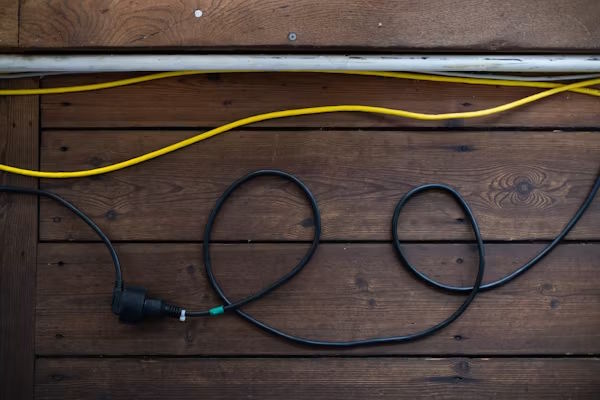
All businesses use electrical equipment daily. From computer systems, printers, and other industrial machinery, some processes cannot run without electricity. However, selecting the appropriate power cord is often an afterthought.
An unsuitable cord may lead to improper connections, restrictions on the equipment's use, or even safety issues that could have been avoided. Hence, businesses should go beyond price when purchasing power cords and cables.
Fortunately, selecting the correct option is not difficult at all. Businesses could begin by considering straightforward factors such as voltage, amperage, wire gauge, length, plug type, and connector type. In addition, it would be wise to take the environment and the cord's use into account.
Given the various power cord styles on the market, there is no one-size-fits-all option for every business. Rather, the most suitable one will depend on the equipment, workplace, and other electrical specifications. Having said that, the following factors should be taken into consideration.
1. Match Cord to the Equipment
First, one must be aware of the type of equipment the power cord will power. This is because various machines have varying electricity requirements. A computer, printer, small appliance, and an industrial machine may each require a different cord.
Thus, companies should consult their manufacturers' specifications before purchasing a power cord. Voltage, amperage, plug type, and wire arrangement should not be overlooked. Power cords are available for office equipment, household appliances, and industrial machinery. Options also vary by wire size, length, plug type, and connector ends.
2. Check the Voltage Rating
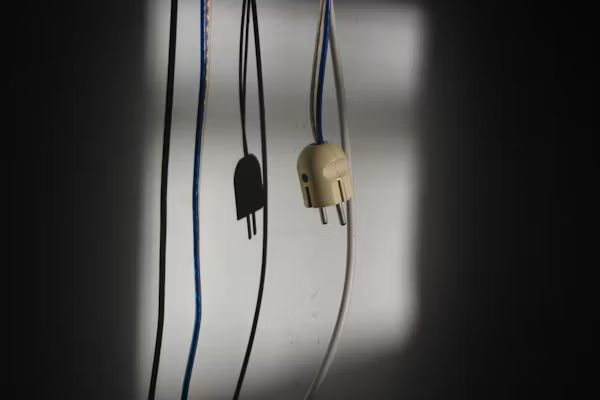
Voltage is another important factor. A power cord must be suitable for the equipment's voltage and the electrical system in which it will be used. For example, some business equipment may use standard 120- or 125-volt connections. Other machines may require higher voltages, including 220V/240V.
As a result, businesses should never choose a cord based only on its appearance or plug shape. Checking the voltage rating first can help prevent an unsuitable connection. OSHA also requires that electrical components, such as receptacles, cord connectors, and attachment plugs, be rated for their intended voltage and current.
3. Consider the Amperage
Voltage is just one component of this issue. The other thing companies need to consider is the current the appliance demands. The amperage rating of the cord indicates the maximum electrical current it can carry.
Using an incompatible cord with the appliance can cause problems. Cord amperage ratings vary by model. Hence, it is advisable to compare the cord's amperage rating with the appliance's requirements before purchasing.
4. Choose the Right Wire Gauge
Wire gauge can also affect how a power cord performs. In general, different wire gauges are suited to different electrical loads and applications.
For this reason, businesses should not assume that every cord will work with every piece of equipment. A cord used for a small office device may have different requirements from one used for industrial machinery.
Different wire gauges are suited to different electrical loads and applications, giving businesses options for their specific needs. Ultimately, the correct gauge should be based on the equipment, current requirements, cord length, and intended use. This approach can help businesses avoid choosing a cord that is too light for the job.
5. Pay Attention to Plug and Connector Types
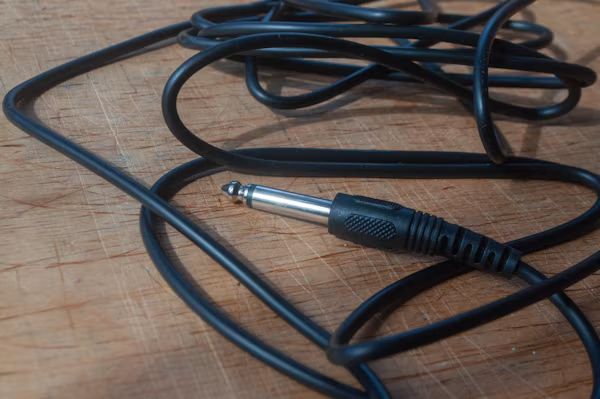
Even if the cord is highly rated, it would be of no use if it cannot connect well to the equipment. Thus, it is important to ensure that the plugs and connectors of the purchased power cords are compatible.
Businesses should choose plugs and connectors that are compatible with their equipment and intended electrical requirements. It is thus important for businesses to know which connectors and plugs are required in advance before ordering power cords.
6. Select a Practical Cord Length
Cord length can directly affect convenience. A cord that is too short may not reach the equipment. On the other hand, an unnecessarily long cord can create extra cable to manage.
Businesses should therefore measure the distance between the power source and the equipment before choosing a length. This is especially helpful in offices, workshops, factories, and other areas where equipment may be spread across a larger space.
Power cords are available in a range of lengths, from short connections to longer options, to suit different workspace layouts. As a result, businesses can choose a length that fits their workspace rather than relying on a one-size-fits-all solution.

Conclusion
Selecting the appropriate power cord is a small step that makes a huge difference in the day-to-day operations of any business.
However, it is important to understand that reliability depends on compatibility. The factors to consider when choosing a cable include voltage, amperage, wire gauge, plug and connector type, cable length, and usage conditions. Another aspect that must be addressed is the relevant standards and certifications.
Most importantly, one must select a specific power cord based on its intended function. For example, a cord for an office computer is not suitable for industrial machinery, and vice versa. Choosing a cord that meets the equipment's specifications and intended operating conditions helps support safe, reliable performance.

