

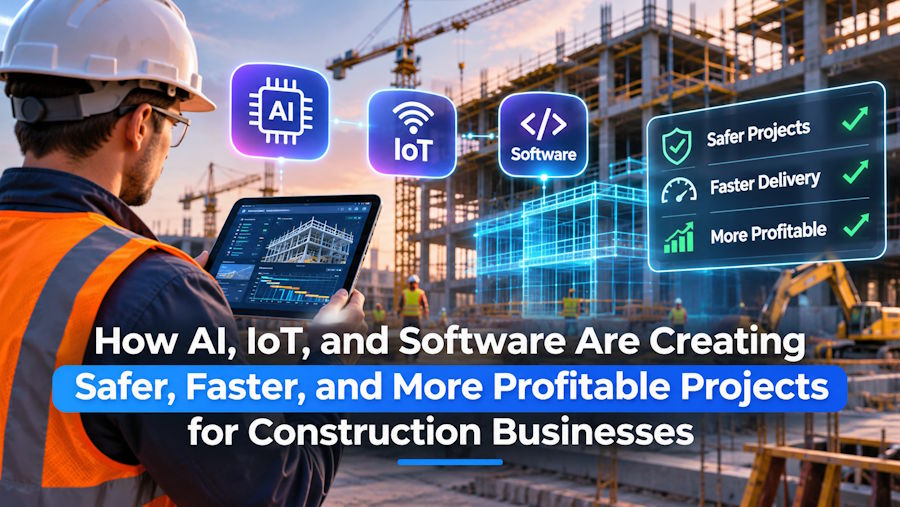
Construction has traditionally depended on manual planning, paper-based documentation, on-site coordination, and experience-based decision-making. While these methods have supported the industry for decades, they often lead to delays, cost overruns, communication gaps, safety risks, and rework.
Today, construction businesses are adopting digital technologies to solve these long-standing challenges. Artificial intelligence, the Internet of Things, cloud software, mobile applications, and data analytics are changing how projects are planned, managed, and delivered.
These technologies do not replace construction professionals. Instead, they give project managers, engineers, contractors, and site teams better visibility, faster insights, and smarter tools to make informed decisions. The result is safer job sites, faster project delivery, improved resource utilization, and stronger profitability.
This article explores how AI, IoT, and construction software are transforming construction businesses and helping them deliver projects more efficiently.
Why Construction Projects Face Cost and Schedule Pressure
Construction projects involve many moving parts. Teams must manage designs, materials, labor, equipment, subcontractors, permits, inspections, budgets, schedules, and client expectations. A delay in one area can affect the entire project timeline.
Common challenges include:
- Poor communication between office teams and field crews.
- Incomplete or outdated project documentation.
- Unexpected site conditions.
- Material shortages and delivery delays.
- Equipment downtime.
- Labor shortages and scheduling conflicts.
- Safety incidents and compliance issues.
- Design changes that create rework.
- Manual data entry and duplicate paperwork.
- Limited real-time visibility into project progress.
Many of these problems are not caused by a lack of effort. They are caused by fragmented data and slow decision-making. When project information is stored in separate systems, teams spend valuable time searching for documents, reconciling reports, and correcting errors.
Digital construction technologies help solve this by connecting people, processes, and project data in one ecosystem.
The Role of AI in Modern Construction
Artificial intelligence is becoming one of the most impactful technologies in construction. AI can analyze large volumes of project data, identify patterns, predict risks, and support better decisions across the project lifecycle.
AI-Powered Project Planning
AI can help construction teams create more accurate project plans by analyzing historical project data, schedules, resource availability, weather patterns, and site conditions.
For example, AI can identify tasks that are likely to cause delays based on similar past projects. It can also suggest better sequencing of activities, highlight resource conflicts, and help project managers create realistic schedules.
Instead of relying only on assumptions, construction teams can use data-driven insights to plan projects more effectively.
Predictive Analytics for Risk Management
Construction projects face risks such as delays, budget overruns, safety incidents, quality issues, and supply chain disruptions. AI can analyze current and historical data to identify early warning signs.
For example, if a project is falling behind schedule, AI can identify the tasks most likely to cause further delays. It can also highlight cost overruns before they become major financial problems.
Predictive analytics helps project managers act early instead of reacting after problems have already occurred.
AI-Based Quality Control
Quality issues can lead to expensive rework, project delays, and client dissatisfaction. AI can support quality control by analyzing site photos, inspection reports, and progress updates.
Computer vision can identify potential issues such as cracks, incomplete installations, safety violations, or deviations from design plans. While human inspection remains essential, AI can help teams identify issues faster and prioritize areas that need attention.
Generative AI for Documentation and Communication
Generative AI is also changing how construction teams handle documentation. It can help create project summaries, meeting notes, daily reports, RFIs, submittals, and client updates faster.
This reduces administrative workload and allows project managers to spend more time on planning, coordination, and problem-solving.
However, AI-generated content should always be reviewed by qualified professionals, especially when it relates to safety, compliance, contracts, or technical specifications.
How IoT Improves Construction Site Visibility
The Internet of Things refers to connected devices that collect and share data through sensors and internet connectivity. In construction, IoT devices can provide real-time visibility into equipment, materials, workers, and site conditions.
Equipment Tracking and Maintenance
Heavy equipment is expensive, and unplanned downtime can delay an entire project. IoT sensors can track equipment location, usage hours, fuel consumption, engine health, and maintenance needs.
With this data, construction companies can:
- Locate equipment quickly.
- Prevent theft and unauthorized use.
- Schedule maintenance before breakdowns occur.
- Reduce fuel waste.
- Improve equipment utilization.
- Extend asset lifespan.
Predictive maintenance is especially valuable. Instead of waiting for a machine to fail, teams can identify early signs of wear and schedule repairs at the right time.
Material and Asset Tracking
Materials such as steel, concrete, lumber, and specialized equipment must arrive at the right place at the right time. IoT-enabled tags, RFID, GPS trackers, and barcode systems can help teams monitor material movement across sites and warehouses.
This improves inventory accuracy, reduces loss, prevents over-ordering, and ensures that crews have the materials they need when they need them.
Site Safety Monitoring
Safety is one of the most important priorities in construction. IoT devices can monitor site conditions and identify potential hazards before they lead to accidents.
Examples include:
- Sensors that detect gas leaks or poor air quality.
- Wearable devices that monitor worker fatigue or location.
- Equipment sensors that detect unsafe operation.
- Weather monitoring systems that alert teams to dangerous conditions.
- Geofencing systems that restrict access to hazardous zones.
These tools do not remove the need for safety training and human supervision. However, they provide an additional layer of protection and help safety teams respond faster.
Environmental Monitoring
Construction sites can affect surrounding communities through dust, noise, vibration, and emissions. IoT sensors can monitor these factors in real time.
This helps contractors stay compliant with environmental regulations, respond quickly to complaints, and reduce the impact of construction activities on nearby residents.
Construction Software: Connecting the Entire Project Lifecycle
Software is the foundation that brings AI, IoT, and construction teams together. An efficient software for construction business helps companies manage projects from pre-construction planning to handover and post-project analysis, while improving collaboration, visibility, and decision-making across every stage.
Cloud-Based Project Management
Cloud-based construction software allows teams to access project information from anywhere. Office teams, site managers, subcontractors, and clients can work from a shared source of truth.
This reduces version-control issues, improves collaboration, and ensures that everyone has access to the latest drawings, schedules, and documents.
Digital Document Management
Construction projects generate a large volume of documents, including drawings, contracts, permits, specifications, RFIs, submittals, change orders, and inspection reports.
Digital document management systems organize these files in one place. Teams can search documents quickly, track revisions, control permissions, and maintain a complete project history.
This reduces lost files, outdated drawings, and miscommunication between stakeholders.
Mobile Field Applications
Field crews need tools that work on-site, not only in the office. Mobile construction apps allow workers to view drawings, submit daily reports, log safety incidents, request materials, capture photos, and update task status from a smartphone or tablet.
This improves data accuracy because information is captured at the source. It also reduces the need for manual data entry later.
BIM and Digital Twins
Building Information Modeling, or BIM, creates a digital representation of a construction project. It combines design data, schedules, costs, materials, and asset information in one model.
Digital twins take this further by connecting the digital model with real-world site data. Sensors, drones, and project management systems can feed live information into the digital twin, giving teams a more accurate view of project progress.
With BIM and digital twins, construction teams can:
- Detect design clashes before construction begins.
- Improve coordination between trades.
- Visualize project progress.
- Plan logistics more effectively.
- Reduce rework.
- Support better facility management after handover.
Real-Time Dashboards and Reporting
Construction leaders need visibility into project performance. Dashboards can display key metrics such as schedule progress, budget status, safety incidents, equipment utilization, labor productivity, and open risks.
Instead of waiting for weekly reports, managers can access real-time data and make faster decisions. This is especially valuable for businesses managing multiple projects at once.
How These Technologies Improve Safety
Safety is not only a moral responsibility; it also affects productivity, insurance costs, project timelines, and company reputation. AI, IoT, and software can create a safer working environment when used strategically.
Early Hazard Detection
IoT sensors can monitor environmental conditions, equipment status, and worker location. AI can analyze this data to identify patterns that may indicate a safety risk.
For example, if a particular area experiences frequent near-miss reports, the system can flag it for additional inspection or safety training.
Better Safety Training and Compliance
Digital safety platforms can store training records, safety checklists, incident reports, and compliance documents in one place. Managers can quickly verify whether workers have completed required training before entering a site.
Mobile apps can also deliver toolbox talks, safety checklists, and incident-reporting forms directly to field teams.
Faster Incident Response
When an incident occurs, every minute matters. Connected systems can alert supervisors, share site location details, and provide access to emergency procedures.
Digital incident reports also help companies analyze root causes and prevent similar incidents in the future.
How These Technologies Speed Up Project Delivery
Faster Decision-Making
When project data is available in real time, teams do not need to wait for manual reports or search through emails. Project managers can identify issues, assign tasks, and make decisions quickly.
Reduced Rework
Rework is one of the biggest causes of delays and budget overruns. BIM, AI-based quality checks, and digital documentation help teams identify errors before they reach the field.
Improved Coordination
Construction involves multiple teams working on interconnected tasks. Shared dashboards, mobile updates, and automated notifications keep everyone aligned.
When subcontractors know about schedule changes, design updates, or material delays early, they can adjust their work accordingly.
Optimized Resource Allocation
AI and IoT data can help businesses allocate labor, equipment, and materials more efficiently. Instead of guessing where resources are needed, managers can use real-time data to make informed decisions.
This reduces idle time, prevents bottlenecks, and improves productivity.
How These Technologies Increase Profitability
Profitability in construction depends on more than winning projects. It depends on controlling costs, completing work on time, reducing waste, and delivering quality results.
Better Budget Control
Construction software can track labor costs, material usage, equipment expenses, subcontractor invoices, and change orders in real time. This gives project managers a clearer view of project profitability.
AI can also identify spending patterns and flag potential budget risks before they become serious.
Reduced Material Waste
IoT-enabled inventory tracking helps teams order the right quantity of materials and avoid overstocking. Better planning also reduces waste caused by damaged, misplaced, or unused materials.
Improved Equipment Utilization
Equipment tracking helps companies understand how often machines are used and whether they are sitting idle. This can reduce rental costs, improve scheduling, and prevent unnecessary purchases.
Fewer Delays and Penalties
Delays can lead to penalty clauses, extended overhead costs, and dissatisfied clients. Predictive analytics and real-time project visibility help teams prevent delays before they escalate.
Stronger Client Relationships
Clients value transparency. Digital project dashboards, regular updates, and clear documentation help construction businesses communicate progress more effectively.
When clients can see what is happening and understand potential risks early, trust improves. This can lead to repeat business and referrals.
Practical Use Cases for Construction Businesses
Preconstruction Planning
AI can support cost estimation, schedule creation, risk assessment, and design analysis. BIM can help teams identify clashes and improve coordination before construction begins.
Site Progress Tracking
Drones, mobile apps, site cameras, and IoT sensors can capture real-time progress data. Project managers can compare actual progress with the planned schedule and take corrective action when needed.
Safety Management
Wearables, sensors, mobile safety apps, and AI-based analytics can help identify hazards, track compliance, and reduce incidents.
Equipment and Fleet Management
IoT sensors can monitor equipment health, location, fuel use, and maintenance needs. This helps businesses reduce downtime and control operating costs.
Quality Assurance
Digital inspection checklists, photo documentation, and AI-based analysis can improve quality control and reduce rework.
Post-Project Analysis
After project completion, businesses can analyze schedule performance, cost variance, safety records, and productivity data. These insights help improve future estimates and project planning.
Challenges of Digital Transformation in Construction
Resistance to Change
Construction teams may be used to familiar processes and tools. Digital transformation requires training, clear communication, and leadership support.
Data Silos
Many construction companies use separate tools for estimating, scheduling, accounting, field reporting, and document management. These systems may not communicate with each other, creating data silos.
Connectivity Limitations
Construction sites may have limited internet connectivity, especially in remote locations. Software and IoT solutions should include offline capabilities and reliable data synchronization.
Data Security
Construction projects involve sensitive financial, design, contractual, and operational data. Businesses must implement strong access controls, encryption, backups, and cybersecurity practices.
Implementation Costs
New technology requires investment in software, devices, training, and change management. Businesses should start with high-impact use cases and scale gradually.
Best Practices for Adopting Construction Technology
Start With a Clear Problem
Do not adopt technology simply because it is trending. Identify a specific challenge, such as reducing rework, improving safety, tracking equipment, or improving schedule visibility.
Choose Scalable Solutions
Select software and hardware that can grow with the business. A solution that works for one project should also support multiple projects, teams, and locations.
Train Field Teams Properly
Technology is only effective when people use it correctly. Provide practical training and show teams how the tools make their work easier.
Integrate Systems Where Possible
Avoid creating another disconnected tool. Choose platforms that can integrate with existing accounting, scheduling, procurement, and project management systems.
Measure Results
Track metrics such as project completion time, safety incidents, rework costs, equipment utilization, budget variance, and labor productivity. This helps businesses understand the return on their technology investment.
The Future of Digital Construction
The future of construction will be more connected, intelligent, and data-driven. AI will move beyond reporting and become a proactive decision-support tool. IoT devices will provide deeper visibility into sites, equipment, and worker safety. Digital twins will become more common across the project lifecycle.
Construction businesses that adopt these technologies early will be better positioned to compete. They will be able to deliver projects with greater speed, accuracy, safety, and profitability.
However, technology alone is not enough. Success depends on strong leadership, clear processes, trained teams, and a culture that values continuous improvement.
Conclusion
AI, IoT, and construction software are changing how construction businesses plan, manage, and deliver projects. These technologies provide real-time visibility, improve collaboration, reduce manual work, and help teams identify risks before they become costly problems.
For construction companies, digital transformation is no longer optional. It is becoming a competitive advantage. Businesses that use AI for predictive insights, IoT for site visibility, and software for connected project management can build safer job sites, deliver projects faster, and improve profitability.
The companies that succeed will not simply adopt technology for its own sake. They will use it strategically to solve real operational challenges, empower their teams, and create better outcomes for clients and communities.

