

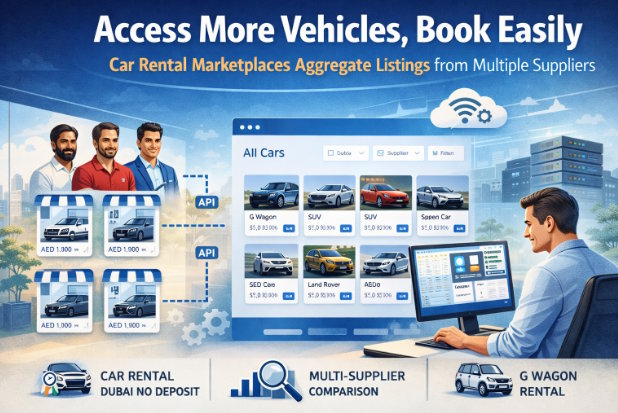
The digital marketplace model has transformed many industries, and car rental is no exception. Instead of visiting individual rental company websites or contacting suppliers one by one, customers today expect a single platform where they can explore multiple options instantly. This is where aggregation platforms play an important role. They bring together listings from various suppliers and present them in a structured, searchable format that makes it easy for users to compare vehicles, pricing, and services.
For developers and technology enthusiasts, understanding how these platforms function behind the scenes offers insight into modern marketplace architecture. Platforms like OneClickDrive operate as aggregators rather than traditional rental companies. Their goal is to connect users with suppliers by displaying available vehicles from multiple sources in one unified interface.
In practical terms, this means that when someone searches for car rental Dubai no deposit, the platform is able to display listings from several suppliers who provide that option, allowing customers to evaluate offers quickly without leaving the site.
Understanding the Aggregator Marketplace Model
A marketplace aggregator works by collecting data from multiple suppliers and organizing it into a consistent structure. Each supplier may have their own inventory management system, pricing strategy, and availability calendar. The challenge for an aggregator platform is to unify this information so that users can easily search and filter through it.
From a technical perspective, this process often involves supplier dashboards, APIs, or data submission interfaces where rental companies upload their vehicle listings. These listings include essential information such as vehicle model, pricing, rental terms, availability, and supplier contact details.
Once the data is submitted, the platform processes and stores it within a centralized database. This allows the system to generate searchable listings that users can filter by category, brand, price range, location, and other parameters.
Supplier Onboarding and Data Integration
The aggregation process begins with supplier onboarding. Car rental companies must first register on the platform and create their supplier accounts. During this stage, they provide company information, licensing details, and operational locations.
After verification, suppliers gain access to dashboards where they can upload vehicle listings. Each listing typically includes structured fields such as:
Vehicle brand and model
Model year
Daily and monthly rental rates
Security deposit requirements
Pickup locations
Vehicle features and specifications
This structured data format ensures that listings from different suppliers can be displayed consistently across the platform.
Building a Unified Vehicle Database
Once supplier listings are uploaded, the platform stores them in a central database designed to handle thousands of vehicle records. Database architecture plays a crucial role here because listings must remain searchable and organized while supporting complex filtering queries.
For example, when a user searches for luxury vehicles or specific car models, the system must quickly retrieve matching records without slowing down the interface.
Vehicle listings are typically categorized by several attributes including car type, manufacturer, price range, seating capacity, and transmission type. These attributes allow the platform’s search engine to return relevant results based on user preferences.
Search and Filtering Mechanisms
One of the most important components of a rental marketplace is the search system. Users expect to find vehicles quickly using simple filters. These filters might include car category, brand, price range, pickup location, or rental duration.
To achieve this, platforms rely on indexing systems and optimized database queries that allow the application to process large datasets efficiently. When a search query is submitted, the backend retrieves matching listings and organizes them into a user-friendly interface.
This search layer becomes even more important when dealing with high demand categories or luxury vehicles that attract significant user interest.
Lead-Based Marketplace Architecture
Unlike traditional booking platforms, some car rental marketplaces operate on a lead generation model. Instead of processing payments directly, the platform connects users with suppliers who handle the rental transaction.
This approach simplifies the system architecture while allowing suppliers to maintain control over pricing, documentation, and vehicle delivery. When users choose a vehicle listing, they are typically redirected to the supplier or provided with contact details to complete the booking.
From a developer perspective, this model reduces the complexity of payment processing, booking confirmations, and contract management within the platform itself.
Managing Multi-Supplier Inventory
A major challenge in aggregation platforms is managing inventory from multiple suppliers without conflicts. Since each supplier manages their own fleet, the platform must ensure that listings remain accurate and up to date.
Supplier dashboards allow companies to update vehicle availability, modify pricing, and remove listings when vehicles are no longer available. These updates are reflected in the central database so users always see the latest information.
Some platforms also implement automated checks or notifications that prompt suppliers to confirm their inventory status periodically.
Handling Luxury Vehicle Listings
Luxury vehicles represent an important category in car rental marketplaces, especially in cities known for premium tourism and business travel. High performance vehicles and luxury SUVs attract users who are looking for unique driving experiences.
For instance, listings related to G Wagon rental services often appear prominently in luxury categories because of the vehicle’s popularity among visitors and residents alike. Aggregation platforms allow multiple suppliers to list similar vehicles, giving customers the ability to compare prices, availability, and rental terms before making a decision.
This comparison capability is one of the primary advantages of marketplace platforms.
Scalability and Performance Considerations
As the number of suppliers and vehicle listings grows, scalability becomes a key technical challenge. The platform must maintain fast search results and responsive interfaces even as thousands of listings are added.
Developers often address this challenge through caching strategies, optimized queries, and scalable cloud infrastructure. These technologies allow the system to handle large volumes of traffic while maintaining a smooth user experience.
Search indexing tools and content delivery networks also contribute to performance improvements by reducing server load and delivering data more efficiently.
The Role of SEO in Marketplace Platforms
Marketplace platforms often rely heavily on search engine visibility to attract users. With thousands of vehicle listings and location based pages, search engine optimization becomes a major part of the platform’s growth strategy.
Developers and SEO specialists work together to structure URLs, metadata, and content in ways that allow individual listing pages to rank for relevant search queries.
Each listing page typically includes detailed vehicle descriptions, images, and structured data that help search engines understand the content. This allows users searching for specific rental options to discover the platform through organic search results.
The Future of Car Rental Aggregation Platforms
As digital marketplaces continue to evolve, aggregation platforms are becoming increasingly sophisticated. Future improvements may include real time availability synchronization, advanced recommendation systems, and deeper integration with supplier management tools.
Artificial intelligence may also play a role in personalizing search results, recommending vehicles based on user preferences, and optimizing listing visibility.
For developers studying marketplace architecture, car rental aggregation platforms provide a fascinating example of how technology can connect businesses and consumers efficiently.
By combining supplier dashboards, centralized databases, advanced search systems, and scalable infrastructure, platforms like OneClickDrive demonstrate how modern web applications can simplify complex industries while delivering value to both suppliers and customers.

