

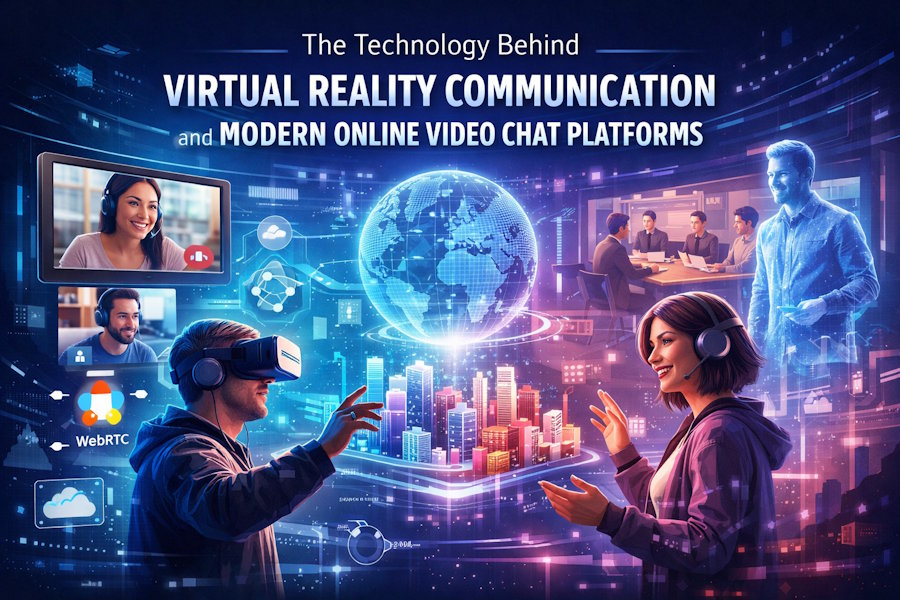
In the last decade, digital communication technologies have evolved dramatically. What once began as simple text messaging and basic video calls has now expanded into immersive virtual environments and advanced real-time communication systems.
Major technology companies like Meta and Google are actively developing new platforms that aim to merge physical and digital communication. Their goal is to create virtual environments where users can interact through avatars, holograms, and three-dimensional digital spaces.
For developers and software engineers, this transformation is creating an entirely new ecosystem of technologies that combine networking, real-time streaming, 3D graphics, and artificial intelligence.
In this article, we will explore how modern software development powers VR communication platforms and how video chat technologies continue to play an important role in digital interaction.
The Rise of Virtual Reality Communication Platforms
Virtual reality is no longer limited to gaming or entertainment. It is now becoming an important part of communication technology.
Modern VR platforms allow users to enter digital environments where they can interact with other people in real time. These platforms rely on several advanced technologies including:
- 3D graphics rendering engines
- motion tracking systems
- spatial audio technologies
- real-time networking protocols
- cloud-based infrastructure
For example, platforms such as Horizon Workrooms allow remote teams to collaborate inside a virtual office. Users can attend meetings, share screens, and communicate with colleagues while represented by avatars.
From a software development perspective, creating these environments requires strong knowledge of networking architecture, graphics programming, and user interface design.
Social Interaction in Virtual Worlds
Another area where VR technology is rapidly expanding is social interaction. Applications like VRChat allow users to explore digital worlds, customize avatars, and interact with people from around the globe.
Developers building these platforms must design scalable systems capable of supporting thousands of simultaneous users. Key technical challenges include:
- synchronizing avatar movements in real time
- optimizing graphics rendering for different devices
- managing voice communication between users
- implementing moderation and security systems
These systems often rely on distributed servers and optimized networking protocols to ensure smooth user experiences.
Why Video Chat Platforms Still Matter
Although VR communication is gaining popularity, traditional video communication platforms remain extremely important.
Video chat systems provide a more direct and authentic way to interact because users can see and hear each other in real time. This helps create trust and improves communication quality.
For example, many modern platforms allow people to meet new individuals through random matching systems. Some services even provide advanced filtering features that allow users to connect with specific types of chat partners, including platforms offering an adult video chat with females, where real-time interaction plays a central role in the user experience.
Behind these platforms lies sophisticated software architecture that includes video encoding algorithms, WebRTC communication protocols, and cloud-based media servers.
Technologies That Power Real-Time Video Communication
Modern video chat applications rely heavily on real-time communication technologies.
One of the most important technologies in this space is WebRTC, which allows developers to build high-quality voice and video communication directly into web applications.
Key components of real-time video chat systems include:
Media Encoding
Video and audio streams must be compressed efficiently so that they can be transmitted quickly without consuming excessive bandwidth.
Network Optimization
Low latency is essential for natural conversations. Developers use adaptive bitrate streaming and optimized routing techniques to reduce delays.
Scalable Infrastructure
Popular communication platforms must handle thousands or even millions of simultaneous users. Cloud infrastructure and load balancing systems are used to manage this demand.
These technologies allow developers to create stable communication platforms that work across smartphones, desktops, and VR devices.
Holographic Communication and the Future of Interaction
While video chat and VR communication are already transforming online interaction, researchers are exploring even more advanced technologies.
One of the most ambitious experiments in this field is Project Starline, a system designed to create realistic three-dimensional projections of people during conversations.
The system uses multiple cameras, depth sensors, and artificial intelligence to generate a lifelike 3D model of a person in real time. This model is then projected onto a special display panel that allows participants to feel as though they are sitting face-to-face.
Although still in the experimental stage, this technology demonstrates how software engineering and advanced hardware can completely redefine digital communication.
Challenges Facing VR Communication Technologies
Despite the excitement surrounding immersive communication platforms, several challenges still remain.
Expensive Hardware
High-quality VR headsets and sensors are still relatively expensive, limiting widespread adoption.
Technical Complexity
Developing immersive communication software requires expertise in multiple areas including networking, 3D rendering, and real-time data processing.
Performance Optimization
Maintaining smooth performance in large virtual environments requires constant optimization and efficient resource management.
Developers must continually refine these systems to make immersive communication accessible to a broader audience.
The Future of Digital Communication
As technology continues to evolve, the line between physical and digital interaction will become increasingly blurred.
Video chat platforms, VR environments, and holographic communication systems will likely coexist and complement each other. Each technology offers unique advantages depending on the context of communication.
For developers, this rapidly growing field provides exciting opportunities to build the next generation of communication platforms. From immersive virtual worlds to real-time video streaming applications, the future of digital interaction will depend heavily on innovative software development.
One thing is certain: the way people communicate online will continue to evolve, and the technologies driving these changes will shape the digital experiences of the next generation.

