

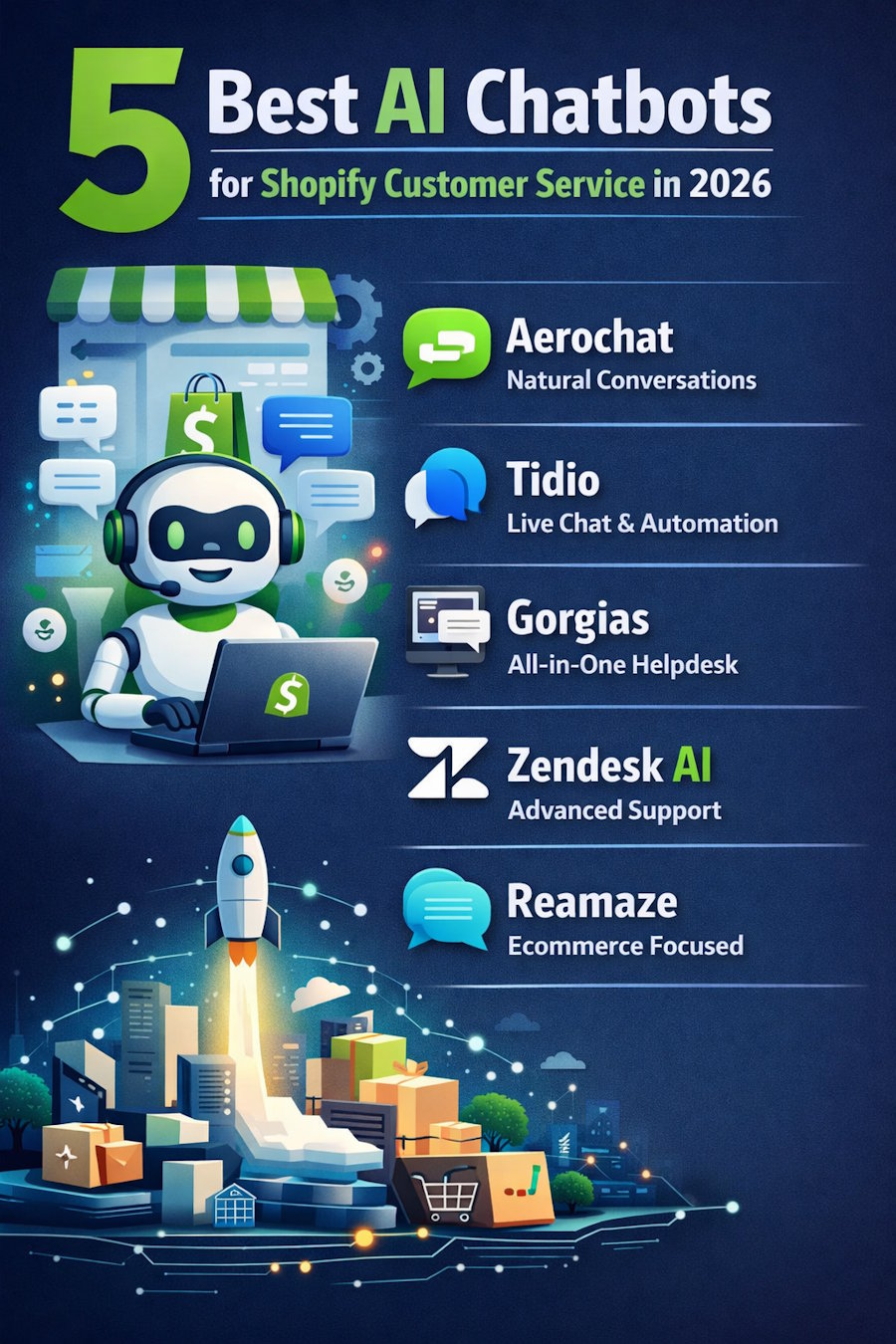
Running a Shopify store feels exciting at first. Then the messages start coming in.
One customer is asking where their order is. Another wants to return a product. Someone else is asking about sizing late at night. You cannot be everywhere at once. Hiring a full support team also gets expensive as you grow.
This is where AI chatbots start to make sense.
A good chatbot does more than answer questions. It handles repetitive queries, reduces response time, and gives you space to focus on growing your business. But not every tool works the same way. Some feel slow. Some are costly. Some simply do not understand what customers are trying to say.
To make things easier, here are five AI chatbots you can consider for your Shopify store. Each one fits a different type of business and support style.
Best AI Chatbots for Customer Service
1. AeroChat
If you want something that feels like a real store assistant instead of a bot, AeroChat stands out. It is built for ecommerce, so it understands common Shopify questions like order tracking, product details, returns, and delivery timelines. It connects directly with your store, which means it can give real answers instead of generic replies.
What makes it different is how natural the conversations feel. Customers do not feel like they are talking to a machine. The tone stays consistent with your brand, which is important if you care about customer experience.
Setup is simple and does not require a developer. You can also track conversations, spot issues, and improve responses over time. When needed, it smoothly passes the conversation to a human agent.
2. Tidio
Tidio is a well known option among Shopify store owners. It combines live chat with AI automation in a simple way. Its AI system handles common questions, guides customers, and manages basic support queries. If something gets complex, it transfers the chat to a real person.
The interface is clean and easy to use. It also connects with email and Messenger, so you are not limited to just website chat.
However, for more advanced Shopify tasks like real time order data or complex returns, it may need extra setup.
3. Freshdesk Omni
Freshdesk Omni is built for stores that have pushed past a basic support bot.
It merges chat, email, WhatsApp, and social into one queue, so your team never juggles separate tabs per channel. Its AI reads what a shopper actually wants, checks your store data, and closes out common asks like order status or refunds on its own.
The unified inbox keeps every conversation in sync, and when something needs a person, it lands with them fully briefed.
It asks for a bit of setup upfront to link your tools. Once running, it holds up well for mid-size Shopify brands scaling their support.
4. Gorgias
Gorgias is more than just a chatbot. It is a complete helpdesk system. It connects deeply with Shopify, allowing you to see order details, update orders, apply discounts, and even process refunds from one place. You can also set automation rules to handle common questions automatically.
The downside is that it takes time to set up and learn. Pricing also increases as your support volume grows.
It works best for larger stores that handle a high number of customer requests.
5. Zendesk with AI
Zendesk is one of the most recognised customer service platforms. It supports chat, email, phone, and social media from one dashboard. Its AI can resolve many support requests without human involvement.
That said, it is not built for small stores. It can feel expensive and complex if you are just starting out.
It is a better fit for businesses that need a scalable support system.
Honorable mentions
Reamaze
Reamaze is designed for ecommerce brands. It offers Shopify integration, automated workflows, and a chatbot that can answer common questions about orders, shipping, and products. It also suggests responses to help your team reply faster.
One useful feature is the status page, which lets you inform customers about delays or issues before they ask.
It is more affordable than enterprise tools, making it a good option for growing stores.
How to Choose the Right One
There is no single best option for everyone. The right chatbot depends on your situation.
Think about these things
- How many support messages you receive daily
- How comfortable your team is with tools and setup
- The kind of experience you want customers to have
- Your budget
AeroChat is one of the best and most advanced AI chatbots for Shopify, especially if you want accurate and natural customer support.
If you need advanced features and handle large volumes, Gorgias or Zendesk may suit you better.
Tidio and Reamaze sit in the middle and work well for growing businesses.
Most of these tools offer trials. The best approach is to test them on your Shopify store with real customers and evaluate what performs best.

