

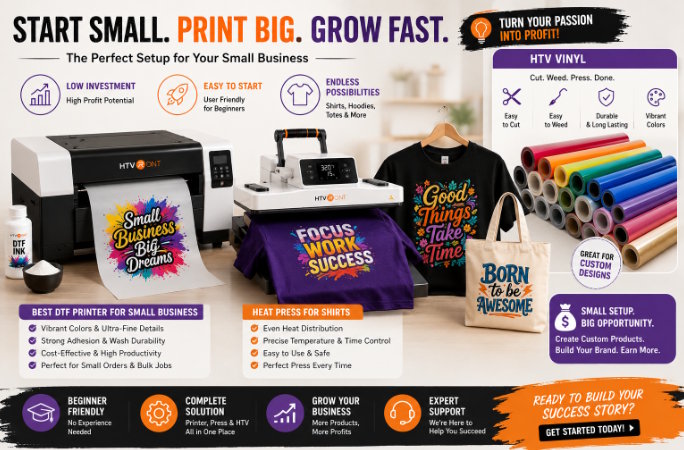
Starting a custom apparel business has become easier than ever. From Etsy stores to local t-shirt brands, more entrepreneurs are entering the print-on-demand industry because personalized clothing continues to grow in popularity. Customers looking for cheap custom t shirts increasingly expect unique designs, fast delivery, and premium print quality, which means businesses need reliable printing equipment from the beginning.
Direct-to-Film printing has become one of the most popular solutions for small businesses because it offers flexibility, vibrant colors, and compatibility with different fabric types. Unlike traditional screen printing, DTF printing allows businesses to handle small custom orders without expensive setup costs.
Many startup owners now invest in the best dtf printer for small business operations because it provides professional-quality prints while keeping production efficient and manageable. Combined with a reliable heat press and quality HTV materials, DTF printing creates a complete workflow for modern apparel production.
Industry guides in 2025 and 2026 highlight DTF printing as one of the fastest-growing methods for small apparel businesses because it supports vibrant designs, multi-fabric printing, and efficient short-run production.
What Makes DTF Printing Ideal for Small Businesses?
Small businesses often struggle with budget limitations, production flexibility, and inventory management. Traditional printing methods can require expensive equipment and large production runs to remain profitable.
DTF printing solves many of these challenges because it supports on-demand production. Businesses can print garments only when customers place orders, which reduces waste and inventory costs.
The DTF workflow is simple:
- Create or upload artwork
- Print the design onto transfer film
- Apply adhesive powder
- Cure the design
- Transfer onto fabric using a heat press
- Peel the film and finish the garment
This process allows businesses to create colorful and durable prints on cotton, polyester, blends, canvas, and other materials.
According to recent printing industry discussions, small businesses prefer DTF because it handles small production runs efficiently while maintaining strong print quality.
Why Choosing the Right DTF Printer Matters
A printer is the heart of any apparel printing setup. Low-quality machines may create inconsistent colors, clogged printheads, or slow production speeds, all of which can affect customer satisfaction.
Many entrepreneurs choose the best dtf printer for small business production because reliable systems improve workflow efficiency and reduce operational problems.
Important Features to Consider
Print Quality
Higher print resolution improves detail, gradients, and color accuracy. This is important for logos, illustrations, and complex artwork.
Production Speed
Faster printers help businesses handle more orders without delays.
Ink System
Quality ink systems improve durability and reduce fading after washing.
Ease of Maintenance
DTF printers require regular maintenance. Beginner-friendly systems help reduce downtime.
Film Size Compatibility
Most small businesses use A3 or 13-inch printers because they balance affordability and productivity.
Industry experts often recommend compact A3 DTF printers for startups because they offer a strong balance between cost and performance.
Best Entry-Level DTF Solutions for Startups
New businesses usually need affordable and scalable equipment. Beginners often start with compact DTF systems before upgrading to larger production machines.
Recent reviews mention entry-level printers like compact A3 models as good options for Etsy sellers and startup apparel brands because they are easier to manage and require less space.
Many startup owners focus on:
- Affordable startup costs
- Easy maintenance
- Reliable support
- Compact workspace compatibility
- Multi-fabric printing capability
This makes DTF printing ideal for home-based businesses and side hustles.
Why a Heat Press Is Essential for Shirt Printing
A printer alone cannot produce professional apparel. Proper heat application is critical for transferring the design correctly onto garments.
Using a quality heat press for shirts helps ensure proper adhesion, durability, and print softness. Uneven heat or pressure can damage prints and reduce customer satisfaction.
Heat presses apply controlled heat and pressure evenly across garments, which improves consistency and long-term durability.
Features to Look for in a Heat Press
|
Feature |
Why It Matters |
|
Accurate Temperature Control |
Prevents overheating or weak transfers |
|
Adjustable Pressure |
Supports different fabric types |
|
Even Heat Distribution |
Improves print consistency |
|
Digital Controls |
Simplifies workflow |
|
Large Workspace |
Supports hoodies and oversized prints |
Recent crafting and apparel equipment guides continue highlighting automated heat press machines because they improve production speed and consistency for apparel creators.
How HTV Materials Still Improve Custom Apparel
Even though DTF printing has become highly popular, HTV materials remain extremely useful in custom apparel production.
Many brands use HTV materials for personalization, specialty effects, and branding details.
HTV is commonly used for:
- Sports jerseys
- Personalized names
- Custom logos
- Reflective safety clothing
- Fashion designs
- Event apparel
One major advantage of HTV is the ability to create textures and finishes that standard printing cannot always achieve.
Popular HTV Styles
|
HTV Type |
Common Use |
|
Glitter HTV |
Fashion apparel |
|
Reflective HTV |
Safety uniforms |
|
Metallic HTV |
Premium branding |
|
Puff HTV |
Raised textures |
|
Glow-in-the-Dark HTV |
Creative designs |
|
Holographic HTV |
Trendy streetwear |
Many businesses combine DTF printing with HTV applications to create more unique and premium-looking apparel products.
DTF Printing vs Other Printing Methods
Choosing the right printing method depends on business goals, budget, and product types.
|
Printing Method |
Advantages |
Limitations |
|
DTF Printing |
Multi-fabric support, vibrant colors |
Requires film and powder |
|
Screen Printing |
Great for large bulk orders |
Expensive setup |
|
DTG Printing |
Soft feel on cotton |
Limited fabric compatibility |
|
Sublimation |
Bright polyester prints |
Works mainly on polyester |
|
HTV |
Easy customization |
Slower for large graphics |
Industry discussions frequently mention DTF printing as the best middle-ground solution because it combines flexibility, durability, and lower setup costs for startups.
Common Mistakes Small Businesses Should Avoid
Many beginners struggle during the early stages because they underestimate the technical side of apparel printing.
Poor Heat Settings
Incorrect pressure or temperature can damage garments or weaken transfers.
Low-Quality Artwork
Blurry designs reduce professionalism and customer trust.
Cheap Consumables
Low-quality film, powder, and ink often reduce durability.
Ignoring Maintenance
DTF printers need regular cleaning to prevent clogging.
Rushing Production
Proper curing and pressing improve long-term durability.
Experienced users on apparel printing forums often stress the importance of regular maintenance and quality consumables for stable results.
Building a Successful Shirt Printing Business
Printing quality alone does not guarantee success. Branding, customer service, and marketing also play important roles.
Create a Strong Online Presence
Social media platforms like TikTok and Instagram help attract customers.
Offer Fast Turnaround Times
Quick delivery improves customer satisfaction.
Use Professional Mockups
High-quality product photos improve sales conversions.
Focus on Unique Designs
Creative artwork helps brands stand out in crowded markets.
Invest in Reliable Equipment
Good printers and heat presses reduce long-term production problems.
Stay Updated With Trends
Fashion trends change quickly, especially in custom streetwear and influencer merchandise.
Small businesses that combine strong branding with consistent production quality usually achieve better long-term growth.
The Future of DTF Printing in 2026
The apparel printing industry continues evolving rapidly. Personalized fashion, influencer merchandise, and print-on-demand businesses are expected to grow further in the coming years.
Industry reports and reviews show increasing demand for automated DTF systems, faster print speeds, and beginner-friendly workflows.
Modern DTF systems are becoming:
- Faster
- More automated
- Easier to maintain
- More color accurate
- More efficient for small businesses
This makes DTF printing one of the strongest opportunities for new apparel entrepreneurs.
Conclusion
DTF printing has transformed the custom apparel industry by making professional printing more accessible for startups and small businesses. Its flexibility, vibrant colors, and multi-fabric compatibility make it an excellent choice for entrepreneurs entering the personalized apparel market.
Investing in the best dtf printer for small business production helps improve print quality, workflow efficiency, and long-term business growth.
A dependable heat press for shirts ensures proper transfers and durable prints, while premium HTV materials provide creative flexibility for customization and specialty designs.
As demand for custom fashion continues growing in 2026, businesses that focus on quality equipment, branding, and customer experience will be positioned for long-term success.
Frequently Asked Questions
Is DTF printing good for small businesses?
Yes, DTF printing is ideal for small businesses because it supports low-volume orders, multiple fabric types, and on-demand production.
Do I need a heat press for DTF printing?
Yes, a heat press is necessary to transfer the printed design properly onto garments.
Can beginners start a DTF printing business?
Yes, many beginners successfully start custom apparel businesses because DTF printing is relatively easy to learn.
Is HTV still useful with DTF printing?
Yes, HTV materials are widely used for personalization, specialty finishes, and creative design effects.
What fabrics work best with DTF printing?
DTF printing works on cotton, polyester, blends, canvas, and several other materials.

