

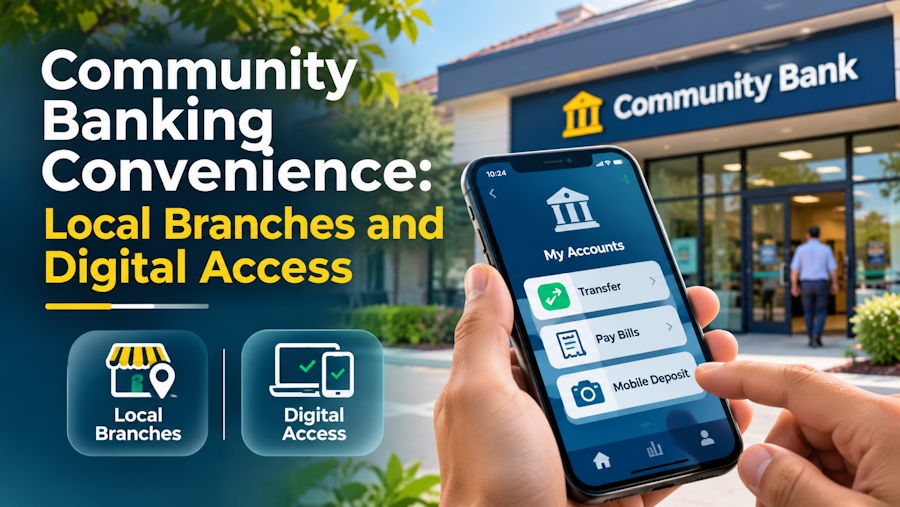
Personal service does not have to mean giving up everyday convenience. https://www.ccb-idaho.com/ combines an Eastern Idaho branch presence with online banking, mobile banking, debit card tools, telephone banking, and broad ATM access. The benefit of this connected model is choice: customers can use a digital channel for routine transactions and still turn to a local banker when a question needs discussion.
Proximity matters when banking gets complicated
Many banking tasks are simple until something changes. A customer may need help opening an account, understanding a transaction, preparing for a mortgage conversation, or organizing business banking services. In those moments, access to a nearby branch and a person who can explain the next step becomes more valuable than a menu of self-service options.
An Idaho community bank can provide that access close to where customers live and work. Local branches make it possible to handle documents, ask product questions, and discuss goals face to face. They can also support customers who prefer online tools but want a local escalation path when a digital interaction does not resolve the issue.
Convenience should therefore be measured across the full relationship. A fast app is useful, but so are responsive customer service, accessible lenders, cash access, and a clear way to get help.
A branch network built around Eastern Idaho
Citizens Community Bank reports eleven branch locations across Pocatello, Chubbuck, Idaho Falls, Ammon, Rexburg, St. Anthony, Ashton, and Island Park. That footprint gives customers several places to seek in-person service within the region.
Branches remain useful for activities that benefit from conversation or physical handling. A customer may want guidance while comparing checking accounts, savings accounts, or certificates of deposit. A business owner may need to discuss cash management, commercial lending, or deposit activity. A homebuyer may want to understand documentation before moving forward with a mortgage request.
Local branches also provide continuity. When employees serve the same communities as their customers, they are positioned to recognize regional needs and direct people to the appropriate banking resource. The value is not merely the building. It is access to a team that can connect a question with the right service.
Digital tools handle everyday banking
Routine banking often belongs on a phone or computer. Mobile check deposit can reduce trips for eligible deposits. Online and mobile banking can support balance review, transfers, bill pay, and account monitoring. Debit card controls and transaction alerts can help customers respond quickly when something looks unfamiliar.
These tools allow branch service to focus on the conversations that need human attention. A customer can review activity before calling about a transaction. A business owner can manage regular payments digitally and schedule a conversation when financing or treasury needs change. A borrower can make an eligible payment electronically while maintaining contact with a local lender.
Digital availability does not remove the need to understand account rules. Deposit cutoffs, funds availability, transaction limits, eligibility, and carrier or data requirements may apply. Customers should read disclosures and ask the bank how a feature works before relying on it for a time-sensitive transaction.
ATM and telephone access extend service
Cash access matters when customers travel beyond their nearest branch. The Citizens Community Bank Locations page says customers can use more than 55,000 surcharge-free Allpoint ATMs worldwide. That network extends access beyond Eastern Idaho while preserving the local banking relationship.
Telephone service provides another option for customers who cannot or do not want to use an app. Citizens Community Bank describes its telephone banking system as available 24/7 for functions such as checking balances and account history, transferring funds, making a loan payment, managing a debit card, and placing eligible stop payments.
The channels serve different needs. An ATM supports cash access. Mobile banking supports visual account management and remote deposits. Telephone banking can complete selected tasks without a smartphone interface. A branch supports documentation and conversation. The practical advantage comes from being able to choose the channel that fits the moment.
Service channels should work together
A convenient community bank should not force the customer to restart every time a question moves from digital service to human support. Contact information should be easy to find, branch employees should understand the available tools, and customers should know where to report a lost card or suspicious activity.
Security is part of convenience. Strong access controls, current contact information, and transaction alerts can help customers monitor their accounts. Customers also carry responsibility: protect login credentials, verify unexpected messages, and contact the bank through a trusted channel when a request appears suspicious.
For business customers, connected service can be especially useful. Online banking and cash-management tools may handle recurring activity, while branch staff and local lenders address account setup, borrowing needs, or changes in operations. The result is a relationship that can move between self-service and direct support.
Questions to ask before switching
Before choosing a bank, map the way you actually manage money. Ask where branches and ATMs are located, which transactions are available online, whether mobile deposit is offered for your account, and how quickly customer support can be reached. Review account fees, minimum balance rules, interest, funds-availability policies, and transaction limits.
Test the human side as carefully as the technology. Can an employee explain the account in plain language? Is there a clear contact for mortgage, consumer, or business lending questions? What happens when a digital transaction needs follow-up?
Community banking convenience is strongest when the branch and the screen complement each other. Eastern Idaho customers can complete routine work digitally while retaining access to local people, regional branches, and multiple ways to reach their money. That connected choice is a practical benefit of a modern community-bank relationship.

