

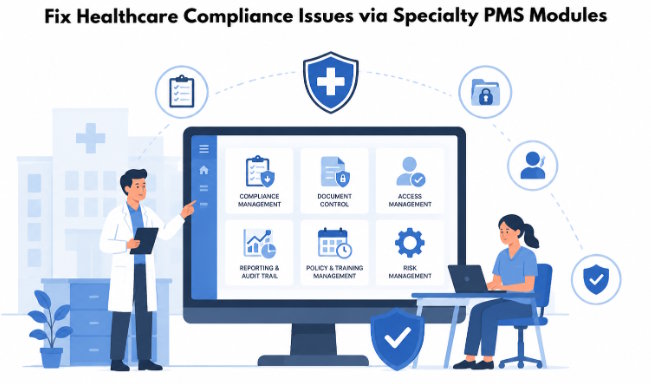
In today’s fast changing healthcare industry compliance is kinda one of the most difficult hurdles for hospitals, clinics, pharmacies and diagnostic centers. Healthcare providers have to stay within strict rules that relate to patient records, billing correctness, prescription handling, insurance submissions and yes, data privacy. And even a small slip, can set off penalties, slow down payments , lead to legal messes and it can also weaken patient confidence.
So this is exactly why specialty PMS modules start looking pretty valuable. Newer healthcare software setups are designed to make compliance management feel less heavy while also improving the day to day operational flow. Basically, from managing digital records, to speeding up pharmacy billing software workflows , these more advanced platforms can help healthcare organizations remain compliant, and stay organized in a calm way.
A solid Pharmacy Management System, if paired with specialty PMS modules, can cut down on manual errors, raise visibility, and automate the important compliance steps across the whole healthcare operation.
Why Healthcare Compliance Matters
Compliance is kind of essential in every healthcare organization because it keeps patient data safe, makes sure the right treatment procedures happen, and it helps billing stay accurate. Healthcare providers have to deal with a lot of regulations that are tied to things like:
- Electronic health records
- Prescription tracking
- Medical billing
- Insurance claims
- Data security
- Patient privacy
- Inventory control
- Audit reporting
When there are no proper healthcare IT systems in place, organizations often end up with mountains of paperwork, old school workflows, and human errors that slip in. Over time, these problems can open compliance gaps, and that can end up hurting patient care as well as business results, a bit, indirectly but still noticeably.
Modern pharmacy management software along with specialty PMS modules lets organizations automate those complicated workflows. It also helps them keep records consistent at every stage, not just at the end.
What Are Specialty PMS Modules?
Specialty PMS modules are kind of advanced tools built into healthcare software, to help manage these specialized workflows and all the compliance things that come with it. They get tailored for certain departments like pharmacies, laboratories, clinics, hospitals and also specialty practices.
Instead of using a more traditional setup, these specialty modules lean hard into automation, ongoing monitoring, and regulatory correctness. In general they make it easier for healthcare providers to run day-to-day operations while still meeting healthcare standards, or at least staying close enough to the rules.
Common specialty PMS modules include:
- Pharmacy management modules
- Billing and claims management
- Inventory tracking systems
- EHR integration
- Appointment scheduling
- Audit and reporting tools
- Prescription monitoring
- Patient communication systems
When these modules run together they improve overall workflow efficiency, and they also lower compliance risks a fair bit.
How Specialty PMS Modules Fix Healthcare Compliance Issues
1. Automated Documentation and Record Keeping
Manual documentation raises the odds of overlooking things, duplicate entries and even compliance issues. Specialty PMS modules automate how patient records get handled and, also, store digital files in a secure way, kind of quietly but reliably.
Healthcare providers can quickly access:
- Patient history and related context
- Treatment logs
- Prescription details and dispensing notes
- Billing information and invoicing data
- Insurance documentation and supporting paperwork
Automated documentation cuts down on all that paper and lets organizations meet compliance requirements more effectively, which is honestly the point, I mean it is.
A modern Pharmacy Management System furthermore keeps prescription records more accurate, so pharmacies can dodge medication errors and regulatory trouble.
2. Accurate Billing and Claims Processing
Billing errors are still, one of the leading causes of compliance trouble in healthcare organizations, you know how it goes. With wrong coding, duplicate entries , or even incomplete claims.it can turn into claim rejections and yeah, direct financial losses.
Advanced pharmacy billing software does a lot to automate those messy billing workflows and it also helps make sure claims get submitted the right way. Specialty PMS modules can actually:
- Check or validate insurance information
- Reduce the odds of coding mistakes
- Generate precise invoices
- Track claims that are still pending
- Keep audit-ready billing records, organized and ready
And all that improves financial visibility, while also supporting healthcare compliance requirements, which is not small at all.
More and more organizations now lean on pharmacy medical billing software to simplify insurance claim management, and reduce the administrative load.
Role of Pharmacy Management Systems in Compliance
A Pharmacy Management System sort of plays a big role in improving compliance across healthcare organizations, it’s not just “paperwork”. Pharmacies handle sensitive patient data, medication logs, and billing transactions every day, so when those tasks are done manually it can raise operational risks, quite a bit actually.
Modern Pharmacy Software solutions help pharmacies keep records more reliable, automate the dispensing step, and improve stock control. They also ease everyday friction in the flow of work and make things run smoother, with less nonsense, more sanity.
Key Compliance Benefits of Pharmacy Software
Prescription Monitoring
Pharmacy software tracks prescriptions in a digital manner, cutting down on medication errors, and it also makes it easier for healthcare providers to follow the right dispensing guidelines,more or less.
Inventory Management
Pharmacies have to keep a close eye on medicine stock levels, expiry dates, and batch numbers carefully and constantly. Specialty PMS modules handle inventory tracking in an almost automatic way, then they push out alerts when items are nearing expiry, or when stock levels are getting low,so nothing really slips.
Regulatory Reporting
There are also automated reporting tools that help pharmacies prepare compliance reports faster, especially when audits and inspections show up kind of suddenly.
Secure Data Management
Modern healthcare software usually includes encryption and access controls to protect sensitive patient information and to keep everything secure end to end.
If healthcare organizations implement a Pharmacy Management System In India , they can improve compliance results while also raising operational efficiency, without all the added trouble.
Data Security and Privacy Protection
Data privacy is, kinda a major concern in healthcare, because hospitals and pharmacies handle confidential patient records every day. So cybersecurity is super important , like really overall, you know.
Specialty PMS modules improve data protection by offering:
- Role based access control
- Secure cloud storage
- Encrypted patient records
- Automated backups
- User activity tracking
All of these pieces help healthcare providers keep patient privacy more secure and, also reduce the risk of data breaches, kind of.
And then a solid healthcare IT foundation builds more trust, between patients and healthcare organizations, in a way that matters.
Reducing Human Errors Through Automation
Manual healthcare operations very often end up causing things like:
- wrong prescriptions
- billing mistakes
- missing records
- duplicate entries
- inventory mismatches
When it’s done by hand, it gets a bit messy, you know, and it can feel chaotic fast, but automation really does help a lot. Modern pharmacy management software automates those repetitive administrative chores, and it boosts operational correctness even if the day is chaotic in practice.
For instance, pharmacy billing software can automatically work out taxes, insurance claims, and keep proper payment logs. Also, pharmacy software solutions can watch medication stock levels and trigger automated compliance alerts, so nobody has to rely on memory or “remember everything” at the last minute.
By reducing the manual workload, healthcare professionals can spend more time on direct patient care, and in many cases the outcomes get better.
Specialty PMS Modules Improve Audit Readiness
Healthcare organizations must pretty often go through inspections and compliance audits . If the records are missing , or if the documentation is a bit off , it can cause real trouble , especially when they’re checking everything in detail.
With Specialty PMS modules, teams can stay audit-ready because they keep centralized digital records in one place,instead of scattered systems .
Audit management features include:
- Real-time reporting
- Digital logbooks
- Transaction tracking
- Prescription history
- Billing snapshots
- Inventory reports
These features make compliance checks a lot easier , and they reduce that overall pressure during inspections,so it feels less chaotic at the moment.
Better Workflow Management for Healthcare Providers
Efficient workflow management is kinda essential for modern healthcare providers. Specialty PMS modules help streamline communication between departments, and yes that improves operational coordination overall.
Integrated systems connect:
- Doctors
- Pharmacists
- Billing teams
- Laboratory staff
- Administrative departments
So the whole thing feels more smoother, and it boosts compliance monitoring across the organization.
Also healthcare software reduces delays in approvals, billing, and patient service management.
Benefits of Pharmacy Management System In India
In India, the healthcare sector is growing pretty fast, and as it keeps going, the demand for more advanced digital solutions also keeps rising.
A good number of healthcare organizations are leaning on a Pharmacy Management System In India, not just to improve compliance but also to make day to day operations feel smoother, like less friction overall.
Major Advantages Include:
Faster Billing Operations
Modern pharmacy billing software can help speed up how payments are handled, and it also reduces billing inaccuracies, which is a big deal.
Better Inventory Tracking
When stock monitoring becomes automated, it becomes simpler to spot issues early, like medicine shortages, and it helps lower the chance of expired inventory.
Improved Patient Safety
Digital prescription management can also cut down medication errors, because details are handled in a more controlled manner.
Compliance Automation
There are specialty PMS modules as well, which let providers maintain accurate records and stay aligned with regulatory guidelines even when rules shift, or new requirements come in.
Centralized Data Management
Healthcare organizations can keep patient records, billing data, and inventory information secured all inside one platform.
And yeah, the increasing adoption of healthcare IT solutions in India is helping organizations modernize their work, while also strengthening compliance standards.
Integration with Other Healthcare Systems
One of the biggest strengths of specialty PMS modules is system integration, and I mean really, connecting things end to end. Thanks to modern software development, these platforms can link up with like, different outside services such as:
- EHR systems
- Laboratory software
- Insurance portals
- Billing platforms
- Inventory systems
- Telemedicine platforms
When these systems get integrated, the data stays more correct and you usually end up with less repeat work, kind of less duplicate stuff too.
For instance, when a doctor updates a prescription, the Pharmacy Management System automatically updates inventory and billing records, and it also helps keep things aligned operationally while lowering compliance risks.
Future of Healthcare Compliance Management
The future of healthcare compliance, it kinda depends a lot on automation and analytics, and on those smart healthcare software systems that kinda “talk” back, like not just collect data but also respond.
Emerging technologies such as:
- Artificial intelligence
- Cloud computing
- Predictive analytics
- Real time monitoring
- Automated reporting
Is going to keep reshaping how compliance gets handled across the healthcare industry, not only in theory but in everyday workflows too, you know.
Also, healthcare providers are starting to invest more in Pharmacy Software Solutions, plus specialty PMS modules, for the sake of boosting efficiency while lowering risk, and somehow keeping the focus on better patient care.
In the end, the organizations that deploy advanced pharmacy management software early, typically see stronger operational control and longer-term business advantages, over time.
Choosing the Right Healthcare Software
Choosing the right healthcare software is kind of crucial, for boosting compliance, and day to day operational performance even if it seems simple at first glance.
When organizations go through the selection process, they typically should look at a handful of details like:
- Easy integration features
- Automated compliance helps
- Secure data safeguards
- A user friendly interface
- Real time reporting
- Inventory management support
- Billing automation functions
- Flexible specialty modules, that can be customized
A dependable Pharmacy Management System can help organizations keep workflows calmer, while still aligning with healthcare regulations, in a more effective way.
Conclusion
Healthcare compliance is getting more complex, like really, it keeps moving kinda nonstop. When providers lean on manual processes and older systems, it can end up with big operational and financial risks, but somehow no one notices right away, until it gets painful.
Specialty PMS modules feel like a practical answer, because they automate compliance oversight, reduce human mistakes, and make the day-to-day workflow seem a bit smoother, even when it’s busy.
Modern Pharmacy Management System platforms help organizations deal with prescriptions, billing, inventory, and patient information in a way that’s secure, and also precise.
And because healthcare IT matters more every year, providers are increasingly adopting pharmacy billing software and pharmacy medical billing software, alongside Pharmacy Software Solutions.
The whole point is to stay compliant and competitive, even while the rules and expectations keep shifting.

