

Shopify has made it easier for businesses of almost every size to launch an online store. But getting a store online is only the beginning. Merchants still need to persuade visitors that their products are worth buying, give customers confidence at checkout and create reasons for buyers to return.
Customer reviews can help with all three. They give shoppers a view of other people’s experiences, help merchants understand what customers value and provide a source of feedback that can improve products and service. For Shopify merchants, the challenge is not simply displaying a star rating. It is building a reliable process for collecting, managing and using customer feedback.
Looking for a ready-made option? Platforms such as Cartnio are part of the wider category of ecommerce tools that help merchants manage customer reviews and loyalty activity. Assess any platform against your own requirements, available features and budget rather than choosing on the basis of a feature list alone.
Why product reviews matter to Shopify stores
Buying online involves uncertainty. A shopper cannot pick up a product, try it on or speak to a salesperson in the same way they might in a physical shop. Product descriptions and photography are important, but they are created by the seller. Reviews add another perspective: feedback from people who have bought or used the product.
Useful reviews can answer practical questions that a product page may not cover. Customers might comment on sizing, materials, assembly, delivery expectations or how an item performs over time. This detail can help a prospective buyer decide whether a product is right for them.
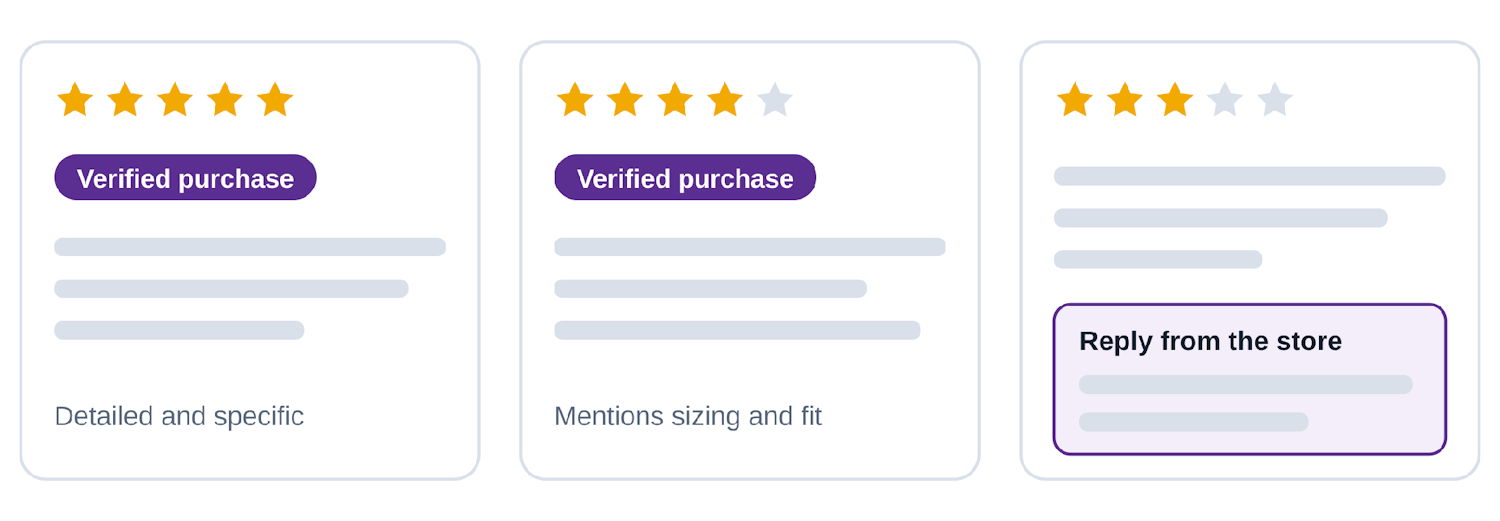
Reviews can also help merchants identify recurring issues. If several customers mention confusing instructions or an unexpected fit, the store has a signal that its product information or customer experience may need attention.
Reviews are not a guarantee of higher sales. Their value depends on their relevance, authenticity, visibility and the way a merchant responds to feedback. A page filled with vague or suspiciously similar comments may do less to build confidence than a smaller collection of specific, credible reviews.
What should merchants look for in a Shopify review app?
Shopify merchants can approach review collection in different ways, from using basic store functionality to adopting a dedicated review app. The right choice depends on the store’s size, product range, workflow and goals. When comparing Shopify review apps, it is useful to consider more than the appearance of the review widget.
Automated review requests
Asking every customer for feedback manually becomes difficult as order volume grows. A review app can help automate requests after a purchase, using an appropriate point in the post-purchase journey.
Merchants should look for control over request timing and messaging. A customer should have a reasonable opportunity to receive and use the product before being asked to review it. The workflow should also account for order status, cancellations, refunds and repeat purchases where relevant.
Verified-purchase context
Where a review platform can reliably associate feedback with an order, it may be able to identify reviews from verified purchasers. This context can help shoppers assess the feedback they are reading.
Verification should be explained clearly. It should not be presented as proof that every statement in a review is objectively true; it indicates that the platform has matched the reviewer to a qualifying purchase according to its verification process.
Flexible review displays
Reviews need to be easy to find. Common placements include a rating summary near the product title, a review section further down the product page, and review snippets on collection or landing pages.
A good review app should give merchants display options that fit their theme and storefront design. It should also work well on mobile, where a large share of ecommerce browsing takes place. If you add structured data, follow Google’s review snippet guidelines so that markup reflects what shoppers can actually see.
Moderation and customer support
Merchants need a way to manage spam, abusive content, personal information and reviews that violate clearly stated guidelines. Moderation should not become a way to suppress legitimate criticism.
A transparent process helps preserve trust: publish genuine feedback, apply consistent rules and respond constructively when customers raise concerns.
Reporting and integrations
Review collection is more useful when merchants can understand how the programme is performing. Useful measures may include requests sent, delivery and response rates, review volume and the products receiving feedback.
Integrations with email, customer service and loyalty tools can also reduce disconnected workflows. Merchants should check which integrations are available on the plan they intend to use.
Turning review collection into a repeatable process
A successful review programme is a customer journey, not just a widget installed on a product page.
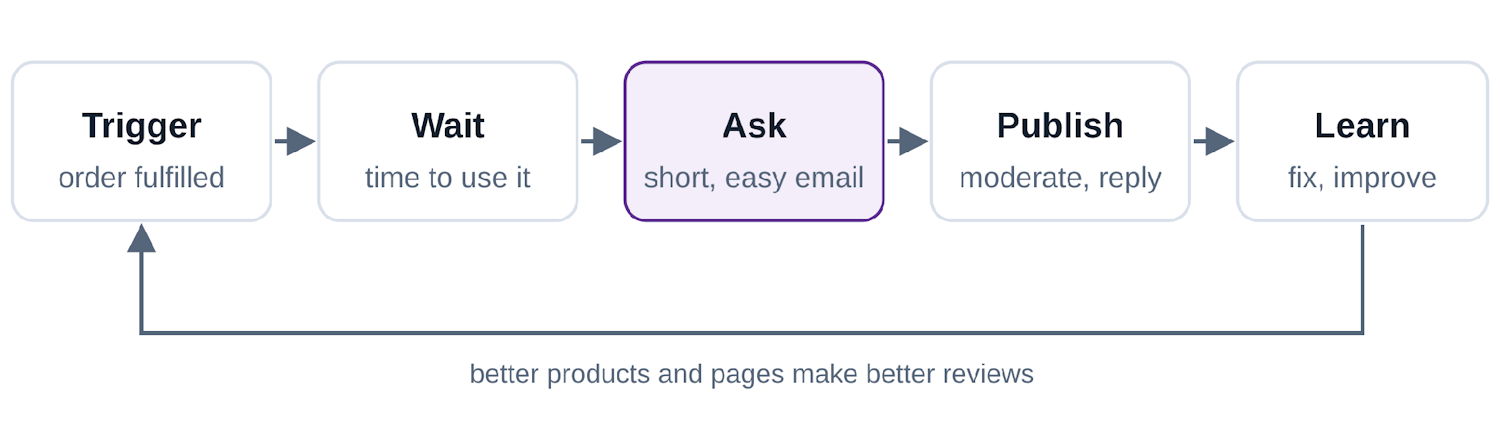
It begins with a clear trigger. For example, a store may decide to send a request after an order is fulfilled, then wait for a suitable period before sending the message. The ideal delay depends on the product: a customer may be able to review a simple accessory quickly, while a product that takes time to use may need a longer interval.
The message should be short, recognisable and easy to act on. It should explain why the customer is being contacted and provide a straightforward route to leave feedback. Merchants should avoid making the process unnecessarily complicated or asking for a positive rating.
The workflow also needs sensible exclusions. A cancelled order should not receive the same request as a completed purchase. A customer who has already submitted a review should not be repeatedly prompted for the same product and order. Stores should consider how returns, refunds and multiple items in one order affect the request.
Finally, merchants should monitor the process. If requests are being sent but few reviews are submitted, the issue could be timing, deliverability, message clarity or the effort required to respond. Testing one change at a time makes it easier to understand what is helping.
Using reviews to improve the customer experience
Reviews are a source of operational insight as well as marketing content. Merchants can look for patterns across products and over time. For example:
- Repeated questions about dimensions may indicate that product measurements need to be more prominent.
- Comments about packaging may reveal an opportunity to improve fulfilment.
- Positive feedback about a particular feature can help a merchant understand what differentiates a product.
- Reviews mentioning the same defect may point to a supplier or quality-control issue.
Responding to reviews is also important. A thoughtful response to criticism can show that a business takes customer concerns seriously. The response should address the issue rather than argue with the reviewer or disclose private order details.
Merchants should treat review feedback as one input among several. It can be valuable, but it may not represent every customer, particularly when only a small proportion of buyers leave reviews.
Connecting reviews with customer loyalty
Reviews and loyalty programmes serve different purposes, but they can complement one another. Reviews help shoppers make informed decisions before buying. Loyalty programmes aim to give existing customers reasons to engage with a store again.
Some ecommerce platforms bring review and loyalty capabilities together. This can make it easier for a merchant to manage customer engagement in one place, but the rules need to be transparent. If a store offers a reward for submitting feedback, the reward should not depend on whether the review is positive. Merchants should also make any incentive clear to readers and follow the rules that apply to their market and review platform.
The broader goal is to build a relationship with customers, not to manufacture favourable ratings. Helpful post-purchase communication, responsive support and products that meet expectations remain central to repeat business.
Choosing the right Shopify review app
There is no single best Shopify review app for every store. A small catalogue with a straightforward theme may need only basic review collection and display. A larger merchant may need automated workflows, moderation, analytics and integrations with other marketing tools.
Before choosing, merchants should:
- List the review features they genuinely need now.
- Check compatibility with their Shopify theme and other apps.
- Understand pricing limits, such as order volume or review-request allowances.
- Test the mobile storefront experience.
- Review the provider’s support, documentation and data-handling information.
- Confirm how reviews can be exported or retained if they change platforms.
It is also worth considering whether a combined reviews and loyalty solution would simplify the store’s workflow, or whether separate specialist tools would provide a better fit.
Platforms such as Cartnio are part of this wider category of ecommerce tools that help merchants manage customer reviews and loyalty activity. Merchants should assess any platform against their own requirements, available features and budget rather than choosing on the basis of a feature list alone.
Building trust takes more than collecting stars
For Shopify merchants, customer reviews can make product information more useful, reveal opportunities to improve the customer experience and help shoppers feel better informed. But the strongest programmes are built on genuine feedback and consistent follow-through.
An effective review process asks at an appropriate time, makes responding easy, treats positive and negative feedback fairly and uses what customers say to improve the store. The technology matters, but it works best when it supports a customer-first approach.
As ecommerce becomes more competitive, merchants do not need to treat reviews as an afterthought. They can make customer feedback a regular part of how they learn, communicate and build lasting relationships.

