

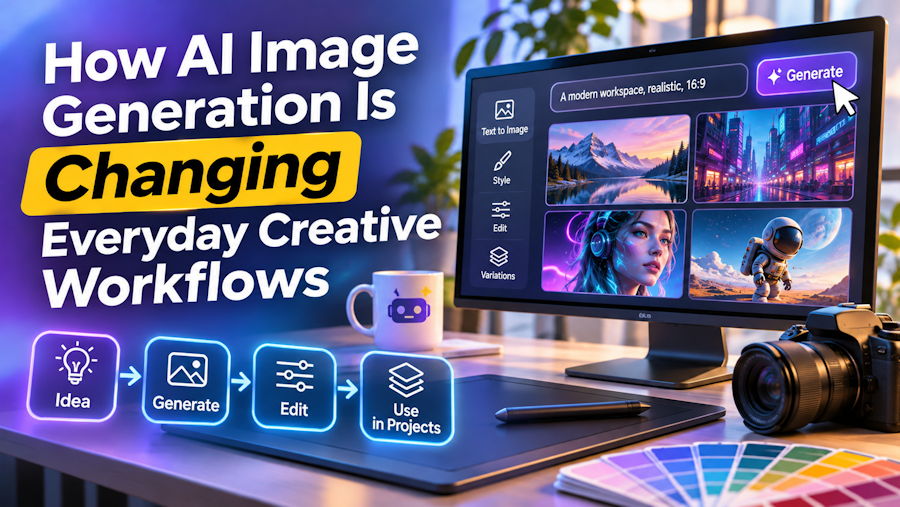
Creating professional-looking images once required specialized software, technical knowledge, and considerable editing time. Today, artificial intelligence is changing how individuals and businesses approach visual content. From generating original artwork to modifying existing photographs, AI-powered tools are making creative processes more accessible.
However, producing an attractive image involves more than entering a short description into an image generator. Creators must understand composition, lighting, visual consistency, and the purpose behind each design. The quality of the final result often depends on how clearly an idea is communicated to the technology.
As AI image generation continues to develop, learning how to combine creative judgment with intelligent editing tools can help professionals produce better visuals while maintaining an efficient workflow.
1. Understanding the Role of AI in Modern Image Creation
AI image generation allows users to transform written descriptions into visual content. Instead of manually drawing every element, creators can describe a subject, setting, artistic style, and desired composition.
This approach is particularly useful for people who need visual material but do not have advanced graphic design experience. Small businesses can explore product concepts, bloggers can develop supporting illustrations, and social media managers can experiment with different creative directions.
Modern AI tools also support image-to-image editing, allowing users to upload an existing photograph and request specific modifications. This creates opportunities beyond traditional text-to-image generation.
For example, a photographer might want to replace a distracting background while keeping the original subject recognizable. An online retailer could explore different product presentation styles without arranging an entirely new photoshoot.
2. Exploring Nano Banana for Practical Image Editing
One important development in AI-powered creativity is the growing ability to edit images through natural-language instructions. Rather than adjusting numerous settings manually, users can describe the changes they want and refine the result through additional prompts.
Tools built around nano banana provide an accessible approach to experimenting with AI image generation and editing. Creators can explore tasks such as background replacement, object removal, image enhancement, and artistic transformations.
This type of workflow is useful when the original photograph already contains valuable elements that should remain unchanged. Instead of recreating the entire composition, users can focus on modifying selected details.
For instance, a business owner could upload a product photograph and request a cleaner background or a different visual setting. Reviewing the generated result and making targeted adjustments helps maintain greater control over the final appearance.
3. Writing Better Prompts for More Accurate Results
The quality of an AI-generated image often depends on the clarity of the prompt. Vague instructions leave considerable room for interpretation, while specific descriptions provide better creative direction.
A useful prompt should explain four basic elements:
- Subject: Identify the person, object, or scene.
- Environment: Describe the background and surrounding details.
- Visual style: Specify whether the result should look realistic, cinematic, illustrative, or artistic.
- Composition: Explain the camera angle, lighting, and positioning.
For example, instead of writing "create a coffee product image," a more detailed instruction could describe a premium coffee package placed on a wooden table, natural morning light, a softly blurred kitchen background, and professional commercial photography.
It is equally important to make editing instructions precise. If only the background needs changing, explicitly mention that the product, proportions, and original colors should remain consistent.
Testing small prompt variations can also reveal which descriptions produce the most suitable results.
4. Using AI Images for Business and Digital Marketing
Visual content plays an important role in how businesses communicate with customers. Websites, advertisements, product listings, and social media campaigns all depend on images that attract attention and communicate information quickly.
AI-powered image creation offers businesses another way to develop visual concepts without relying on a complete traditional design process for every project.
E-commerce sellers can experiment with product backgrounds and promotional compositions. Content publishers can create illustrations that support their articles, while marketing teams can explore multiple creative directions before selecting a final design.
Platforms such as nano banana also bring image generation and editing workflows together, making it easier to experiment with reference images, different creative models, and visual variations.
Nevertheless, businesses should review generated images before publishing them. Product details, brand colors, text, and visual accuracy deserve particular attention. AI-generated visuals should support genuine product representation rather than create misleading expectations.
5. Maintaining Quality and Consistency in AI Workflows
Although AI tools can accelerate creative work, human review remains essential. Generated images may contain unusual details, inconsistent proportions, distorted text, or elements that do not match the original concept.
A reliable workflow should include generating an initial image, reviewing its composition, identifying specific improvements, and refining the result through focused instructions.
Consistency becomes especially important when producing multiple images for the same campaign. Using similar lighting descriptions, color palettes, visual styles, and reference materials can help create a recognizable appearance across different assets.
Creators should also consider image resolution, aspect ratios, and licensing requirements before using generated content commercially.
Keeping original photographs and project versions organized makes it easier to revisit earlier decisions and produce consistent variations when needed.
Conclusion
AI image generation is becoming an increasingly practical part of modern digital creativity. By combining text-to-image capabilities with intelligent photo editing, these tools allow individuals and businesses to explore visual ideas with greater flexibility.
However, successful results still depend on clear instructions, thoughtful creative decisions, and careful quality checks. Understanding how to write effective prompts and refine individual image elements can make a significant difference in the final output.
As AI technology continues to evolve, the most effective creative workflows will likely combine automated capabilities with human expertise. Rather than replacing creative judgment, AI can give people more opportunities to experiment, improve their visual communication, and develop professional-quality content for an increasingly image-focused digital world.

