

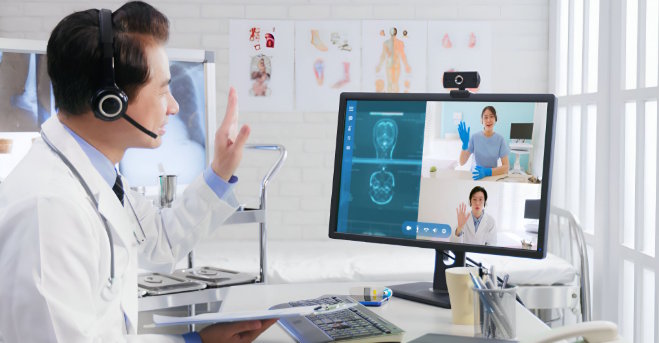
If you've been in the healthcare space for the past couple years, you've likely heard a ton of the patient care discussion has morphed from how often can we get people in to the clinic into how do we keep an eye on them without them having to come in each and every week?
Well, that's simply the definition of remote patient monitoring, and the firms that provide it are rapidly gaining a significant foot-hold, particularly because chronic disease management is one of the most costly issues in American healthcare.
What Are Remote Patient Monitoring Companies?
RPM companies, typically known as remote patient monitoring companies, are healthcare technology vendors that provide the providers with tools to collect health information from the patient out of the provider's office or hospital, in their own homes, while they are living their daily life.
Consider having blood pressure monitors that directly alert a nurse's dashboard, glucose monitors that keep a log of readings without requiring any extra effort from the patient, or pulse oximeters that alert to a drop in oxygen before the patient knows something is amiss.
How RPM Companies Work
Once you have an understanding of the basics, the set up is rather easy. A patient receives a device (which may be mailed to them or provided on-site during a clinic visit) that gathers readings throughout the day, and then transmits readings via a cell or Bluetooth link to a cloud-based platform. That information is fed into the RPM company's software, which sorts it out and notifies a care team automatically if something seems amiss, or allows a nurse or provider to easily review during a check-in call.
Services Offered by RPM Companies
Most RPM companies don't just leave you with a box of devices. They typically include a full bundle of services, the purchase and delivery of devices, patient enrollment, technical support, clinical dashboards, Medicare reimbursement billing support, and even a group of remote nurses performing the patient calls for the provider.
The quality of service will be different from company to company, so be sure to understand what's covered before you sign any contracts.
Benefits of Remote Patient Monitoring Companies
Improved Patient Outcomes
One of the things that actually gets me about RPM data is that patients who are monitored regularly tend to catch problems earlier, which, not surprisingly, leads to better outcomes over time. When a cardiologist can see that a patient's blood pressure has been creeping up for the past ten days, they can adjust the medication before that patient ends up in the ER. That's not a small thing.
Reduced Hospital Readmissions
Hospitals don't want to have to take in people, and patients don't want to be back in the hospital, so this is something to pay close attention to since it costs the hospital money. RPM firms have been having pretty solid performance here, especially for patients with heart failure, COPD and diabetes, chronic conditions where a bad week at home can quickly get out of hand without anyone realizing it.
Enhanced Chronic Care Management
Managing a chronic condition is not a once-a-quarter appointment. It's a daily, sometimes hourly thing for a lot of patients, and RPM companies give providers a way to stay plugged in without overwhelming their schedules. The combination of remote monitoring and regular care team touchpoints keeps patients engaged and gives providers a much clearer picture of what's actually happening between visits.
Key Features of Leading RPM Companies
Not all remote patient monitoring companies are built the same, and honestly, the gap between a good vendor and a bad one can have real consequences for both patients and the practices that rely on them.
HIPAA-Compliant Solutions
This one isn't optional. Any RPM platform handling patient health data has to be HIPAA-compliant, which means encrypted data transmission, proper access controls, audit logs, and a signed Business Associate Agreement with your practice. If a vendor is vague about any of this during the sales conversation, that's a red flag worth taking seriously.
EHR and Telehealth Integration
The last thing any busy clinical team needs is another separate system they have to log into. Good RPM companies build integrations with major EHR platforms like Epic, Cerner, and Athena so that patient monitoring data flows directly into the existing record. Same goes for telehealth — if a provider can jump from a patient's RPM dashboard into a video visit without switching platforms, that saves real time and reduces the chance of something getting missed.
AI-Based Monitoring and Alerts
The best RPM platforms don't just display data, they actually do something smart with it. AI-driven alert systems can detect patterns that a human reviewing hundreds of patient records might miss, like a subtle but consistent decline in a patient's oxygen levels that wouldn't trigger any single threshold alert but is clearly trending in a bad direction over two weeks. That kind of early warning is where a lot of the clinical value actually lives.
Real-Time Patient Data Tracking
There's a difference between a platform that updates once a day and one that streams data in real time, and for certain patient populations, post-surgical patients, people with unstable heart failure, that difference matters a lot. Real-time tracking means the care team can actually respond to something when it's happening, not 18 hours later.
How Remote Patient Monitoring Companies Help Healthcare Providers
Better Workflow Efficiency
A well-implemented RPM program actually makes a care team's job more manageable, not harder, which I know sounds counterintuitive given that it's adding data to review. But because the platform does the triage work of flagging which patients actually need attention that day, nurses and coordinators spend their time on real problems instead of doing wellness calls that turn out to be unnecessary.
Improved Patient Engagement
Having a monitoring device at home and a health care team that calls the patient at regular intervals typically leads to greater engagement with care, which often manifests itself in adherence to care plans. It's a little bit of a vicious cycle, if the patient knows that somebody is looking at their data they'll take their medicine more regularly, and regular medication translates to regular readings, which translates to fewer crises.
Increased Medicare Reimbursement Opportunities
This is the part that gets a lot of practice administrators interested. Medicare has reimbursement codes specifically for RPM services, CPT codes 99453, 99454, 99457, and 99458, and a well-run RPM program can generate meaningful additional revenue for a practice while simultaneously improving the care they're delivering. A good RPM company will help you understand the billing requirements and make sure you're documenting everything you need to qualify.
How to Choose the Best Remote Patient Monitoring Company
Scalability
Whether you're a solo practitioner or a health system, you're looking for a vendor with a platform that will scale with you. It's a completely different problem to start with 50 patients as opposed to 5,000.It's a different challenge to have 50 patients versus 5,000 and have the technology and operational support work the same way in both scenarios.
Technology and Device Support
Check which devices the platform is compatible with, and if they have been FDA-cleared. Inquire about the patient's willingness to bring in their own devices or if all devices need to be provided by the vendor. Also discover what happens if the patient's glucose monitor doesn't sync at 7pm on Friday, who does the fallout lie with?
Customer Support and Training
This is one of those things that can be a boring sales talk but really important for anyone who cares to do it. Getting an RPM program up and running is half change management, and half technology purchase, your staff is going to have questions, hit snags, and need help figuring things out.
Future Trends in Remote Patient Monitoring Companies
The RPM segment is hot these days. Today, wearable technology is becoming more sophisticated and less cumbersome, allowing for more patients to be monitored on a greater variety of conditions without them feeling it as a burden in their daily life. Machine learning is becoming increasingly effective at foreseeing crisis before it happens. But as Medicare rolls out more and more adjustments to its reimbursement structure for remote care, more providers will be making RPM a more financially viable option than it was five years ago.
Additionally, there is a trend toward connecting RPM data with more comprehensive population health management platforms, enabling health systems to leverage monitoring data not only for each patient but to also gain valuable insights into patterns in their entire patient population and proactively address issues at population level.
Conclusion
Remote patient monitoring firms are providing something that's virtually scarce to healthcare providers: a practical, scalable solution to connect with patients beyond the confines of the clinic, identify issues early, and do it in a way that Medicare will actually cover. It’s all about finding a vendor that has the technology, compliance and in-the-trenches support that makes that promise more than mumbo-jumbo in a complex care world.
When evaluating RPM companies for your practice and/or health system, identify the features that matter most to your patient population, ask hard questions about EHR integration and HIPAA compliance, and don’t skip the reference checks. It makes a difference when you have the right partner.

