

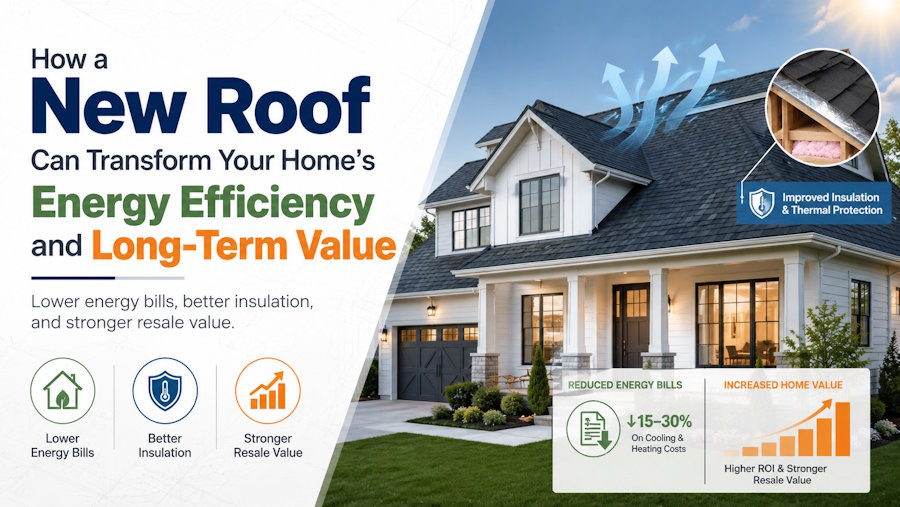
When most homeowners think about improving their property, they tend to focus on kitchens, bathrooms, or landscaping. Yet one of the most impactful upgrades a homeowner can make sits quietly overhead, protecting everything beneath it. A quality roof does far more than keep out the rain. It plays a central role in energy performance, indoor comfort, structural integrity, and the long-term financial value of a home. Understanding what a modern roofing investment can accomplish is the first step toward making a genuinely smart decision for your property.
The Connection Between Your Roof and Home Energy Performance
Most homeowners are surprised to learn just how significantly their roof affects monthly energy costs. Heat gain during summer and heat loss during winter are both closely tied to roofing materials, insulation quality, and ventilation design. An aging or poorly installed roof allows conditioned air to escape and outdoor temperatures to penetrate more easily, forcing heating and cooling systems to work harder and consume more energy.
Modern roofing systems are engineered with energy efficiency in mind. Reflective roofing materials, often called cool roofs, are designed to reflect more sunlight and absorb less heat than traditional dark shingles. According to ENERGY STAR, energy-efficient roofing products can lower roof surface temperatures significantly, reducing the amount of heat transferred into the living space below and helping homeowners cut cooling costs during peak summer months. When combined with proper attic insulation and ventilation, the cumulative savings over the life of a roof can be substantial.
Choosing the Right Roofing Materials for Your Climate
Not all roofing materials are created equal, and the best choice depends heavily on the local climate, architectural style, and budget. Asphalt shingles remain the most widely used roofing material in North America due to their balance of affordability, durability, and ease of installation. However, metal roofing has grown significantly in popularity because of its exceptional lifespan, resistance to extreme weather, and reflective properties that contribute to energy savings.
Clay and concrete tiles are preferred in warmer, drier climates because of their natural thermal mass and longevity. Slate, while among the most expensive options, can last well over a century with minimal maintenance. Wood shakes offer a natural aesthetic and reasonable insulation value, though they require more upkeep and may face restrictions in fire-prone areas. Each material carries its own set of performance characteristics, and working with knowledgeable roofers who understand local weather patterns and building codes is essential for making the right selection.
How a Quality Roof Protects Structural Integrity
Beyond energy efficiency and aesthetics, a well-maintained and properly installed roof is the primary defense against moisture intrusion, which is one of the most destructive forces a home can face. Water that finds its way past a compromised roof can cause wood rot, mold growth, damaged insulation, and even structural failure in extreme cases. These issues often develop slowly and out of sight, which means homeowners may not realize the extent of the damage until it has become costly to repair.
A high-quality roof installation addresses these risks through multiple layers of protection. Underlayment acts as a secondary moisture barrier beneath the primary roofing material. Flashing, which is typically made of metal, is installed around chimneys, skylights, vents, and valleys to direct water away from vulnerable joints. Proper drainage design ensures that water moves efficiently off the roof and away from the foundation. Together, these elements create a system that actively works to preserve the structural health of the entire home.
The Financial Return on a Roofing Investment
Homeowners often approach roofing projects with concern about upfront costs, but the financial picture becomes considerably more favorable when viewed through a long-term lens. A new roof consistently ranks among the home improvement projects with the strongest return on investment at resale. Real estate professionals frequently note that prospective buyers are more confident in a home with a newer roof, and properties with aging or visibly deteriorating roofs often face price negotiations or delays during the inspection process.
Beyond resale value, a new roof can also reduce homeowner's insurance premiums in some cases. Insurance providers recognize that modern roofing materials, particularly impact-resistant shingles, carry a lower risk profile than older materials. Some providers offer meaningful discounts for homes equipped with certified impact-resistant roofing, which can help offset the cost of the investment over time. When combined with energy savings and reduced maintenance expenses, the financial case for a timely roof replacement is often stronger than homeowners initially expect.
Working With Professionals to Get the Most From Your Roof
The quality of a roofing project is only as good as the professionals executing it. Even the most advanced materials will underperform if installed incorrectly. Improper nailing patterns, inadequate ventilation design, and shortcuts in flashing installation are among the most common causes of premature roofing failures. Selecting a qualified, licensed, and insured contractor is therefore just as important as selecting the right materials.
Homeowners should look for contractors who are certified by the manufacturers of the roofing products they install, as these certifications often come with enhanced warranty coverage that standard installations do not qualify for. Requesting references, reviewing past project portfolios, and verifying licensing and insurance credentials are all reasonable steps before signing any agreement. A reputable contractor will be transparent about the scope of work, provide a detailed written estimate, and explain the warranty terms clearly before any work begins.
It is also worth scheduling periodic roof inspections, ideally once or twice per year and after any major storm event. Catching minor issues early, such as a few displaced shingles or minor flashing separation, can prevent them from developing into far more expensive problems. Many contractors offer inspection services as part of an ongoing maintenance relationship, which can extend the functional life of a roof considerably beyond its standard warranty period.
A thoughtfully chosen and properly installed roof is one of the most valuable investments a homeowner can make. It delivers measurable improvements in energy efficiency, provides reliable protection against moisture and structural damage, and adds genuine financial value to the property. Rather than viewing roofing as a reactive expense to be delayed as long as possible, the most informed homeowners treat it as a proactive investment in the long-term health and performance of their home. With the right materials, the right professionals, and a commitment to regular maintenance, a quality roof will serve reliably for decades to come.

