

Introduction
Organizations today rely heavily on digital platforms to support communication, collaboration, customer service, and day-to-day operations. As technology evolves, businesses often need to migrate from outdated systems to more modern platforms that offer improved security, scalability, and functionality. While these transitions can deliver significant long-term benefits, they also introduce operational risks.
One of the biggest concerns during any platform transition is downtime. Even brief disruptions can impact employee productivity, customer experience, and business continuity. For companies handling large volumes of data, communications, and critical workflows, minimizing interruptions is essential.
This is why many organizations invest in carefully planned migration strategies. Professional migration specialists help businesses navigate complex transitions while maintaining system availability, reducing risk, and ensuring that operations continue smoothly throughout the process.
The Cost of Downtime During Platform Migrations
Downtime can have serious consequences regardless of industry. When systems become unavailable, employees may lose access to essential tools, communication channels can be disrupted, and customers may experience delays or service interruptions.
The financial impact of downtime often extends beyond immediate productivity losses. Businesses may face missed opportunities, delayed projects, reputational damage, and increased support costs. In highly regulated industries, disruptions can even create compliance challenges.
Platform migrations are particularly sensitive because they involve moving critical data, applications, and configurations from one environment to another. Without proper planning, organizations risk unexpected outages, data inconsistencies, or prolonged recovery periods.
Professional migration teams understand these risks and develop structured transition plans designed to minimize disruptions. Their expertise allows organizations to maintain continuity while modernizing their technology infrastructure and improving future performance.
Strategic Planning Reduces Migration Risks
Successful platform transitions begin long before data is moved. Comprehensive planning is one of the most effective ways to reduce downtime and avoid unexpected complications.
Migration specialists typically start by evaluating the existing environment, identifying dependencies, assessing data volumes, and documenting business-critical processes. This discovery phase helps uncover potential obstacles that could affect the transition.
Organizations that require specialized support often rely on experienced providers offering email migration services to ensure communication systems remain stable throughout the migration process. These services help organizations map existing environments, validate configurations, and create migration timelines that align with business requirements.
Detailed planning also enables teams to schedule migrations during low-activity periods, establish backup procedures, and create contingency plans. These proactive measures significantly reduce the likelihood of unexpected downtime and help maintain operational stability throughout the transition.
Expertise and Automation Improve Efficiency
Modern platform migrations often involve large volumes of data, multiple user groups, and complex technical requirements. Managing these tasks manually can increase the risk of errors and extend project timelines.
Professional migration teams leverage specialized tools, automation frameworks, and proven methodologies to streamline the process. Automation helps reduce repetitive tasks, improve accuracy, and accelerate data transfers without compromising integrity.
Experienced specialists can also identify potential issues before they become major problems. Whether addressing compatibility concerns, permission structures, or system dependencies, their technical knowledge allows them to resolve challenges efficiently.
Additionally, migration experts perform extensive testing throughout the project lifecycle. Validation checks, pilot migrations, and performance assessments help ensure that systems function correctly before full deployment. This level of preparation contributes significantly to reducing downtime and improving overall migration outcomes.
Maintaining Business Continuity Throughout the Transition
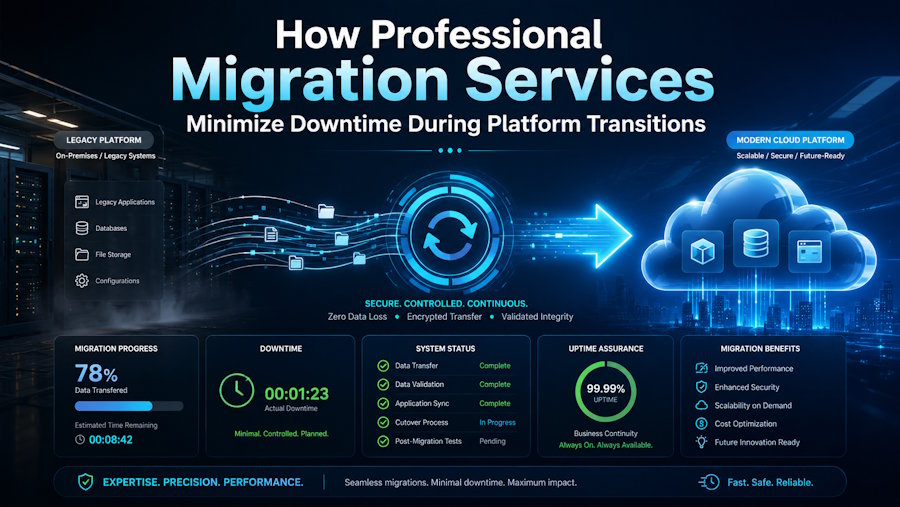
One of the primary goals of professional migration services is maintaining business continuity. Rather than approaching migrations as a single disruptive event, experienced teams often implement phased transition strategies.
Phased migrations allow portions of the environment to be migrated incrementally while existing systems remain operational. This approach minimizes disruption and provides opportunities to verify performance at each stage before proceeding further.
Communication also plays a critical role in business continuity. Professional migration teams keep stakeholders informed throughout the process, helping employees understand timelines, expectations, and any temporary adjustments that may be required.
Training and post-migration support further contribute to a seamless experience. By ensuring users are prepared for the new environment and have access to assistance when needed, organizations can maintain productivity while adapting to updated systems and workflows.
Long-Term Benefits Beyond Reduced Downtime
While minimizing downtime is a key objective, professional migration services deliver value that extends far beyond the transition period itself. Organizations often emerge from successful migrations with stronger infrastructure, enhanced security, and improved operational efficiency.
Modern platforms typically offer better scalability, allowing businesses to support future growth without major disruptions. Enhanced security features help protect sensitive information, while improved collaboration tools can increase employee productivity and communication effectiveness.
Professional migrations also provide opportunities to optimize system configurations, eliminate outdated processes, and improve overall technology management. These improvements can generate long-term returns that justify the investment in expert migration support.
As organizations continue to adopt cloud technologies and modern digital platforms, the importance of efficient migration strategies will only increase. Businesses that prioritize careful planning and expert execution are better positioned to achieve successful outcomes while minimizing operational risk.
Conclusion
Platform transitions are an essential part of modern business growth and digital transformation. However, without proper planning and execution, migrations can create costly disruptions that impact productivity, customer satisfaction, and business continuity.
Professional migration services help organizations navigate these complex projects with confidence. Through strategic planning, technical expertise, automation, testing, and phased implementation approaches, they significantly reduce the risk of downtime while ensuring data integrity and system reliability.
As technology environments become increasingly sophisticated, organizations must approach migrations as strategic initiatives rather than routine technical tasks. Investing in experienced migration support enables businesses to maintain operational stability while positioning themselves for future success.
Companies that prioritize well-managed transitions can take advantage of modern technologies with minimal disruption, creating a stronger foundation for long-term growth, innovation, and resilience in an evolving digital landscape.

