

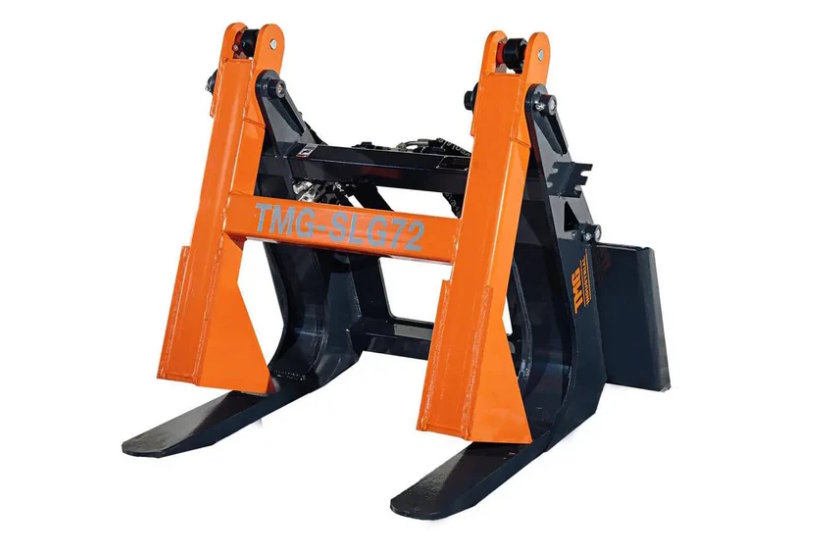
Across rural Australia, from timber blocks to broadacre farms and fire-prone bushland, moving heavy logs and tangled debris by hand is slow, dangerous work. A skid steer loader has become a mainstay on many properties, but the attachment fitted to it determines what the machine can actually do.
A skid steer log grapple turns an ordinary loader into a powerful handling tool, gripping, lifting, and carrying material that would otherwise take a crew and a great deal of time to shift.
How a Skid Steer Log Grapple Works
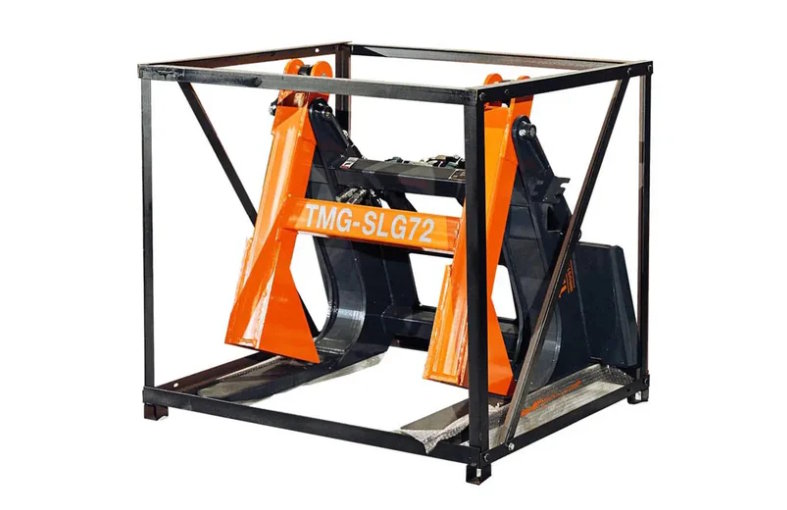
A log grapple is a set of hydraulically driven jaws mounted on the front of a skid steer. The loader’s hydraulic system supplies pressurised fluid to a cylinder that opens and closes the claw, allowing the operator to clamp securely onto a log, branch pile, or bundle of debris.
Because the jaws apply real clamping force rather than simply scooping, the grapple holds awkward and uneven loads firmly. This is exactly where a standard bucket falls short. The wide claw opening allows the attachment to take a large bite, while the closed grip keeps the load stable during transport.
The Importance of Mount Compatibility and Grapple Capacity
Two specifications shape how useful a grapple will be: mount compatibility and capacity.
A universal mounting plate helps ensure the attachment fits the great majority of skid steer loaders, so the tool is not tied to a single machine. Grapple capacity describes how much material the jaws can safely hold and lift. Matching that capacity, along with the loader’s own lift rating, to the work is essential.
A few principles guide a safe and practical match:
- Keep loads within both the grapple’s and the loader’s rated limits.
- Carry heavy material low to the ground to protect machine stability.
- Spread bulky, light debris across the jaws rather than overloading one side.
- Check that the attachment, loader, and hydraulic system are suited to the same type of work.
Hydraulic Power and Long-Term Reliability
The strength of a grapple comes from hydraulics, and operating pressure determines how firmly the jaws can grip. Clean, well-maintained hydraulic connections are vital because a leak can weaken performance, create a slip hazard, and cause an environmental mess.
Inspecting hoses, couplers, and the hydraulic cylinder before each session helps keep the attachment working dependably. In the dust and heat of the Australian climate, keeping grit out of the hydraulic system is one of the most valuable habits an operator can form.
Safe Operation When Handling Logs and Debris
Handling logs is hazardous, and a grapple is a tool for managing that risk rather than ignoring it. Operators should keep bystanders well clear of the working area because a rolling log or dropped load can cause severe injury.
Loads should be gripped securely before lifting, carried low and balanced, and never swung over people. Working on stable ground and at a measured pace, rather than rushing, helps prevent tip-overs and dropped loads, which are among the most common hazards in this kind of work.
Advantages and Limitations of a Skid Steer Log Grapple
A skid steer log grapple offers clear benefits, but it also comes with practical limits that operators should respect.
Key Advantages
- It grips and moves heavy, awkward material more safely and quickly.
- It turns a skid steer loader into a versatile material-handling machine.
- It reduces manual labour when clearing logs, branches, and storm debris.
- It improves control over uneven loads compared with a standard bucket.
Important Limitations
- It depends on the loader’s hydraulic power and lift capacity.
- It requires careful load management to avoid instability.
- It works best on clear, stable ground.
- It still requires trained, cautious operation around heavy timber.
Matching the Grapple to the Machine
Getting the best from a grapple depends on matching it carefully to the loader that carries it. A skid steer has its own rated lift and tipping capacity. Fitting a grapple whose loads exceed that rating makes the whole machine unstable, no matter how strong the attachment itself may be.
The hydraulic flow and pressure supplied by the loader also affect how firmly and quickly the jaws can work. For this reason, the attachment and machine should be selected as a pair rather than treated as separate purchases.
Beyond capacity, operator technique plays a major role in productivity and safety. Taking measured bites, carrying loads low and balanced, and working at a steady pace all help keep the machine stable. A grapple that is well matched to its loader, and used with patience, turns heavy and awkward material handling into a controlled, efficient task.
Industry Outlook
As Australian landowners face growing pressure to manage timber, clear debris, and reduce bushfire fuel loads, demand for efficient and safe material-handling tools continues to rise.
The skid steer log grapple meets that need by extending the reach, grip, and power of a machine many properties already own. Those who fit a well-built log grapple from an established industrial equipment supplier gain a dependable attachment that can handle heavy work season after season while helping keep operators safer on the ground.
Final Thoughts
A skid steer log grapple is one of the most practical attachments for rural properties, timber handling, land clearing, and bushfire preparation. It gives operators greater control over logs and debris, reduces manual handling, and helps make demanding outdoor work safer and more efficient.
The best results come from choosing the right grapple for the machine, respecting capacity limits, maintaining the hydraulic system, and operating with care. When those basics are in place, a log grapple becomes a reliable tool for handling some of the toughest jobs on the property.

