

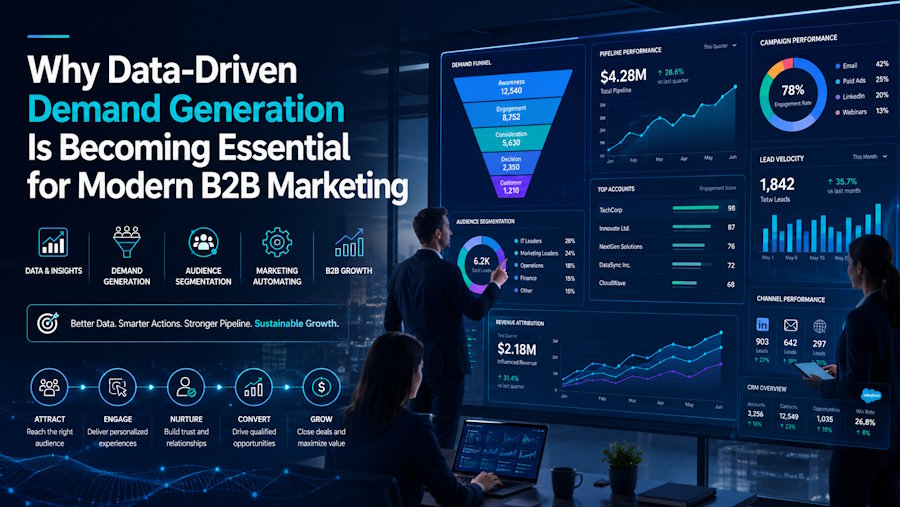
The digital landscape has transformed the way businesses attract, engage and convert potential customers. Traditional marketing techniques that once relied heavily on broad advertising and outbound communication are increasingly being replaced by strategies built around measurable engagement and personalized customer experiences. As buying journeys become more complex, organizations must understand not only who their audience is but also how prospects interact with content throughout every stage of the decision-making process.
For B2B organizations, this shift has made demand generation a strategic priority rather than a marketing trend. Modern buyers typically conduct extensive research before speaking with a sales representative. They compare solutions, consume educational content and evaluate multiple vendors across a variety of digital channels. Businesses that fail to support this self-directed journey often struggle to generate qualified opportunities despite significant marketing investment.
Technology has played a central role in this evolution. Marketing platforms, customer relationship management systems and analytics tools now provide detailed insights into audience behavior, allowing organizations to replace assumptions with evidence. Rather than focusing solely on lead volume, successful teams increasingly prioritize engagement quality, customer intent and long-term relationship building.
Why the Right Technology Supports Better Marketing Outcomes
Building a successful demand generation strategy requires more than publishing content or running digital advertising campaigns. Marketing teams need technology that helps them understand audience behavior, deliver relevant experiences and measure engagement across multiple touchpoints. Selecting appropriate demand generation software enables organizations to capture meaningful engagement data, support personalized communication and create more informed marketing strategies based on measurable customer interactions rather than assumptions.
As customer expectations continue to evolve, organizations must deliver consistent experiences across websites, webinars, email campaigns and virtual events. Modern marketing platforms help connect these interactions, allowing businesses to understand how prospects progress through the buying journey instead of viewing each activity in isolation.
This connected approach also strengthens collaboration between marketing and sales teams. Shared engagement insights enable both departments to identify qualified prospects more accurately while improving communication throughout the customer acquisition process.
Understanding the Modern Buyer's Journey
The traditional sales funnel has become increasingly complex. Buyers rarely move directly from discovering a product to making a purchasing decision. Instead, they often spend weeks or months researching solutions, comparing providers and evaluating educational resources before contacting a business.
This behavioral shift has increased the importance of content that informs rather than simply promotes. Articles, webinars, technical documentation, product demonstrations and industry research all contribute to building trust with prospective customers. Organizations that consistently provide useful information position themselves as credible sources of expertise while supporting buyers throughout their decision-making process.
Every interaction provides valuable information about customer interests. Downloading a technical guide may indicate different priorities from attending a product demonstration or participating in a webinar. Understanding these behavioral signals allows businesses to deliver more relevant follow-up communication while respecting the pace at which individual prospects prefer to make decisions.
Rather than relying on generic campaigns, marketers can create experiences that reflect genuine customer needs, increasing both engagement and conversion potential.
Why Data Matters More Than Ever
Marketing decisions have become increasingly data-driven. Businesses no longer need to rely solely on intuition when evaluating campaign performance because modern analytics provide detailed insight into customer behavior across multiple digital channels.
Understanding which content attracts attention, which events encourage participation and which communication channels generate meaningful engagement helps organizations allocate resources more effectively. Instead of investing equally across every marketing activity, businesses can focus on initiatives that consistently deliver measurable results.
Data also improves forecasting and strategic planning. Historical performance enables teams to identify seasonal trends, evaluate campaign effectiveness and predict future outcomes with greater confidence. These insights support continuous improvement while reducing uncertainty during marketing planning.
Importantly, meaningful analytics extend beyond basic website traffic or email open rates. Engagement quality, content consumption, repeat interactions and customer intent often provide a more accurate picture of marketing effectiveness than isolated performance metrics.
Creating Personalized Customer Experiences
Personalization has become one of the defining characteristics of successful digital marketing. Modern audiences expect communication that reflects their interests, industry challenges and stage within the buying journey rather than generic promotional messaging.
Achieving meaningful personalization requires a combination of technology, quality data and thoughtful strategy. Marketing teams must understand not only who their audiences are but also how they engage with different types of content over time.
When organizations recognize behavioral patterns, they can recommend relevant resources, invite prospects to appropriate events and deliver follow-up communication that aligns with demonstrated interests. This creates a more valuable customer experience while increasing the likelihood of continued engagement.
Personalization also supports stronger long-term relationships. Prospects are more likely to trust organizations that consistently provide relevant information rather than overwhelming them with untargeted marketing campaigns.
Strengthening Collaboration Between Marketing and Sales
Successful demand generation depends on effective collaboration between marketing and sales teams. Although these departments often pursue shared objectives, they have historically relied on different metrics and priorities, creating unnecessary disconnects throughout the customer acquisition process.
Modern engagement platforms help bridge this gap by providing shared visibility into customer interactions. Sales representatives gain valuable insight into the content prospects have consumed, events they have attended and topics that have attracted their attention before initial conversations take place.
This context enables more informed discussions while reducing the likelihood of repetitive or irrelevant communication. Prospects benefit because conversations become more personalized and aligned with their existing interests rather than beginning from the earliest stages of discovery.
Marketing teams also benefit from feedback provided by sales professionals. Understanding which campaigns generate genuinely qualified opportunities allows marketers to refine future strategies while improving alignment between business objectives and campaign performance.
Measuring Success Beyond Lead Volume
Many organizations once evaluated marketing success primarily through the number of leads generated. While lead volume remains important, modern B2B marketing increasingly recognizes that quality often matters more than quantity.
Large numbers of unqualified prospects rarely contribute meaningful business value. Instead, organizations are focusing on engagement indicators that reflect genuine purchasing intent. Repeat website visits, participation in educational events, content downloads and meaningful interactions frequently provide stronger evidence of future buying decisions than simple form submissions.
This shift encourages businesses to prioritize long-term relationship building rather than pursuing short-term marketing metrics. Educational content, thought leadership and interactive experiences help nurture prospects over time while establishing credibility within competitive markets.
As measurement capabilities continue to improve, organizations gain greater confidence in evaluating which activities contribute most effectively to sustainable business growth.
Looking Ahead
Digital marketing continues to evolve alongside changing customer expectations and advancing technology. Organizations that embrace data-driven decision making, meaningful personalization, and integrated engagement strategies are better positioned to compete in increasingly complex B2B markets.
Technology alone cannot guarantee marketing success, but it provides the foundation for understanding customer behavior and delivering experiences that genuinely support buyer needs. Businesses that combine reliable insights with valuable content and thoughtful communication are more likely to establish lasting relationships with prospective customers.
Demand generation is no longer simply about attracting attention. It is about creating relevant, educational experiences that build trust throughout every stage of the customer journey. By focusing on engagement quality rather than isolated marketing metrics, organizations can develop stronger relationships, improve collaboration between departments and achieve more sustainable long-term growth.
As digital channels continue to expand, the ability to understand audience behavior and respond with timely, relevant communication will become an increasingly important competitive advantage. Businesses that invest in strategies centered on customer value rather than volume alone will be well placed to adapt to future changes while continuing to generate meaningful business opportunities.

