

The laser engraving business model works because the math is straightforward. Low material cost. High perceived value on personalized products. Repeat customers. And machines that pay themselves off in months rather than years.
This guide covers the practical steps to launch, from picking the right machine to landing the first paying clients. OMTech offers a full range of CO2 and fiber laser systems built for small business production.
Why Laser Engraving Is a Strong Business Model in 2026
- Personalized products command 3x to 5x the price of identical non-personalized items
- Low material cost per unit means strong margins even at modest order volumes
- Etsy, local markets, and corporate gifting all provide accessible sales channels
- No specialized skills required to start — most operators are productive within one week
- Equipment pays for itself through eliminated outsourcing spend or new product revenue
Step 1: Choose Your Product Focus
Trying to sell everything at launch is the single most common mistake new laser business owners make. Pick one or two categories, produce them consistently, and expand only after proving demand.
Product categories with the strongest margins and fastest demand validation:
- Personalized cutting boards: Maple or walnut blanks at $10 to $14. Finished product sells for $50 to $80. High demand year-round with peak periods around major holidays.
- Engraved tumblers: Blank tumblers at $6 to $12. Personalized product sells for $25 to $45. Requires a rotary attachment but high Etsy search volume.
- Custom wooden signs: MDF or plywood blanks under $8. Signs sell for $35 to $75. Address plaques, welcome signs, and family name pieces are consistent sellers.
- Corporate gifts and awards: B2B clients place larger orders at higher price points. Acrylic awards, branded wood pieces, and engraved hardware all work well.
Step 2: Select the Right Machine
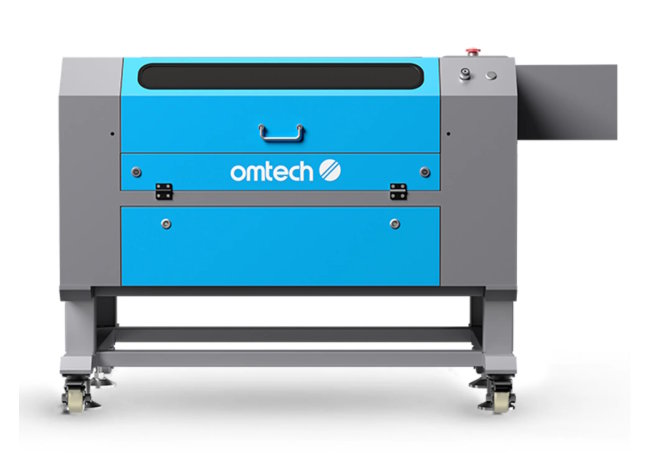
For most laser engraving businesses, a CO2 laser is the correct starting machine. CO2 handles wood, acrylic, leather, glass, and fabric. Those five materials cover the vast majority of sellable personalized products. Browse laser engraving business tips to see CO2 options built for small business production.
What to look for in a business-grade CO2 laser:
- Power: 60W to 80W minimum for production use. 40W machines limit material thickness and slow down batch production
- Work area: At least 20 by 24 inches to handle standard cutting boards and sign blanks without repositioning
- Enclosure: Enclosed design manages fumes at source. Essential in home and small workshop environments
- Software compatibility: LightBurn support enables professional workflows including batch variable text for personalization
- Autofocus: Saves setup time on varied material thicknesses. Pays back the extra cost quickly in production use
Step 3: Budget for the Full Setup
Machine price is not the total cost. Plan for these from the start:
- Ventilation fan and ducting: $150 to $400. Non-negotiable for any production environment
- Water chiller for CO2: $200 to $500. Protects tube during long production sessions
- Rotary attachment: $80 to $200. Required for tumblers and all cylindrical work
- Honeycomb table: $50 to $150. Improves cut quality and reduces backburn on flat material
- Initial blank inventory: $200 to $500 depending on product mix
- Packaging materials: $100 to $200 for boxes, tissue, and branded packaging
Total realistic startup cost for a small production setup: $3,500 to $6,500. Businesses that budget for the full number avoid the painful experience of buying a machine and discovering it is not fully operational without further purchases.
Step 4: Build Your Sales Channels
Etsy
Etsy is the strongest initial channel for personalized laser products. The platform audience is actively looking for handmade and customized items. Product photography is the biggest driver of conversion. Clean, well-lit images showing engraving detail on a neutral background outperform lifestyle shots for most laser products.
- List in-stock designs with personalization options rather than custom-order-only listings to capture impulse buyers
- Research existing top sellers in your category to understand pricing, photography style, and product range
- Aim for 15 to 20 listings at launch to give the shop enough depth to appear credible to new visitors
Local and Direct Channels
- Craft fairs and farmers markets provide immediate cash sales and direct buyer feedback
- Corporate gifting outreach to local businesses generates higher-value repeat orders
- Real estate agent partnerships for personalized closing gifts are a reliable B2B revenue stream
- Wedding vendor relationships create seasonal bulk orders for personalized wedding gifts
Step 5: Price for Profitability
Underpricing is the most common financial error in laser businesses. Calculate the real cost per unit:
- Blank material cost
- Consumable supplies (packaging, tape, tissue)
- Platform fees (Etsy charges around 6.5% plus listing and payment processing fees)
- Shipping materials and time
- Your time at a rate that reflects the skill and equipment involved
A cutting board with a $12 blank that takes 20 minutes to engrave, package, and list should not sell for $25. Most successful laser sellers price their time at $25 to $50 per hour and build that into the product price.
What Results to Expect in Year One
Realistic first-year outcomes for sellers who execute consistently:
- Month 1 to 2: Learning the machine, developing settings, building initial product listings
- Month 3 to 4: First consistent Etsy sales, first repeat customers, identifying which products sell
- Month 6: Most sellers in this category reach $500 to $1,000 per month with consistent effort
- Month 12: Sellers who focused on two to three proven products typically reach $1,000 to $2,500 per month
The laser is a tool. The business part is understanding your customer, pricing correctly, and showing up consistently.

