

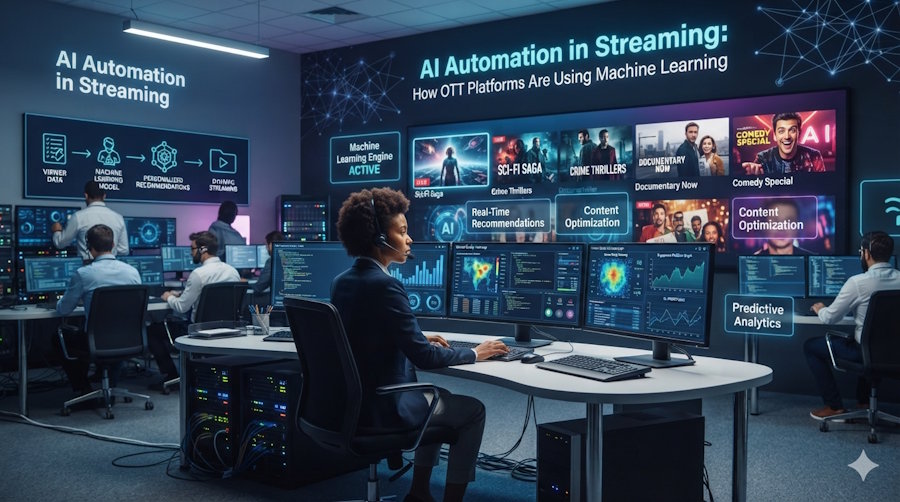
The streaming industry has evolved far beyond simply delivering movies and TV shows over the internet. Today, Over-the-Top (OTT) platforms rely heavily on artificial intelligence (AI) and machine learning (ML) to create personalized, efficient, and engaging viewing experiences. From recommending the next binge-worthy series to improving video quality and preventing fraud, AI automation has become the backbone of modern streaming services.
As competition among streaming platforms continues to grow, companies are investing in intelligent technologies that can better understand user behavior, optimize content delivery, and streamline operations. Machine learning enables OTT providers to analyze enormous amounts of data in real time, allowing them to make smarter decisions while improving customer satisfaction.
In this article, we'll explore how AI automation is transforming the OTT landscape and why machine learning is becoming essential for the future of streaming.
Understanding AI and Machine Learning in OTT
Artificial intelligence refers to computer systems that perform tasks typically requiring human intelligence, such as recognizing patterns, making decisions, and understanding user preferences. Machine learning, a subset of AI, allows systems to learn from data without being explicitly programmed for every scenario.
For OTT platforms, this means software can continuously analyze viewing habits, device usage, search history, and engagement patterns to improve the streaming experience automatically. Instead of relying on static algorithms, machine learning models evolve over time, becoming more accurate as they process additional user data.
This continuous learning helps platforms deliver highly personalized experiences while improving operational efficiency behind the scenes. You can stream Hulu in France or Hulu in Germany.
Personalized Content Recommendations
Perhaps the most recognizable application of AI automation in streaming is personalized recommendations. Every time a user watches a movie, pauses a series, rates a show, or searches for content, the platform collects valuable behavioral data.
Machine learning algorithms analyze factors such as:
- Viewing history
- Watch time
- Preferred genres
- Time of day
- Device preferences
- Language settings
- Search behavior
- Viewing completion rates
Using this information, OTT platforms generate recommendations tailored specifically to each viewer. Rather than displaying the same homepage to every subscriber, AI creates unique content suggestions that increase engagement and encourage longer viewing sessions.
As the algorithms continue learning, recommendations become increasingly accurate and relevant.
Smarter Search and Content Discovery
Finding the right content has become easier thanks to AI-powered search systems. Instead of requiring users to type exact titles, modern OTT platforms understand natural language, partial searches, actor names, genres, and even moods.
For example, a viewer searching for "lighthearted family comedy" or "action movies with space adventures" can receive relevant recommendations without knowing specific titles.
Machine learning also improves autocomplete suggestions and corrects spelling mistakes, making content discovery faster and more intuitive.
Adaptive Streaming Quality
One of the biggest frustrations for viewers is buffering. AI automation helps reduce interruptions by optimizing video delivery based on network conditions and device capabilities.
Machine learning continuously monitors factors such as:
- Internet speed
- Network congestion
- Device performance
- Screen resolution
- Available bandwidth
Using this data, streaming platforms automatically adjust video quality in real time. If internet speeds decrease, the system temporarily lowers the resolution to prevent buffering. When bandwidth improves, higher-quality playback resumes seamlessly.
This adaptive streaming technology ensures a smoother viewing experience across different devices and internet connections.
AI-Powered Content Tagging
Managing thousands of movies and TV shows requires detailed organization. Traditionally, content metadata was added manually, a time-consuming and expensive process.
Today, AI can automatically analyze video and audio to generate detailed metadata, including:
- Actors and characters
- Objects appearing on screen
- Spoken dialogue
- Scene locations
- Music identification
- Emotional tone
- Genres and themes
Automated tagging improves search accuracy and enables better content recommendations while significantly reducing manual workload.
Predicting Viewer Behavior
Machine learning enables OTT platforms to predict what subscribers are likely to watch next. By recognizing viewing patterns across millions of users, AI identifies trends before they become obvious.
Predictive analytics helps platforms answer questions such as:
- Which new shows are likely to become popular?
- Which subscribers may cancel their subscriptions?
- What time are users most active?
- Which genres are gaining popularity?
- Which promotional campaigns are most effective?
These insights allow streaming companies to make smarter business decisions while improving customer retention.
Intelligent Advertising
Advertising-supported streaming services benefit significantly from AI automation.
Instead of showing identical advertisements to every viewer, machine learning analyzes audience interests and demographics to deliver more relevant ads.
AI considers factors such as:
- Viewing preferences
- Geographic location
- Device type
- Viewing time
- User engagement
- Content categories
More targeted advertising increases campaign effectiveness while creating a less intrusive viewing experience.
Improving Customer Support
AI-powered chatbots and virtual assistants have become common across many streaming platforms.
Instead of waiting for human support agents, users can instantly receive assistance with:
- Login issues
- Subscription management
- Playback errors
- Device setup
- Payment questions
- Account recovery
Natural language processing allows these virtual assistants to understand user questions and provide accurate responses around the clock. More complex issues can then be transferred to human representatives when necessary.
Detecting Fraud and Account Abuse
Account sharing, credential theft, and fraudulent subscriptions present significant challenges for streaming companies.
Machine learning helps detect unusual activity by analyzing:
- Login locations
- Device changes
- Viewing patterns
- Simultaneous streams
- Payment behavior
If suspicious activity is detected, AI systems can trigger additional security measures such as identity verification or password resets. This proactive approach helps protect both users and streaming providers.
Optimizing Content Delivery Networks
Streaming millions of hours of video every day requires highly efficient infrastructure. AI plays an important role in optimizing Content Delivery Networks (CDNs), which distribute media files across global servers.
Machine learning predicts viewing demand based on historical trends, regional preferences, and upcoming content releases. Popular titles can be cached closer to users before demand spikes, reducing server load and improving playback performance.
This intelligent resource management helps platforms maintain reliability during major premieres and live events.
Supporting Content Production Decisions
AI automation isn't limited to content delivery—it also influences content creation.
Streaming companies analyze viewing statistics, audience demographics, and engagement metrics to determine which genres, themes, and storylines perform best.
Machine learning assists executives by identifying:
- Emerging audience interests
- Regional viewing preferences
- Successful cast combinations
- Popular episode lengths
- Seasonal viewing trends
These insights help guide investment decisions for original programming while reducing production risks.
Challenges of AI in Streaming
Despite its many benefits, AI automation also presents challenges.
Protecting user privacy remains a top priority, as machine learning depends on collecting and analyzing large volumes of behavioral data. Streaming companies must handle this information responsibly while complying with data protection regulations.
Additionally, recommendation algorithms can sometimes create "filter bubbles," repeatedly suggesting similar content while limiting exposure to diverse genres and creators.
Maintaining transparency, fairness, and ethical AI practices will remain essential as automation becomes more sophisticated.
The Future of AI Automation in OTT
The future of streaming will become even more intelligent as AI technologies continue advancing.
Emerging innovations include:
- Hyper-personalized homepages
- AI-generated trailers
- Automatic multilingual dubbing
- Real-time subtitle translation
- Interactive storytelling
- Voice-controlled navigation
- Predictive content recommendations
- Enhanced accessibility features
As generative AI and advanced machine learning models mature, OTT platforms will deliver increasingly immersive and customized entertainment experiences.
Conclusion
Artificial intelligence and machine learning have transformed OTT streaming from a simple content delivery system into a highly personalized digital entertainment ecosystem. AI automation enhances nearly every aspect of the viewer experience, including content recommendations, search functionality, adaptive streaming, advertising, customer support, fraud detection, and infrastructure optimization.
For streaming providers, machine learning improves operational efficiency, reduces costs, and enables smarter business decisions. For viewers, it creates faster, more engaging, and highly personalized entertainment experiences across every device.
As AI technology continues to evolve, OTT platforms will become even more adaptive, intuitive, and user-centric, shaping the future of digital entertainment for audiences around the world.

