

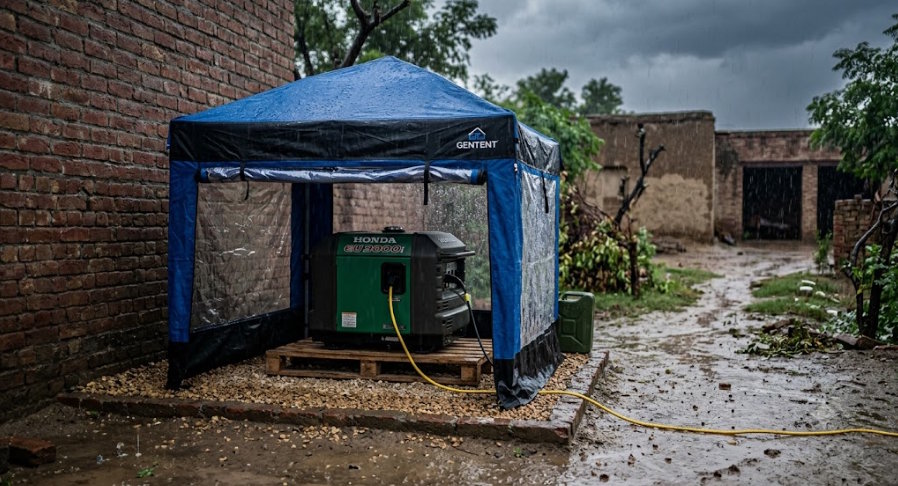
Start With the Right Safety Plan
Protecting your generator from rain starts with one rule: keep the unit outside while shielding it from direct water exposure. A generator produces electricity, heat, and exhaust simultaneously, so the setup must control all three risks.
Do not place it under a porch, inside a garage, or near open doors. The goal is to block water without trapping heat or fumes. Before setup, read the manual, check the surface, inspect cords, and plan where the exhaust will point.
This matters during power outages, when people often rush and make unsafe choices. A few minutes of planning can prevent shock, fire, equipment damage, and fumes near living areas.
Can You Run It in Rain?
“Is it okay to run a generator in the rain?” is a common question, and the safe answer is no unless the unit has proper protection. Water can reach outlets, wiring, switches, and engine parts. That can create shock risks, short circuits, corrosion, and fuel problems.
You can run a generator only when the setup keeps rain away while still allowing airflow. A portable generator also needs a stable, raised base so water does not pool under it.
For homes that often rely on backup power, a licensed expert can help design safer long-term options. A Bergen County NJ electrician who works with standby generators can also assess placement, load needs, and code requirements before storm season.
Choose a Safe Rain Cover
A generator cover for rain while running must be different from a storage cover. A storage cover can trap heat, block exhaust, and create fire risks. A running cover should protect outlets and engine parts while leaving enough open space for cooling.
The best protection for your generator from rain depends on the model, location, and storm exposure. Some covers attach to the frame. Others use a tent-like structure. Generator tents can work well when they fit correctly and do not block airflow.
Look for these features:
- Open sides for cooling and exhaust flow
- Strong frame attachment
- Water-shedding top design
- Access to outlets and controls
- Fit for your exact generator style
Compare Common Protection Options
Not every shelter works the same. Some options protect well but need careful setup. Others seem useful but can increase danger in wet conditions.
|
Option |
Best Use |
|
Running Cover |
Regular storm use with airflow and outlet access |
|
Open Canopy |
Light rain when sides stay fully open |
|
DIY Roof Shelter |
Fixed outdoor area with clear exhaust paths |
|
Loose Tarp |
Not ideal because it can sag, melt, or block vents |
|
Closed Shed |
Unsafe during operation without engineered venting |
A simple roof can help, but the area must stay open on all sides. Avoid anything that turns the setup into an enclosed space. Carbon monoxide can build up quickly, even when a door or window appears to be open.
Set It Up Correctly Outside
Safe placement matters as much as the cover. Keep the machine on a firm, level, raised surface. A concrete pad, treated platform, or stable generator stand can help keep the generator dry when rain collects on the ground.
Place the unit far from windows, vents, and doors. Point the exhaust away from the home. Leave clear space on all sides so the engine can cool. Proper ventilation protects the machine and reduces health risks.
Use these safety tips:
- Use outdoor-rated extension cords
- Keep plugs off the ground
- Inspect cords for damage
- Keep fuel containers away from heat
- Shut the unit off before refueling
- Never touch outlets with wet hands
This setup helps when running your generator during wet or changing weather conditions.
Protect It During Storms
Heavy rain and strong wind can push water into areas that light rain may not reach. Before a storm arrives, secure the cover, check the base, and remove loose objects nearby. Wind can shift tarps, canopies, and panels into hot parts or exhaust areas.
If snow is possible, clear the air intake and exhaust areas often. Snow can pack around the engine or block airflow. That can cause shutdowns, overheating, or damage.
Run a generator only when you can monitor it. If the storm becomes too severe, turn it off and wait until conditions improve. Protecting your generator is not just about keeping water away. It is also about keeping airflow open and the surrounding area clear.
Final Safety Checklist
Generator safety comes down to balance: block rain, avoid fumes, and keep the engine cool. The safest setup allows generator use in the rain only with a rated cover or open shelter that protects the top and electrical areas.
Before each use, confirm that the unit is outside, dry, elevated, and away from living spaces. Check the cords, cover, exhaust direction, and fuel level. Never operate it indoors, under a closed shelter, or beside an open window.
With the right setup, your generator can support your home during storms without creating unnecessary risks. Simple choices make the biggest difference: keep water out, keep air moving, and keep people away from exhaust.

