

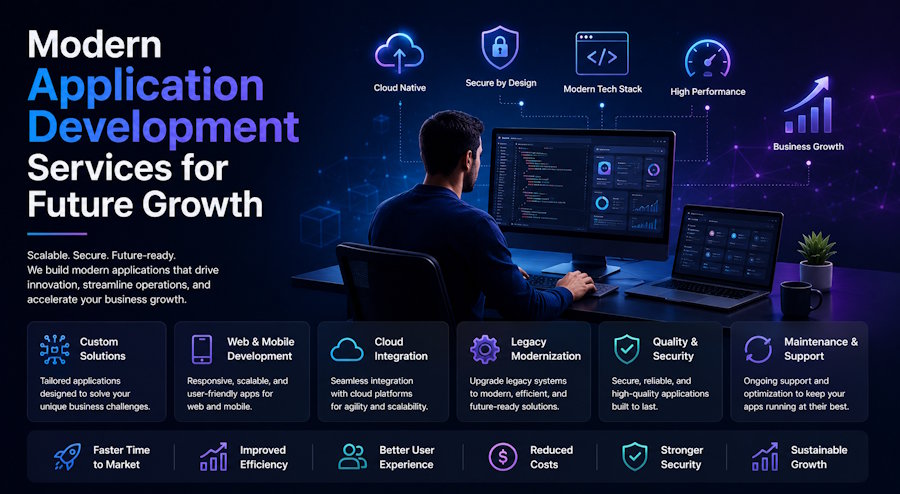
Businesses rarely lose time because employees are unwilling to work hard. They lose time because disconnected software, repetitive manual tasks, and outdated systems slow every department. Choosing the right development partner is one of the most important decisions a company can make. A poor decision often leads to budget overruns, delayed launches, frustrated employees, and software that never fits real business operations. At KernDev, we have spent nearly three decades helping companies replace inefficient systems with applications built around the way they actually work. As an IT company software development partner, we believe every application should solve measurable business problems instead of adding another layer of complexity.
From our experience, companies usually contact us after facing similar challenges. Different departments use separate software that cannot exchange information. Employees manually copy data between systems, reports take hours to prepare, and customers experience delays because information is scattered across multiple platforms. These problems continue to grow as businesses expand, making future growth difficult without the right technology foundation.
KernDev has delivered more than 500 projects on time and within budget by focusing on business objectives before writing code. Our team studies existing workflows, listens to employees who use the software every day, and recommends practical improvements that reduce unnecessary work. We also believe businesses should feel confident before making a long-term commitment, which is why we do not charge upfront. Clients can test our services for a month before deciding whether they want to continue working with us.
Why Businesses Need Modern Applications Instead of Outdated Systems
Many organizations begin with spreadsheets, email approvals, and off-the-shelf software. These tools often work during the early stages of growth, but they become difficult to manage as teams expand and customer expectations increase.
Our team regularly meets business owners who face issues such as:
- Customer information stored in multiple systems.
- Manual approval processes that delay projects.
- Inventory records that do not match actual stock.
- Reporting that requires several employees to compile.
- Limited visibility into daily operations.
- Software that cannot support new business requirements.
These issues affect productivity across the entire organization. Employees spend valuable time correcting mistakes instead of completing meaningful work, while managers struggle to make decisions because the available information is incomplete or outdated.
At KernDev, we begin every project by understanding how a business operates. We speak with department leaders, observe existing workflows, and identify where delays, duplicate work, and communication gaps occur. This approach helps us recommend applications that reflect real business needs rather than assumptions.
One client in the distribution sector explained that their staff spent almost two hours every morning comparing inventory spreadsheets from different departments. After analyzing their workflow, our team identified several unnecessary manual steps that could be automated through a centralized application. Even before development started, mapping these processes revealed opportunities to save hundreds of employee hours each month.
Building Applications That Support Long-Term Business Growth
Growth introduces new challenges. More customers create more transactions, larger teams require better coordination, and additional locations increase operational complexity. Businesses that continue relying on disconnected software often find that everyday tasks become slower instead of more efficient.
From our experience, successful applications share several characteristics:
- They support existing business processes while improving efficiency.
- They provide accurate information across departments.
- They reduce repetitive manual work.
- They simplify reporting for management teams.
- They integrate with existing business systems where appropriate.
- They remain flexible as business requirements change.
Our developers, architects, business analysts, and quality assurance specialists work together throughout each project. Rather than focusing only on technical implementation, we evaluate how every feature will affect employees, managers, and customers.
A common mistake we see is organizations purchasing several independent software products over time. Individually, each application may perform its task well. Collectively, they create isolated data, inconsistent reporting, and duplicated work. Replacing this fragmented environment with a carefully planned application allows businesses to work more efficiently while improving accuracy across every department.
Over the years, we have learned that technology alone does not solve operational problems. Success comes from understanding how people perform their work each day and designing software that removes unnecessary obstacles. That philosophy continues to shape every project our team delivers.
How Modern Application Development Projects Succeed
Many software projects fail long before development begins. The issue is rarely the programming language or technology stack. The real problem is that business requirements are unclear, communication is inconsistent, and development starts before the organization understands its own workflows.
Our team has reviewed projects from companies that invested significant budgets yet still depended on spreadsheets because the finished application did not reflect how employees actually worked. In most cases, developers were given feature lists instead of business objectives. As a result, the application looked complete but never became part of daily operations.
At KernDev, every engagement starts with conversations instead of code. We work with business owners, department managers, and the employees who use the software every day. Their feedback often reveals bottlenecks that are invisible during executive meetings.
Typical questions our specialists ask include:
- Which tasks consume the most employee time?
- Where do approvals slow down operations?
- Which reports require manual preparation?
- Which departments repeatedly enter the same information?
- What frustrates customers most during their interactions?
The answers help shape an application that addresses real operational challenges instead of adding unnecessary features.
Custom software application development services Begin with Business Understanding
Successful custom software application development services require much more than technical expertise. Every decision should support measurable business goals.
Our team usually divides projects into several practical stages:
- Reviewing current workflows.
- Identifying repetitive manual activities.
- Mapping how information moves across departments.
- Prioritizing business requirements.
- Designing intuitive user experiences.
- Developing and testing features in phases.
- Collecting user feedback before wider deployment.
This structured approach reduces project risk while giving clients visibility throughout development.
One healthcare client initially requested a completely new internal management system. After several workshops, we found that only specific workflows required replacement. By integrating existing systems with newly developed modules, the client reduced implementation costs, shortened deployment time, and minimized employee retraining.
Experiences like this reinforce an important lesson our team has learned over many years. Listening carefully before making technical recommendations often produces better outcomes than replacing every existing system.
Mistakes Businesses Make When Choosing a Development Partner
Organizations often compare software vendors primarily by price. While budgets matter, selecting a development partner based only on cost can create expensive problems later.
Warning signs include:
- Promises of unrealistic delivery schedules.
- Minimal effort spent understanding business operations.
- Limited communication after development begins.
- No documented testing process.
- Lack of planning for future maintenance.
We have worked with clients who approached us after investing in applications that technically functioned but failed to solve everyday operational problems. Employees continued using spreadsheets because they trusted them more than the new system.
Our recommendation is to evaluate a software partner based on experience, communication, transparency, and the ability to understand business processes. A development team should explain why certain decisions support your goals rather than simply agreeing with every requested feature.
This approach has helped KernDev build lasting relationships with businesses across multiple industries. Our objective is not simply to deliver software. We aim to create applications that employees adopt with confidence because they make daily work simpler, faster, and more reliable.
Case Study: Replacing Fragmented Systems With One Business Application
A regional logistics company contacted KernDev after years of struggling with disconnected software. The business had grown from a small operation into a company serving hundreds of customers each month, but its technology had not kept pace.
The sales team managed customer information in spreadsheets. Dispatchers tracked deliveries using a separate application. Accounting relied on another platform, while warehouse staff updated inventory manually. None of these systems shared information automatically.
The consequences became more serious as the company expanded:
- Customer service representatives spent valuable time searching for order updates.
- Dispatch schedules were delayed because shipment information was incomplete.
- Managers questioned reports because each department reported different numbers.
- Employees entered identical information multiple times, increasing the risk of errors.
The company's leadership initially believed they needed to replace every existing system. During our discovery workshops, we found that several applications still met business needs. The real issue was the lack of communication between them and the manual processes surrounding them.
Our team documented existing workflows, interviewed employees from every department, and identified the highest-impact bottlenecks. Instead of rebuilding everything from the ground up, we designed an application that connected essential systems, automated repetitive tasks, and presented business data through a single interface.
After deployment, employees required far less manual data entry. Managers could review operational reports within minutes rather than waiting until the end of the day. Customer support staff accessed shipment updates immediately, reducing response times and improving customer satisfaction.
The project demonstrated an important lesson we have seen repeatedly throughout our work: successful software reflects the way people perform their jobs rather than forcing them to adopt unnecessary processes.
Preparing Applications for Future Business Growth
Business requirements rarely remain static. New products, additional locations, changing regulations, and higher customer expectations all influence how software should perform.
Applications built with future growth in mind provide several advantages:
- They support increasing numbers of users without disrupting daily operations.
- They simplify integration with additional business systems.
- They allow new features to be introduced as business priorities change.
- They improve reporting by collecting consistent information across departments.
- They reduce reliance on manual work as transaction volumes increase.
At KernDev, we encourage clients to think beyond immediate project goals. A carefully planned application should continue supporting business operations for years instead of requiring major redesigns after every period of growth.
Our Team's Perspective After Decades of Software Development
Nearly three decades of software development have taught our team that technology alone does not solve business problems.
The strongest outcomes come from understanding people, workflows, and long-term business objectives before development begins.
Across manufacturing, healthcare, logistics, finance, education, and professional services, we continue to encounter similar challenges:
- Disconnected business systems.
- Duplicate information across departments.
- Manual approval processes.
- Limited visibility into daily operations.
- Software that employees avoid because it complicates their work.
Addressing these issues requires collaboration between business stakeholders and technical specialists. Every successful project begins with clear communication, realistic planning, and continuous feedback throughout development.
Our experience also reinforces the importance of transparency. We do not ask clients to commit financially before they have confidence in our work. Businesses can evaluate our services for the first month before deciding whether they would like to continue working with our team.
Why Businesses Choose KernDev
Organizations choose KernDev because they want a development partner that understands business operations as well as software engineering.
Our team focuses on practical outcomes rather than unnecessary complexity. Every recommendation is based on improving operational efficiency, reducing repetitive work, and helping employees complete their responsibilities more effectively.
Clients value our approach because it includes:
- Careful planning before development starts.
- Clear communication throughout every stage.
- Solutions designed around actual business processes.
- Ongoing collaboration after deployment.
- Experience gained from delivering more than 500 successful projects.
Every project reflects the same objective: creating applications that support measurable business improvements rather than simply delivering another software product.
Final Thoughts
Modern application development is about helping businesses remove operational obstacles, improve collaboration across departments, and prepare for future expansion with confidence.
Organizations that invest time in understanding their workflows before development begins are more likely to achieve successful outcomes, stronger employee adoption, and lasting business value.
At KernDev, we continue to help companies turn complex business requirements into practical applications built around real operational needs. Our team's experience, transparent collaboration, and commitment to delivering projects on time have earned the trust of businesses across multiple industries.
If your organization is evaluating a new application or replacing outdated systems, our team is ready to review your workflows, discuss your objectives, and recommend an approach that fits your business. We invite you to experience our process firsthand with our no upfront payment model, giving you the opportunity to evaluate our work for a month before making a long-term commitment.

