

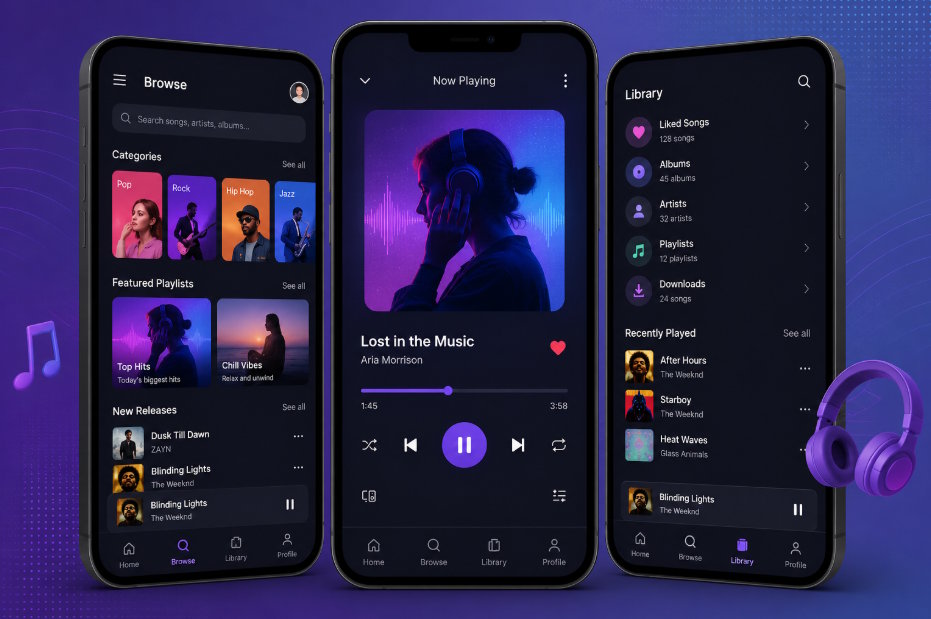
Music streaming has changed how people enjoy music. Users no longer buy albums or download songs one by one. They expect instant access to millions of tracks anytime and anywhere.
This demand has created a huge opportunity for startups and business owners to build music apps. However, launching a music streaming app takes more than building a music player. Users compare every new app with popular platforms they already trust.
The right features engage users’ attention longer, high chances of returning users, and eventually lead to becoming subscribers for additional feature access.
Thus, if you are planning to build a music streaming platform, knowing the essential features is the first step. This guide explains the key features every successful music streaming app should include.
Essential Features Every Music Streaming App Should Have
A successful music app should make listening simple, fast, and enjoyable. The following features build the foundation of a great user experience.
1. Easy User Registration and Profile Management
The first impression matters. Users should create an account within minutes. Offer sign-up through email, phone number, or social media accounts. This removes unnecessary steps and improves user onboarding. Try to simplify the onboarding process by connecting with a music app development company to help you with custom features.
User profiles should store playlists, favorite artists, listening history, and subscription details. This helps users continue their experience across different sessions without starting over.
2. Smart Music Search and Discovery
Users visit a music app to find songs quickly. A slow or confusing search can make them leave. Allow users to search by song title, artist, album, genre, or playlist. Adding filters makes finding music much easier.
Discovery is equally important. Recommend trending songs, new releases, and popular playlists on the home screen. This keeps users exploring instead of searching every time. The easier people discover music, the longer they stay inside the app.
3. Music Library and Playlist Management
Every listener enjoys organizing music differently. Your app should make this simple. Users should save favorite songs, albums, artists, and podcasts in one place. They should also create, edit, and organize playlists easily.
Allow playlist sharing with friends or family. Some users also enjoy collaborative playlists where multiple people can add songs together. A well-organized music library improves user satisfaction and keeps users connected to the platform.
4. Personalized Recommendations
Personalization keeps users engaged. It makes every visit feel unique. Partnering with a successful mobile app development company in Denver helps you deliver high-performing personalised mobile app features.
This ensures better user engagement, as a custom mobile app solution helps to track listening habits, favorite artists, skipped songs, and playlists. Optimise your app with such features to recommend songs users are likely to enjoy.
5. High-Quality Audio Streaming
Audio quality directly affects user experience. People expect clear and uninterrupted sound. Offer multiple streaming quality options based on internet speed. Users with slower connections can choose lower quality, while premium users may prefer high-quality audio.
Adaptive streaming also reduces buffering during playback. Smooth listening creates a better overall experience.
6. Offline Music Downloads
Internet access is not always available. Offline listening solves this problem. Allow premium users to download songs, playlists, or albums. They can then enjoy music during travel or in areas with poor network coverage.
Offline playback also adds value to premium subscriptions. Many users upgrade mainly for this feature.
7. Cross-Platform Synchronization
People switch between different devices throughout the day. A user may start listening on a smartphone, continue on a laptop, and finish using a smart speaker. The app should remember their progress automatically.
Playlists, favorites, downloaded music, and listening history should stay updated across all supported devices. This creates a smooth and consistent user experience.
8. Social Sharing and Community Features
Music often brings people together. Social features make the experience more interactive. Allow users to share songs, albums, or playlists through messaging apps and social media platforms.
Users can also follow friends, artists, or creators to discover new music. Collaborative playlists encourage users to engage with the platform more frequently. These features increase user activity without requiring constant marketing efforts.
9. Push Notifications
Push notifications help users return to the app. Notify users about new album releases, favorite artist updates, trending playlists, or subscription renewals.
Personalized notifications work better than generic messages. They feel more relevant and encourage users to open the app. However, avoid sending too many alerts. Too many notifications often lead users to disable them.
10. In-App Subscription and Payment Integration
Most successful music apps use subscription-based business models. Offer both free and premium plans with clear benefits. Premium users may receive ad-free listening, offline downloads, better audio quality, and exclusive content.
The payment process should remain simple and secure. Support multiple payment methods to reduce checkout friction. Easy subscription management also improves customer satisfaction.
Advanced Features That Help Your Music Streaming App Stand Out
Basic features attract users. Advanced features help your platform compete in a crowded market. As your business grows, these capabilities can improve engagement and create additional revenue opportunities.
► AI-Powered Music Recommendations
Artificial intelligence improves recommendations by learning user behavior over time. Instead of suggesting only popular songs, AI recommends music based on listening patterns, moods, favorite genres, and daily habits.
► Podcasts and Audiobook Integration
Many users enjoy more than music. Adding podcasts and audiobooks increases the time users spend inside your app. It also attracts audiences with different listening preferences. This expansion creates new subscription opportunities while improving platform value.
► Live Audio Sessions and Artist Events
Fans enjoy connecting directly with artists. Live concerts, question-and-answer sessions, exclusive interviews, and virtual events create memorable experiences. These events increase user engagement and encourage premium memberships or ticket purchases.
► Voice Assistant Integration
Voice commands make music playback faster and more convenient. Users can play songs, skip tracks, adjust volume, or search artists without touching the screen. This feature becomes even more useful while driving, cooking, or exercising.
► Smart Device and Wearable Compatibility
Users expect music everywhere. Support smart TVs, smart speakers, smartwatches, fitness bands, and connected car systems. This allows users to continue listening across different environments. The more devices your app supports, the greater its convenience.
► AI Mood-Based Music Generation
AI can now create playlists instantly based on user mood or activity. A user can choose moods like relaxing, studying, exercising, or traveling. The app then builds a playlist automatically. These features make every music session feel fresh and personalized.
Conclusion
Building a successful music streaming app requires much more than playing songs. Users expect personalized experiences, smooth navigation, high-quality streaming, and features that fit their daily lives.
A careful understanding of the essential features creates a strong foundation for your platform. Moreover, to improve user retention, several Advanced features such as AI-based music recommendation, voice assistant, and smart device cross-connectivity help your app stand out.
Whether you are planning for a startup or an enterprise-level music app, a productive feature strategy helps increase subscriptions and build a music streaming platform that generates future profit.

