

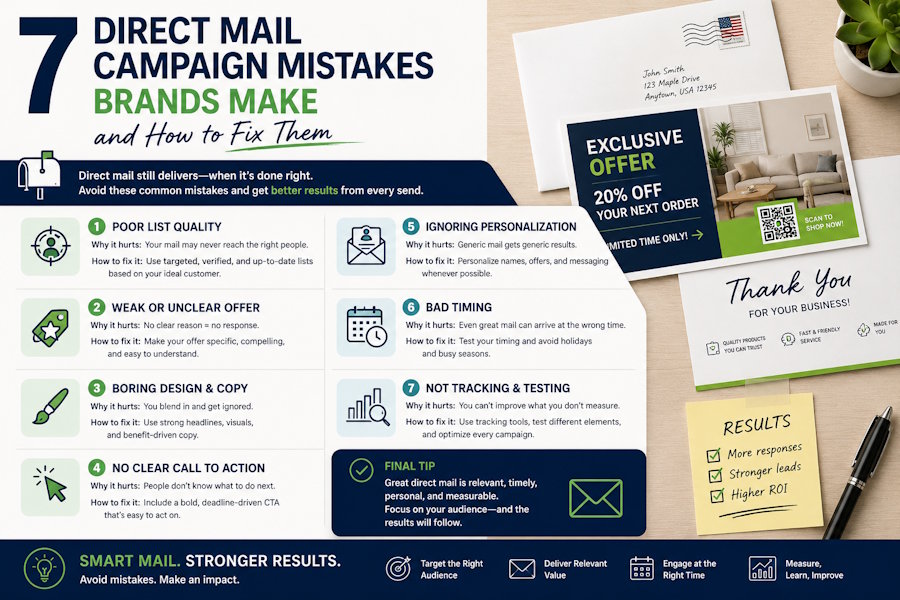
Despite what most brands think, direct mail can still pull in strong results. But they walk away convinced that the channel simply doesn’t work for them. In most cases, the channel is never the real issue. It’s the avoidable mistakes, repeated consistently, that drag performance down.
Consumers want more physical marketing touchpoints, especially branded magazines and mailers. So, it’s not that direct mailing isn’t effective. Once you know what a direct mail campaign really needs, spotting and fixing those mistakes becomes much easier.
1. Mailing an Outdated List
This is where many of the problems begin. A mailing list that hasn’t been updated in months translates into wasted time, effort, and money. The addresses may no longer exist, and prints may land on people who aren’t interested in your products or services anymore. Unfortunately, this is common among brands running multiple campaigns without the right focus on list updating.
The fix is easy: run your list through NCOA (National Change of Address) processing and de-duplication before you hit send.
2. Not Testing Enough
Sending out mailers without first testing if they’re effective enough is far too common. Naturally, that results in low ROI and moving away from a channel that, when used right, can be very lucrative.
To avoid this, test your mailers before running a campaign. Send copies to other teams in the office, run pilot rounds with a select group of recipients, and see what feedback you get. Take it into consideration and see the bigger picture to make changes that will matter.
3. Treating All Recipients Equally
Sending a generic message to your entire mailing list is detrimental to your campaign. Recipients are at different stages of the buying cycle, with different needs and past engagement with your brand. A new prospect and a loyal customer of three years shouldn’t receive the same offer.
Sending the same message to all recipients might be a quick tactic that brands use when an urgent mailer needs to go out, but it pays to focus on segmentation. Segmenting lists by purchase history, consumer behavior, past campaign engagement, and other factors helps you shape your messaging more effectively. Even minor tweaks to the tone or offer can meaningfully lift your response rates.
4. Not Using Postal Optimization
As many marketers already know, postage is often the costliest part of a direct mail campaign. Most brands do conduct postal optimization, but only in part. They’re typically selecting a specific print format to reduce mailing costs due to the size, weight, and paper stock. However, postal fees remain high, and sending out mailers no longer makes sense.
Running postal optimization more holistically is the answer here. That means looking beyond just the print format. For instance, choosing print and mailing manufacturers and distributors clustered strategically in your target regions consolidates mail volume. You get better postal rates regardless of campaign size, which can help reduce the mailing costs. Costs go down, and direct mail ROI shoots up.
5. Burying the Main Offer
Some brands love their copies, and occasionally, it’s also necessary to include more information on a mailer. But when it's filled with too much, and the actual offer is buried too deeply, the mailer will work against you.
Lead with a clear offer. Follow it with an obvious next step. If you’re offering a 50% discount, place it at the top and include a QR code below that links directly to the offer page. People decide whether to engage within seconds, and the clearer your message is, the more likely you are to capitalize on that window.
6. Not Personalizing Your Mail Enough
Just printing a first name on a mailer isn’t personalization, yet it’s what many brands still do. It’s actually a mail merge, and real personalization happens when you actually know about the recipient: what they’ve bought before, what they’re interested in, and where they live.
Go beyond the recipient’s name. Use variable data printing to adjust offers, messaging, and visuals by segment. For instance, a renter and a homeowner shouldn’t necessarily receive the same offer or mailer images. How you tweak them determines how personalized their mailers are and, in turn, how they’ll respond.
7. Only Tracking Receiver Count
Checking how many people received a mailer is an important step, but it’s a surface-level data point. If you only track that, you won’t know which segments responded, which offers worked, or where to spend your next quarter’s budget.
The fix here is simple, too. Include QR codes, unique promos, or dedicated landing pages connected to specific segments. Every mailer becomes a data source for the next, and guesswork stops being your only strategy.
Final Thoughts
None of these fixes involve spending more or a strategy overhaul. They all focus on the details and on creating a campaign that works from the start. Get these fundamentals right, and you will see just how well direct mail can do for your brand.

