

If you've been in IT infrastructure for a while, you already know the Broadcom acquisition changed everything. Licensing costs shot up dramatically overnight for many organizations, and a lot of enterprises suddenly found themselves locked out of the customer tier they'd been sitting in comfortably for years.
Some IT leaders usually describe it as getting a rent increase notice with no warning and no negotiation.
That's pushed a real, urgent conversation into boardrooms and server rooms alike. Teams that hadn't seriously questioned their virtualization stack in a decade are now building shortlists, running pilots, and asking hard questions about what "enterprise-ready" actually means in 2026.
So let's walk through what's actually out there if you’re looking for VMware competitors.
Enterprise Virtualization Market Overview in 2026
Enterprise virtualization is entering a new phase. While VMware remains the benchmark platform, many organizations are evaluating alternative virtualization and HCI solutions due to-
- Licensing changes
- Infrastructure modernization initiatives
- Hybrid cloud adoption
- Growing AI readiness requirements
As a result, VMware competitor evaluations are increasingly focused on long-term infrastructure strategy rather than virtualization functionality alone.
Top 5 VMware Competitors Enterprises Are Evaluating in 2026
Here are the top contenders of VMware that are popping up on the user list recently.
1. Sangfor HCI: Enterprise-Ready Without the Cost Baggage
Sangfor HCI strikes a strong balance between cost efficiency and enterprise capability. It delivers a VMware-like experience with built-in compute, storage, networking, and security, without the licensing complexity.
Unlike many alternatives, it includes HA, intelligent scheduling, and integrated security out of the box, along with seamless migration tools. What's more, Sangfor HCI bakes security into the stack. Therefore, if you're moving on to a new IT infrastructure, it's one of the ideal solutions to keep in mind.
2. Proxmox VE: Open-Source Budget Option
Proxmox is free, and that's genuinely its biggest selling point. For smaller deployments or dev/test environments, it works fine. It is a popular open-source virtualization platform that appeals to organizations seeking flexibility and lower licensing costs.
While many enterprises successfully deploy Proxmox, organizations with large-scale or highly regulated environments should carefully evaluate support models, operational requirements, and advanced enterprise capabilities before adoption.
3. Microsoft Hyper-V: Legacy Windows Integration
If your shop runs heavily on Windows Server, Hyper-V feels familiar. Windows admins take to it quickly. The problem is that it's Windows-first in every meaningful way.
Cross-platform support is limited, distributed storage isn't native, and advanced networking capabilities lag behind what most large enterprises need. Microsoft Hyper-V remains a viable option for organizations heavily invested in the Microsoft ecosystem, particularly those seeking integration with Windows Server and Azure services.
4. OpenStack: Cloud-Native but Complex
OpenStack is powerful on paper. It scales well and works great for cloud providers. In practice, though, deploying and maintaining it requires significant expertise.
Several teams underestimate the operational overhead and end up with a platform that works but consumes more engineering hours than the VMware licensing ever did. It's better suited for teams with deep cloud engineering bench strength.
5. Nutanix AHV: Integrated HCI with Premium Pricing
Nutanix is a serious enterprise contender. AHV comes built into the Nutanix HCI platform; the management console is solid, and enterprise support is strong. The hesitation for a lot of teams right now is that the licensing model has its own complexity, and the total cost of ownership is higher than some alternatives.
For organizations leaving VMware partly over cost concerns, it can feel like jumping from one premium vendor to another.
Sangfor vs Nutanix: The Critical VMware Competitors Comparison
This is where the conversation gets interesting. When you look at Sangfor vs Nutanix and then pull Sangfor into that same frame, a few things stand out clearly.
Performance and Capabilities
Nutanix AHV delivers close to a VMware-like experience for most workloads, with some differences. That gap matters when your operations team has years of VMware muscle memory.
Sangfor delivers up to 95% of the VMware experience, with built-in intelligent DRS and proactive HA. It maintains high VM density and enterprise-grade performance comparable to VMware, without relying on additional components or licensing layers.
Cost and Licensing
Here's the thing about Nutanix: it's per-node licensing, and security features cost extra on top.
Sangfor reports that its HCI platform, powered by the aSV hypervisor, can deliver up to 70% lower total cost of ownership compared to VMware, driven by unified licensing and built-in infrastructure components.
Many organizations also find that Nutanix’s licensing model often forces higher upfront expenditures due to its strict infrastructure requirements. For example, Nutanix requires 6 nodes for a Stretched Cluster and 5 nodes for a 3-Copy Cluster, whereas Sangfor enables these high-availability configurations with significantly fewer nodes (4 and 3, respectively).
Security and Ecosystem Integration
This is honestly where Sangfor's integrated approach stands out most. Nutanix requires third-party security appliances to get full protection, and each one adds licensing complexity.
Sangfor ships with a built-in security through aSEC. The compute, storage, and security stack is unified (aSV, aSAN, aNET, and aSEC). It's also certified for Red Hat Linux compatibility, which matters more than people often expect during migrations.
If you're already researching a solid VMware vSphere Alternative, the integrated security story is one of the strongest arguments here.
Migration and Compatibility
Migration risk is where a lot of VMware alternatives lose deals. Sangfor built in migration tools with risk assessment built in, not bolted on. The architecture is designed around compatibility first, meaning hardware reuse is straightforward.
Almost a 95% similarity with VMware means your team isn't learning an entirely new operating model. That's real continuity.
Nutanix has migration tooling as well, but the process tends to carry more complexity alongside a VMware environment.
Industry Validation
Nutanix has a strong enterprise presence and a solid support reputation. Sangfor has appeared in the Gartner Market Guide for Server Virtualization for two consecutive years and is listed as a Representative Vendor in the 2025 Gartner report.
What's more, they are now ranking as one of the top 5 vendors in the APAC region by revenue. For procurement teams that need vendor credibility backed by analyst recognition, that matters.
Which VMware Competitors Are Best Positioned for AI Infrastructure?
Many enterprises are evaluating virtualization platforms that can support future requirements, such as:
- Private AI deployments
- GPU-enabled workloads
- Data-intensive analytics
- Hybrid cloud architectures
- Cloud-native applications
This makes AI readiness an increasingly important evaluation criterion when comparing VMware competitors.
Platforms such as Sangfor HCI are frequently evaluated for providing a pathway from virtualization to private, hybrid, and AI-enabled cloud infrastructure.
VMware Competitors That Deliver Proven Outcomes
Look beyond pricing, benefits, and ease of migration when choosing an alternative to VMware. Ask real questions and provide proof. Those proofs are visible with Sangfor HCI.
Healthcare Victory with Sangfor HCI: Real Client Success Story
The Medical City South Luzon modernized its IT infrastructure with Sangfor HCI, replacing fragmented systems with a unified platform. The upgrade improved system reliability, enhanced performance for clinical applications, and ensured high availability, critical for uninterrupted patient care in a hospital environment.
Why does Gartner Recognition Matter for VMware Competitors?
Success stories are fine. You'll find most market contenders for enterprise virtual infrastructures publishing customer success stories. But what really proves authority and trust are social proofs. Peer review insights, users' discussions on social channels, and forums are the genuine trust signals to track.
Truth be told, that's where Sangfor HCI is challenging top market contenders with a significant upper hand. For enterprise buyers, Gartner validation is a signal of credibility that simplifies internal procurement conversations. That's where Sangfor gains a 4.8 rating out of 5.
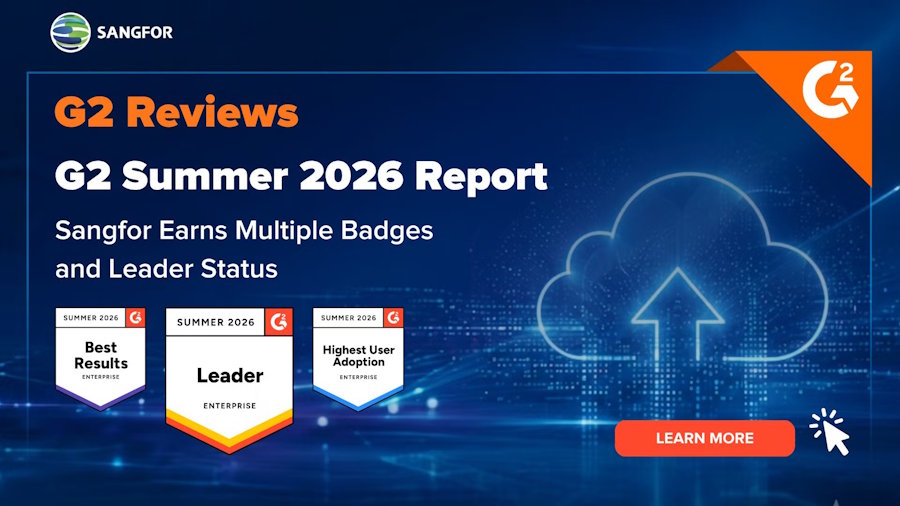
Sangfor is also staying ahead in terms of its reviews on G2. Recently recognized as a G2 leader across core categories in Cloud Computing, Sangfor has earned multiple badges in the G2 Summer 2026 Reports.
Sangfor's inclusion as a Representative Vendor in the 2025 Gartner Market Guide for Server Virtualization also tells procurement teams something meaningful about platform maturity and reliability.
VMware Competitors Should Be Evaluated Beyond Virtualization
Organizations replacing VMware should evaluate whether a platform can support long-term infrastructure evolution.
Key considerations include:
- Private cloud adoption
- Hybrid cloud integration
- Containerized workloads
- AI infrastructure requirements
- Operational scalability
The most successful VMware replacement initiatives are not simply virtualization projects; they are infrastructure modernization programs.
How to Evaluate VMware Competitors?
The market is saturated with multiple VMware competitors offering almost the same benefits at the same pricing points. Therefore, decisions are difficult. But if you track the right metrics, decisions should become a lot easier.
The key metrics to follow here are consistency in experience, TCO, risk in migration, integrated posture of the IT infrastructure, and future readiness with AI and private cloud support. Platforms like Sangfor HCI, Nutanix, and Microsoft Hyper-V check all those decision benchmarks.
The Winning VMware Competitor
Among all the VMware competitors worth evaluating today, Sangfor presents the most complete enterprise value story: Almost VMware-like experience, up to 70% lower TCO, a native security suite, and Gartner Representative Vendor recognition.
Nutanix AHV is a strong platform, but the integrated compute-storage-security approach that Sangfor brings, combined with simplified licensing and a proven healthcare deployment track record, makes it the more compelling choice for enterprises that need to control costs without compromising on capability.
For IT leaders who need to move off VMware without feeling like they're moving backward, Sangfor is worth putting at the top of your evaluation list.
FAQs
What are the top VMware competitors in 2026?
Commonly evaluated VMware competitors include Sangfor HCI, Nutanix AHV, Proxmox VE, Huawei Cloud Stack, Scale Computing, Microsoft Hyper-V, and OpenStack.
Why are enterprises evaluating VMware competitors?
Organizations are reassessing VMware due to licensing changes, modernization initiatives, hybrid cloud strategies, and AI readiness requirements.
Is Sangfor a VMware competitor?
Yes. Sangfor HCI is frequently evaluated as a VMware alternative for enterprise virtualization, HCI, private cloud, and hybrid cloud deployments.
How does Sangfor compare with Nutanix?
Both platforms support enterprise virtualization and HCI, but organizations often compare them based on migration support, licensing models, operational simplicity, and long-term infrastructure strategy.
What should enterprises evaluate when comparing VMware competitors?
Key factors include migration risk, operational continuity, scalability, reliability, security, ecosystem compatibility, and AI readiness.
Which VMware competitors support AI workloads?
Several modern platforms support AI-ready infrastructure, including Sangfor HCI, Nutanix AHV, Huawei Cloud Stack, and OpenStack-based environments.

