

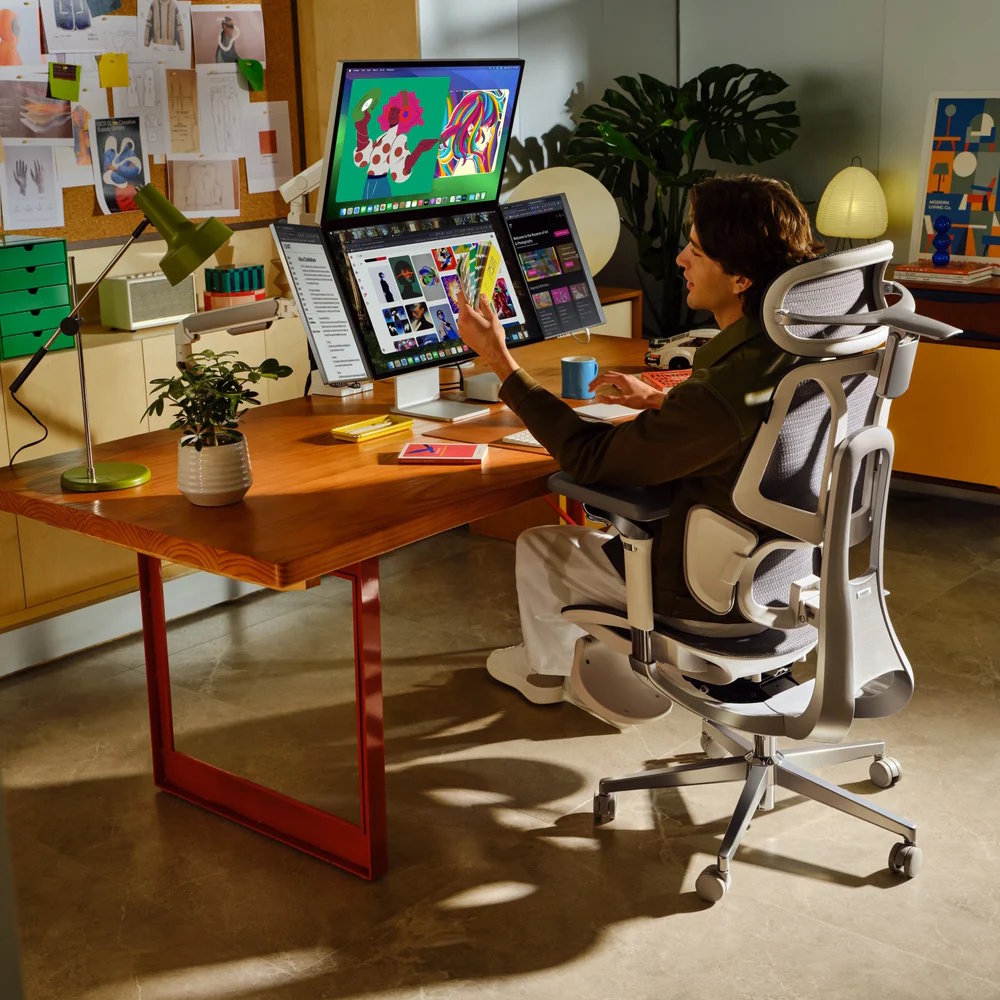
Back pain has become one of the most common complaints among office workers, gamers, students, and remote professionals. Spending long hours sitting places significant strain on the lumbar spine—the natural inward curve of your lower back. Without proper support, poor posture can lead to discomfort, fatigue, and even chronic musculoskeletal issues over time.
This is why adjustable lumbar support has become one of the most important features in modern ergonomic office chairs. Rather than providing one fixed support position, today's advanced chairs allow users to customize lumbar support according to their body shape and sitting habits.
In this guide, we'll explain the three major types of lumbar adjustment—height, depth, and three-zone support—and why each plays a vital role in maintaining spinal health and all-day comfort. As ergonomic chair technology continues to evolve, manufacturers are introducing increasingly sophisticated lumbar systems that go beyond basic adjustments. If you're searching for the best ergonomic chair, it's worth paying close attention to the quality and adaptability of the lumbar support system, as it plays a crucial role in long-term comfort and posture. One example is HBADA, a brand known for developing ergonomic seating solutions with a strong emphasis on spinal support and user customization.
Why Lumbar Support Matters
The lumbar region consists of five vertebrae that naturally curve inward. This curve helps distribute body weight evenly and absorbs pressure during movement. However, when sitting for extended periods, especially in poorly designed chairs, this curve tends to flatten.
As a result, users often experience:
- Lower back pain
- Muscle fatigue
- Poor posture
- Neck and shoulder tension
- Reduced productivity
An ergonomic chair with adjustable lumbar support helps preserve the spine's natural alignment by keeping consistent contact with the lower back, reducing unnecessary stress throughout the workday.
Understanding Height-Adjustable Lumbar Support
Height adjustment allows the lumbar support to move vertically so it aligns precisely with the user's lower back.
Because every individual has a different torso length, a fixed lumbar cushion rarely fits everyone correctly. If the support sits too high or too low, it may create pressure instead of relief.
- Benefits of Height Adjustment
- Fits users of different heights
- Supports the natural lumbar curve
- Improves upright posture
- Reduces lower-back fatigue
- Provides personalized ergonomic positioning
Height adjustment is often considered the first feature users should customize after adjusting seat height.
What Is Depth-Adjustable Lumbar Support?
Depth adjustment controls how far the lumbar support protrudes toward the user's back.
Some people have a pronounced lumbar curve, while others have a flatter spine. A fixed amount of pressure simply cannot accommodate every body type.
Depth adjustment allows users to increase or decrease lumbar pressure until the support feels natural instead of intrusive.
- Advantages of Depth Adjustment
- Matches different spinal curvatures
- Prevents excessive pressure
- Encourages natural sitting posture
- Improves long-term comfort
- Reduces the need for constant repositioning
When properly adjusted, lumbar support should gently fill the gap between the chair and the lower back—not push the body forward.
What Is Three-Zone Lumbar Support?
Traditional lumbar support usually focuses on a single pressure point in the lower back.
Three-zone lumbar support is a more advanced ergonomic approach that divides support into multiple sections designed to work together with the body's natural movement.
Instead of concentrating pressure in one location, three-zone systems distribute support across:
- Upper lumbar region
- Central lumbar curve
- Sacral or pelvic area
This creates more balanced spinal support throughout the lower back.
Modern ergonomic engineering has increasingly moved toward multi-zone support because it accommodates posture changes more naturally during long sitting sessions. Manufacturers have introduced advanced systems that allow these zones to flex independently, helping maintain consistent support as users lean, recline, or shift positions.
Benefits of Three-Zone Lumbar Design
Compared to conventional lumbar systems, three-zone support offers several ergonomic advantages.
1. Better Pressure Distribution
Rather than concentrating force in one spot, support is spread across multiple areas, reducing pressure buildup.
2. Improved Dynamic Support
As users move throughout the day, different lumbar zones continue supporting the spine without requiring constant manual adjustments.
3. Enhanced Comfort During Long Sitting Sessions
Whether working, studying, or gaming, multi-zone support helps reduce fatigue by maintaining better spinal alignment over extended periods.
4. Better Pelvic Stability
Supporting the sacral region improves pelvic positioning, which contributes to healthier posture throughout the entire spine.
Height vs. Depth vs. Three-Zone Support
Each adjustment serves a unique purpose.
|
Feature |
Primary Function |
|
Height Adjustment |
Positions lumbar support correctly along the spine |
|
Depth Adjustment |
Controls pressure against the lower back |
|
Three-Zone Support |
Distributes support across multiple lumbar regions |
Rather than replacing one another, these features work best together.
The most ergonomic office chairs combine all three adjustments to deliver a more personalized sitting experience.
Choosing the Right Ergonomic Chair
When shopping for an office chair, lumbar support should be more than just a padded cushion.
Look for features such as:
- Adjustable lumbar height
- Adjustable lumbar depth
- Flexible backrest
- Breathable mesh construction
- Adjustable armrests
- Seat depth adjustment
- Reclining mechanism
- Multi-zone lumbar support
A chair that adapts to your body is far more effective than forcing your body to adapt to the chair.
Advanced Ergonomic Innovation from HBADA
As ergonomic chair technology continues to evolve, manufacturers are introducing increasingly sophisticated lumbar systems that go beyond basic adjustments. One example is HBADA, a brand known for developing ergonomic seating solutions with a strong emphasis on spinal support and user customization. Its latest ergonomic chair lineup includes features such as dynamic lumbar adjustment, adaptive support mechanisms, and advanced three-zone lumbar engineering designed to better accommodate long hours of sitting.
For professionals who spend much of their day at a desk, investing in a three-zone adjustable lumbar support chair can provide a more personalized seating experience by combining height adjustment, depth adjustment, and multi-zone support into one integrated ergonomic system.
Tips for Adjusting Your Lumbar Support Properly
Even the best chair requires proper setup.
Follow these simple guidelines:
- Sit with your hips fully against the backrest.
- Adjust lumbar height so it fits the natural curve of your lower back.
- Increase lumbar depth until you feel gentle support—not excessive pressure.
- Keep your feet flat on the floor.
- Position your knees at approximately 90 degrees.
- Relax your shoulders while keeping your elbows close to your body.
- Reassess your chair settings periodically as your posture changes throughout the day.
Small adjustments often make a significant difference in long-term comfort.
Final Thoughts
Effective lumbar support is no longer a luxury—it is an essential feature for anyone who spends hours sitting each day. Height adjustment ensures proper positioning, depth adjustment delivers personalized pressure, and three-zone lumbar support provides balanced spinal alignment across multiple regions of the lower back.
When these features work together, they can help improve posture, reduce fatigue, and create a healthier sitting experience. As ergonomic technology continues to advance, chairs that combine all three forms of lumbar adjustment are becoming the benchmark for long-term comfort and productivity.

