

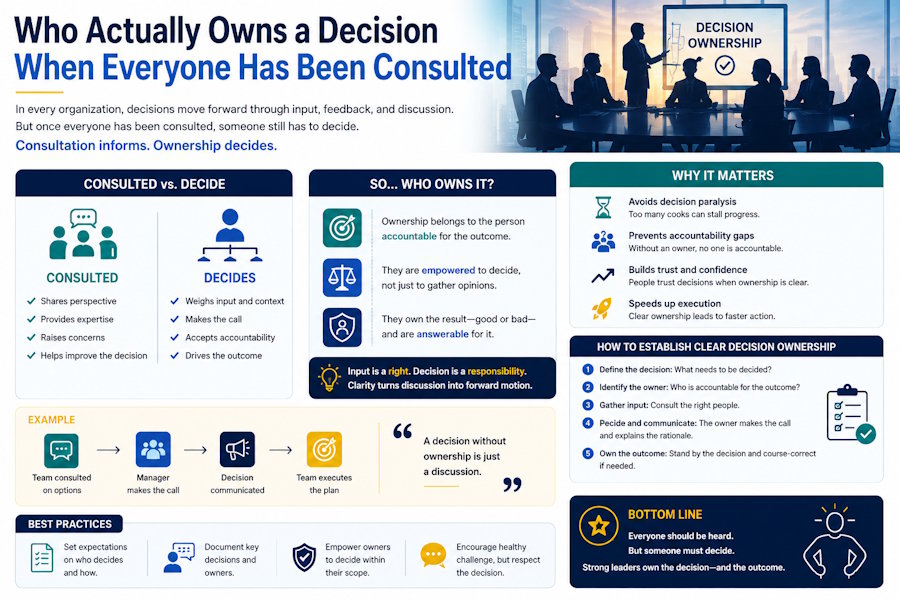
Consultation feels like good practice, and usually is. Stakeholders are engaged, perspectives gathered, and objections surface early. The difficulty arrives afterwards, when a decision must be made and it is unclear who is entitled to make it.
Consultation and Authority Are Different Things
Being asked for a view is not the same as holding a vote, yet the distinction is rarely stated. Someone who contributed to a discussion often reasonably expects their position to be reflected in the outcome, and feels overruled when it is not.
The problem compounds with numbers. Six people consulted produce six sets of expectations, and if the decision maker was never identified, any outcome will disappoint several of them. What follows is usually not open disagreement but slow resistance, which is harder to detect and to resolve.
The Cost of Ambiguity
Unclear ownership produces recognisable symptoms. Decisions that are made and then quietly revisited weeks later. Meetings that conclude without anyone able to state what was agreed. Work that pauses while somebody seeks confirmation from a person who assumed the matter was settled.
Each of these consumes time disproportionate to the decision itself. A choice worth an hour of discussion can absorb a fortnight when nobody is certain it has actually been made.
Naming the Decision Maker in Advance
The remedy is unglamorous and effective. Before consultation begins, state who will decide and what the input is being used for. That single sentence reframes the entire exercise.
People generally accept not getting their preferred outcome. What they resist is believing they had influence and discovering afterwards that they did not, or being unable to identify who chose differently and why.
This is why project management consultants often spend early effort on decision rights rather than on schedules. A plan built on unclear authority will require rework regardless of how carefully it is constructed.
Recording What Was Decided
Writing decisions down matters as much as making them. A short record naming the decision, the person accountable, the date, and the main reasoning prevents most subsequent disputes.
The reasoning is the part usually omitted and the part most often needed. Six months later, when circumstances have shifted, knowing why a choice was made determines whether it should still stand or be revisited deliberately rather than by drift.
Consultation Still Matters
None of this argues for consulting fewer people. Input improves decisions, surfaces risks, and builds the support that implementation depends on.
It argues for honesty about what consultation is. Gathering perspectives to inform a choice is legitimate and valuable. Implying shared authority that does not exist creates a problem that appears later, usually when speed matters most.
A Small Discipline With Large Returns
There is something quietly satisfying about a fix this simple. Naming the decision maker takes one line at the start of a discussion and removes a category of confusion that can otherwise persist for months.
Teams that adopt the habit tend to notice the difference immediately. Discussions end more cleanly, decisions stay decided, and people participate more willingly once they understand exactly what their contribution is for.

