

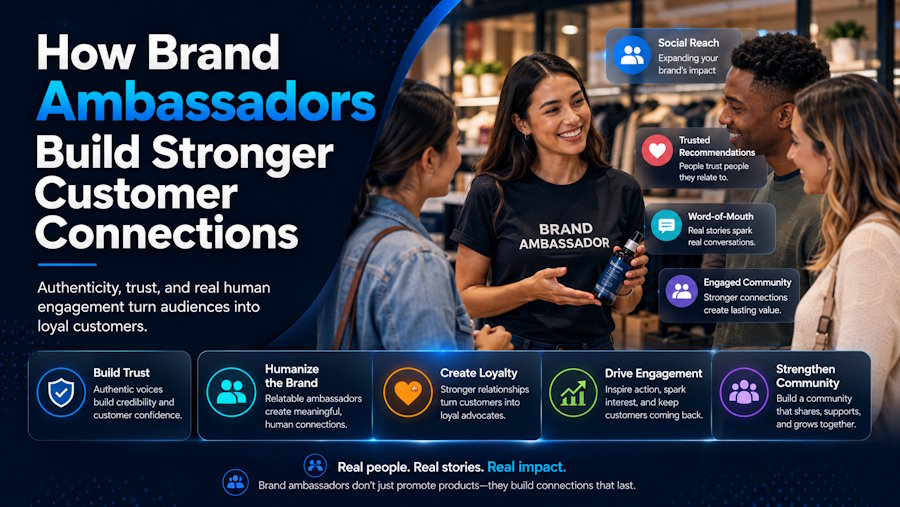
Strong customer relationships rarely begin with advertising alone. They grow through direct contact, steady guidance, and moments that feel attentive rather than scripted. Brand ambassadors support that process by turning brief encounters into useful exchanges shaped by listening, clarity, and product knowledge. These personal moments build a foundation that digital outreach alone cannot match. When companies commit to direct engagement, the impact often reaches well beyond a single transaction.
A conversation at the right time can reduce uncertainty, answer practical concerns, and leave a customer feeling respected. That is why companies invest in brand ambassadors who connect with customers, knowing that human contact shapes recall more deeply than any headline, display, or promotional claim. Achieving that kind of impact takes more than enthusiasm. It requires structure, preparation, and a clear understanding of what customers actually need.
Human Contact
In busy retail spaces, events, and sampling programs, live interaction gives people room to ask, compare, and respond in real time. Many companies rely on skilled brand ambassadors because those exchanges create a clearer picture of customer intent, hesitation, and interest. Instead of relying on guesswork, teams gain direct reactions that reveal which messages resonate, which details confuse, and which benefits hold attention long enough to matter.
Trust Starts Fast
Trust often forms within the first few minutes of contact. Customers notice tone, pacing, eye contact, and whether answers feel honest or rehearsed. A skilled ambassador can lower resistance by listening fully before responding. That restraint matters in crowded settings where attention fades quickly. People may forget every feature later, yet they tend to remember whether the interaction felt respectful, informed, and genuinely helpful.
Training Shapes Tone
Effective representation depends on preparation, not charm alone. Ambassadors need a clear grasp of product use, brand standards, and the limits of what should be promised. Good training also covers situational judgment, because live conversations rarely follow a neat script. One customer may want technical detail, another may need reassurance, while a third simply wants a quick explanation before deciding whether to stay engaged.
Listening In Real Time
Listening is often the strongest part of ambassador work. Customers reveal concerns through questions, facial expression, and body language long before a survey captures them. Those signals can show whether pricing feels unclear, instructions seem complicated, or the offer lacks relevance. Solid market research depends on capturing these real-time responses before they fade. Teams that pay attention during these exchanges can adjust messaging quickly. That helps prevent weak talking points from repeating across multiple locations or event dates.
Data Makes Follow-Up Smarter
Human interaction creates the opening, yet careful reporting helps extend its value. Notes from conversations, lead details, demo interest, and recurring objections can guide better follow-up after the event ends. Useful records allow teams to respond with information tied to actual questions rather than broad generic messaging. That precision improves relevance, which often raises reply rates, strengthens conversion, and reduces wasted outreach.
Consistency Builds Recognition
Customers rarely meet a brand just once. They may see it at a trade show, encounter it later in a store, then notice it again online. Familiarity grows when the message stays clear across each setting. Ambassadors help hold that line by keeping explanations, tone, and presentation aligned. Consistent delivery reduces confusion, which makes the brand feel steadier, easier to understand, and more credible over time.
Product Experience Lowers Doubt
Some products make sense only after direct use. A sample, guided trial, or short demonstration gives customers evidence they can judge for themselves. That physical experience often answers doubts faster than printed claims. An ambassador adds value by connecting what the customer notices with the product's practical benefits. The result feels less like persuasion and more like informed guidance grounded in what the person just observed.
Local Fit Improves Relevance
Audience expectations differ by city, venue, season, and shopper profile. A message that works at a convention may fall flat in a grocery aisle or campus event. Strong ambassador programs account for those differences through staffing choices that match setting and audience. Relevance improves when the representative understands local context, speaks naturally to the moment, and adjusts examples without drifting from the core message.
Scale Needs Structure
Large programs need discipline if they want to stay personal. Clear hiring standards, attendance tracking, briefing materials, and performance reviews help protect quality across many locations. Without that structure, customer experience can vary too widely from one event to the next. Strong oversight gives companies better visibility into execution while still leaving room for genuine conversation, practical judgment, and a tone that feels natural.
Emotional Memory Drives Return
Buying decisions are often shaped by memory as much as information. Customers may forget exact wording, yet they remember whether an exchange felt patient, clear, and respectful. That emotional residue can influence later choices, repeat visits, and referrals to friends or coworkers. A thoughtful ambassador leaves behind more than facts. The interaction creates a sense of ease that lowers friction when the customer meets the brand again.
Conclusion
Brand ambassadors strengthen customer connection by giving people a human point of contact during moments that influence trust. Their contribution reaches beyond simple visibility. It includes listening, explanation, demonstration, and careful observation of customer response. When those elements work together, each interaction becomes more useful for both sides. Companies gain sharper insight, while customers receive clearer guidance. That balance is what turns a short exchange into lasting confidence and repeat engagement.

