

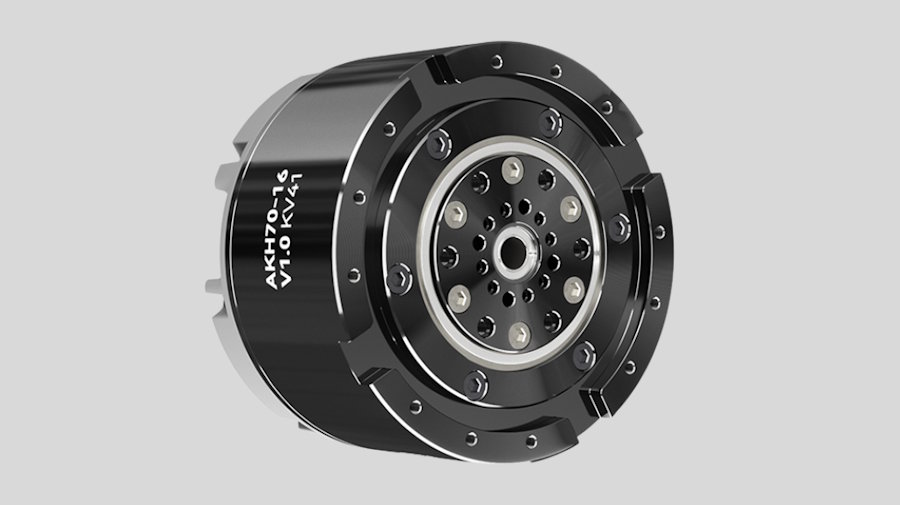
The coordinated movement of the joints is essential for humanoid robots to maintain balance during walking, adjust their posture smoothly, and interact with objects in a controlled manner. The hip joint is one of the most important joints of the lower limb as it is responsible for a number of different directions of movement whilst supporting large mechanical loads. High torque is not enough to achieve stable motion. It is equally important that there are advanced sensing, intelligent control and efficient mechanical integration. To overcome these challenges, a dual-encoder actuator architecture provides continuous feedback, more precise positioning and reliable closed-loop performance in challenging robotic applications.
1. Why Closed-Loop Control Matters in Modern Humanoid Robotics
Each robotic joint is constantly sending and receiving instructions in order to move physically. Small positioning errors can add up over time if there is no accurate feedback, leading to less stability and poorer quality of motion. Closed-loop control addresses this issue by continually comparing the desired position to the actual position of the drive and issuing corrections as needed.
This is particularly useful in humanoid robots, in which the hip joints work in conjunction with knees, ankles and the upper body. A robot may be walking, climbing, rotating or balancing on an uneven surface, and each adjustment needs to be performed with a high degree of accuracy and with a short delay.
A stable closed-loop system contributes to several performance improvements:
- Minimizes positioning errors during continuous movement
- Improves repeatability across repetitive motion cycles
- Supports smoother acceleration and deceleration
- Enhances synchronization between multiple robotic joints
- Maintains reliable operation despite changing external loads
Precise feedback systems have become an integral part of the design of actuators in the modern era of humanoid robotics, where robots are required to perform more dynamic tasks than they currently do.
2. The Advantages of Dual-Encoder Feedback Architecture
In traditional actuator systems, usually only one encoder is used to track motor rotation. This method is suitable for a lot of applications but may not be able to fully compensate for mechanical transmission effects from the motor to the output shaft.
A dual-encoder setup provides separate sensing points on the motor side and output side. This will give a much more complete idea of what is really happening with each joint, and enable the controller to make compensations for transmission differences and achieve more consistent positioning.
The magnetic encoder resolution is 21 bits, which allows for very detailed motion feedback and fine control of the joint motion. The output position information is stored even when the power is lost, so that robotic systems can start up again with a better sense of their position rather than needing to be extensively recalibrated.
Dual-encoder systems can be used to enhance motion quality in multi-axis robotic systems, and to enable more reliable closed-loop control of the motion system.
3. How a Hip Joint Motor Improves Multi-Axis Motion Precision
The Hip Joint Motor is one of the most challenging parts of a humanoid robot, as it is responsible for forward movement, lateral movement, rotational positioning and the overall balance of the body. It is more complex than simple joints on robots because it must coordinate several degrees of freedom and deal with high mechanical forces.
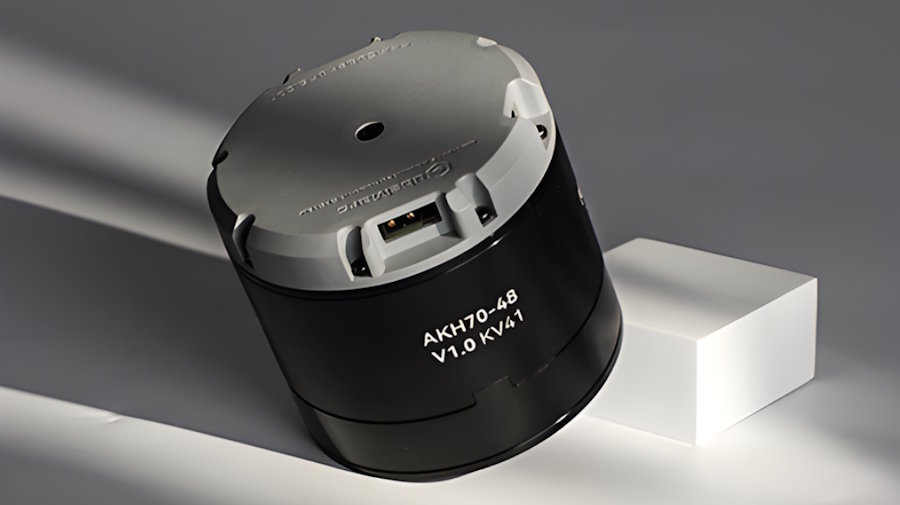
The high-performance hip joint motor is an integrated combination of a number of engineering benefits. A brushless motor (BLDC) technology ensures high-performance power generation, and the built-in planetary gearbox (PGB) enhances the torque output without adding unnecessary size and weight. High-resolution encoders provide continuous movement monitoring so that the controller can make accurate movement corrections during each motion cycle.
Modern designs also focus on integration in small spaces. For instance, exposed wiring is reduced, and mechanical organization is simplified by the routing of cable through the hollow shaft of the actuator modules, which are 7 mm in diameter. This cleaner design facilitates installation and minimizes potential interference between moving components.
These features help the lower limb robotic systems to perform movements like forward and backward leg swinging, side stepping, controlled rotation, and posture transition in a smoother fashion.
4. Integration Features That Support Reliable System Performance
In addition to motion accuracy, actuator integration impacts installation efficiency, maintenance and long-term reliability. The use of a single actuator module consisting of various mechanical and electronic elements decreases external wiring and simplifies the overall robotic architecture.
Integrated actuator modules combine multiple components into a single package, such as motors, gearboxes, encoders, controllers and communication. This way, assembly complexity is lowered, and consistency of the system is maintained through a plurality of robotic joints.
Key integration capabilities include:
- Brushless motor combined with planetary gearbox
- Integrated drive electronics supporting Field-Oriented Control (FOC)
- Dual CAN interfaces for multi-actuator daisy-chain communication
- UART interface for PC-based parameter configuration
- Compact dimensions that simplify installation within humanoid joints
Further protection features enhance reliability of operations. A built-in protection mechanism against overcurrent, over-voltage, under-voltage and high temperature ensures stable operation for demanding robotic tasks and protection of internal components from abnormal operating conditions.
5. Selecting the Right Robotic Actuator for Dynamic Applications
When selecting a Robotic Actuator, there's more to consider than just torque. Long-term performance of robots is affected by motion precision, control flexibility, integration level, communication capability and overall system efficiency.
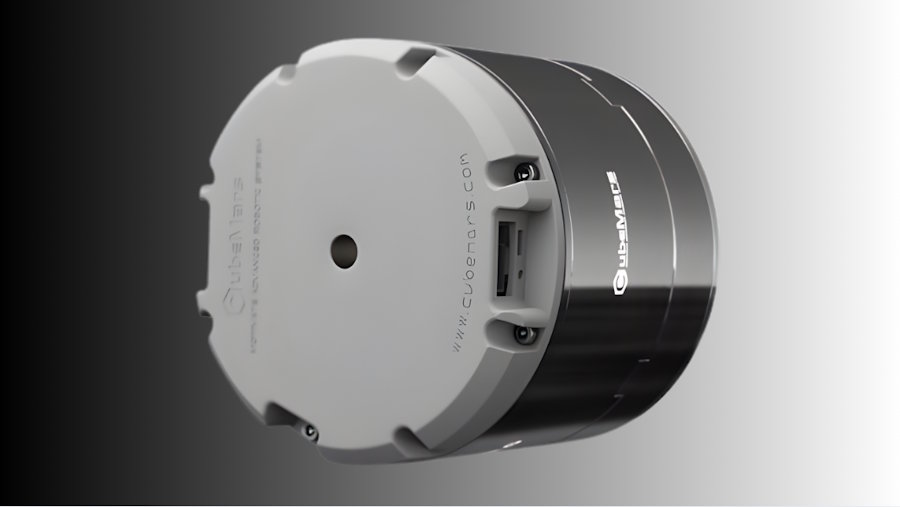
Highly integrated actuator modules make it easier to design hardware and coordinate software by integrating key components into a single package. For instance, the AKH70-48 V1.0 KV41 combines a brushless motor, a proprietary planetary gearbox, two encoders and drive electronics and provides maximum torque of 222 Nm while weighing around 1396 g. This allows for the highest torque density without adding too much mass to the joint.
Both SERVO and MIT control modes are also supported, providing more flexibility for the engineer to design various robotic control strategies. Robots can perform complex sequences of motion more consistently with coordinated control of position, velocity and acceleration.
Additionally, manufacturers like CubeMars offer customization on interfaces, functional features, and operational parameters, enabling the adaptation of actuator configurations to meet the unique needs of different applications, whether in humanoid robots, exoskeletons, industrial automation, or medical robotics.
6. Balancing Torque Density with Lightweight Construction
The higher the performance of the actuators, the more challenging the engineering balance between more torque and heavier mechanical assemblies. Too much weight in the joints will lead to higher energy usage and more stress on other robotic structures.
This is achieved with high torque density, which maximizes output in a compact package. The torque density is as high as 159 Nm/kg, which allows for good performance of the individual joints without compromising efficient robot dynamics.
Such lightweight actuator construction has several advantages for robotic systems. Less weight in the joints provides better maneuverability when accelerating, less inertia when changing direction and more natural movement patterns when executing complex walking sequences.
This compactness of the actuator size also offers enhanced design flexibility to engineers when they are designing multiple joints in a tight humanoid structure. Smaller assemblies provide extra room for sensors, battery systems, communication devices and protective enclosures without sacrificing mechanical attributes.
One of the key features of state-of-the-art joint actuator technology is its balance of power, weight and efficiency; as robotic platforms become more agile, this balance is increasingly becoming a hallmark of the technology.
7. Future-Ready Motion Control Through Intelligent Actuation
Humanoid robotics is steadily progressing towards more autonomous, adaptive and collaborative applications. Actuator technology must now have more intelligence, reliability and communication capability in addition to higher output as robotic systems become more sophisticated.
Combined with dual-encoder feedback, adaptive PID control, integrated Field-Oriented Control and multi-actuator networking, these make actuator platforms which support next-generation movement for robots. These technologies allow for more stable joint coordination, simplify the commissioning process and increase consistency in operation.
Additionally, highly integrated actuator modules increase the ease of future system upgrades by integrating sensing, drive electronics, standardized interfaces, and mechanical transmission into standardized solutions that can be scaled across the various robotic platforms. Such flexibility can be used in various applications, from industrial automation to robotic manipulators, wearable exoskeletons, and advanced humanoid robots.
Conclusion
In this context, stable closed-loop control has become an essential need for today's humanoid robots, especially in the context of complex lower-limb systems in which precise coordination directly influences balance, mobility and overall performance. Dual-encoder feedback operates by tracking both motor and output positions, allowing for constant corrections throughout each cycle of movement, thus improving motion accuracy.
Advanced hip joint actuators, paired with integrated drive electronics, adaptive control modes, lightweight construction, high torque density and small mechanical design, form an efficient basis for challenging robot applications. For robots to perform increasingly sophisticated, smooth and reliable motion in the real world, intelligent integrated actuator solutions will continue to be a key element in advancing actuator technology.

