


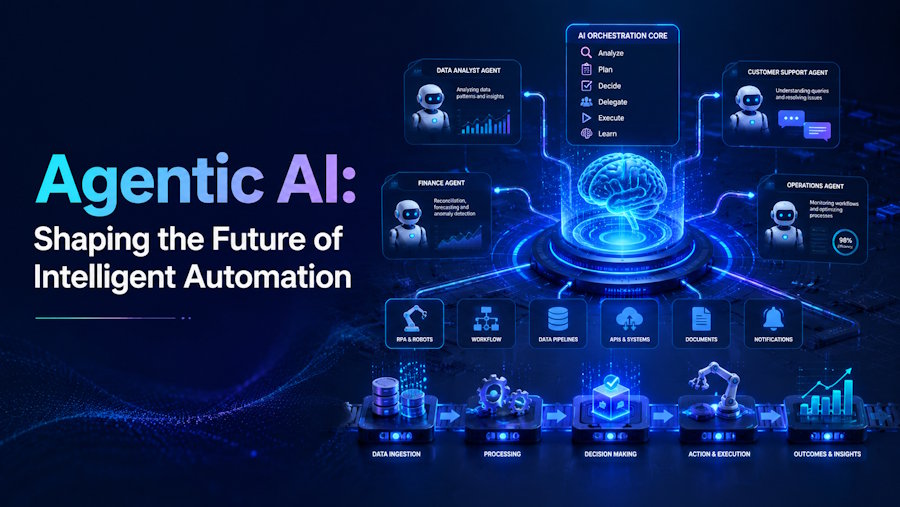
Artificial intelligence has evolved far beyond chatbots and virtual assistants. Today, AI is capable of analysing information, making decisions, and completing complex tasks with minimal human input. This new generation of intelligent systems, known as Agentic AI, is transforming the way businesses operate by enabling software to plan, reason, and take action toward achieving specific goals.
As organisations increasingly adopt autonomous AI solutions, there is a growing demand for professionals who understand how these systems work. Many developers, students, and business professionals are exploring an Agentic AI course to gain practical knowledge of building and deploying AI agents in real-world environments.
What Makes Agentic AI Different?
Unlike traditional AI tools that respond to a single prompt, Agentic AI can handle multi-step tasks independently. It can break down objectives into smaller actions, access external tools, evaluate results, and adjust its approach based on changing conditions. This ability to operate with greater autonomy makes Agentic AI suitable for solving more complex business challenges.
From automating customer support to managing workflows and conducting research, AI agents are becoming valuable digital collaborators across various industries.
Why Businesses Are Investing in Agentic AI
Organizations are using Agentic AI to improve efficiency, reduce manual effort, and enhance decision-making. Industries such as healthcare, finance, e-commerce, marketing, and software development are already leveraging AI agents to automate repetitive processes while allowing employees to focus on higher-value work.
As adoption continues to grow, professionals with expertise in designing and managing autonomous AI systems are becoming increasingly valuable in the job market.
Skills Needed to Build AI Agents
Developing intelligent AI agents requires a combination of technical and problem-solving skills. Understanding large language models, prompt engineering, workflow design, memory management, and tool integration helps create AI systems capable of completing complex tasks reliably.
Career Opportunities
The rise of Agentic AI is creating new career paths for AI engineers, machine learning specialists, automation consultants, and product developers. Companies are looking for professionals who can design intelligent workflows and integrate AI agents into business operations.
Building practical experience alongside technical knowledge can help candidates prepare for these emerging roles and stay competitive in an AI-driven job market.
Looking Ahead
Agentic AI represents a significant step forward in the evolution of artificial intelligence. Instead of simply generating responses, these systems can reason, plan, and execute tasks with increasing independence. As businesses continue to adopt autonomous AI technologies, learning how to develop and manage intelligent agents will become an increasingly valuable skill.
Whether you're beginning your AI journey or expanding your existing expertise, investing time in understanding Agentic AI can help you stay ahead in one of the fastest-growing areas of technology.

