


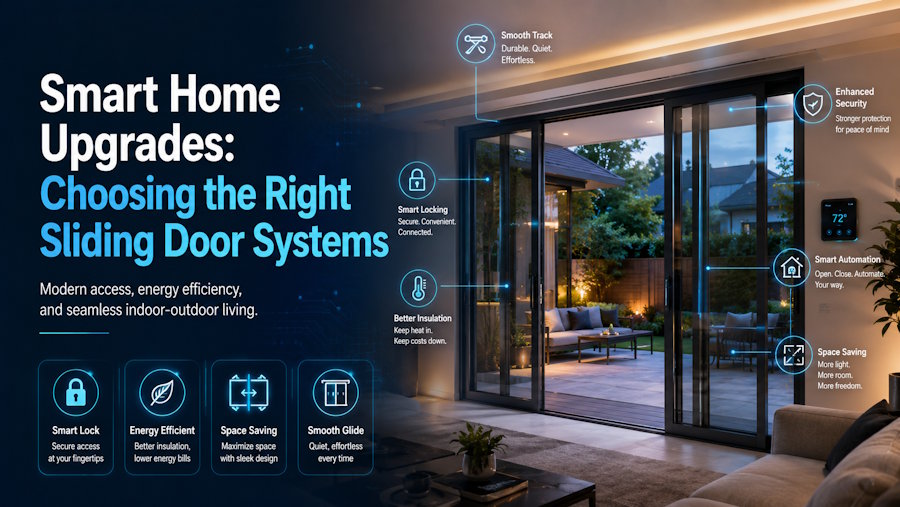
As homes become smarter and more design-conscious, the humble door has quietly become a technology and engineering decision as much as an aesthetic one. Sliding door systems in particular sit at the intersection of automation, energy efficiency and space planning, which is why they feature so heavily in modern home upgrades.
For homeowners weighing an upgrade, understanding what separates a well-specified sliding system from a basic one can make the difference between a feature that works flawlessly for years and one that binds, leaks or drives up cooling costs.
Why Sliding Systems Suit Modern Homes
Sliding doors save space by moving along a track rather than swinging into a room, which makes them ideal where floor area is limited or where a large opening is needed. They also allow much larger panes of glass than hinged doors, flooding interiors with light and opening living spaces to balconies, gardens or courtyards.
In warm climates the appeal grows, because a well-sealed sliding system can open a home to a terrace when the weather allows and close into an insulated barrier when it does not. That flexibility is central to how contemporary homes are designed to be lived in.
The Technology Inside a Good System
Behind the simple sliding motion sits real engineering. Panels can weigh several hundred kilograms, so the running gear has to carry that load smoothly and repeatedly without developing play. Cheap rollers fail quickly; quality systems specify hardware rated well beyond the actual panel weight.
Thermally broken aluminium frames prevent heat transferring through the metal itself. Specialists working with sliding doors Dubai projects tend to specify glass according to the orientation of each elevation, so a west-facing opening exposed to afternoon sun gets a different specification than a shaded one.
What to Confirm Before You Buy
Homeowners planning an upgrade should confirm a few practical points early. Threshold detailing needs to handle drainage properly, especially on ground floors. Track design should keep floors as flush as possible for a clean look and easy movement. Security hardware, laminated glass and multi-point locking, is worth insisting on. And maintenance access to the running gear should be considered at the design stage, because hardware buried behind sealed trim is expensive to service later.
Sizing and layout planning matter as well. A sliding system needs somewhere for the panels to slide to, so the wall space beside the opening has to be planned around the door rather than as an afterthought. Getting this right at the design stage avoids awkward compromises later, such as panels that only partly clear the opening or stack in front of a window.
Automation is increasingly part of the picture too. Motorised sliding systems can be integrated with smart-home controls, opening and closing on a schedule, responding to a voice command, or linking to climate control so the home manages ventilation automatically. For a genuinely smart home, a door that talks to the rest of the system is a natural fit rather than a gimmick.
Budget planning benefits from the same foresight. The glass, the hardware and the installation each affect the final cost, and cutting corners on any one of them tends to show later. Spending sensibly on quality running gear and correctly specified glazing usually costs less over the life of the door than choosing the cheapest option and replacing failed parts within a few years.
Chosen carefully and installed precisely, a sliding door system is one of the few home upgrades that improves daily comfort, natural light and energy efficiency at the same time, which is exactly why it has become a staple of the modern smart home.

