

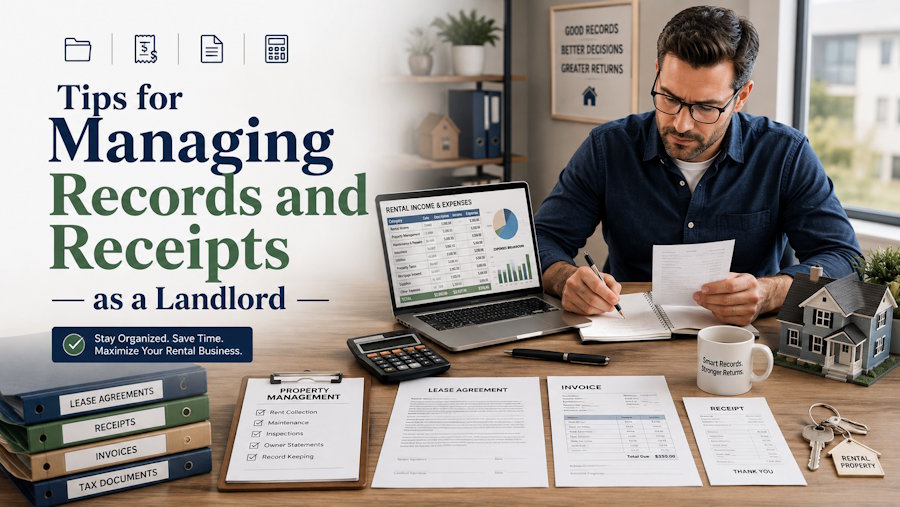
Good record-keeping is one of the simplest ways to reduce stress in your rental business. When your files are organized, you can understand how your properties are performing, prep for tax time without scrambling, and respond faster if a tenant ever disputes a charge.
The goal isn’t to save every scrap of paper forever. It’s to build a system that captures the right documents, stores them securely, and makes them easy to find later.
Why Solid Record-Keeping Pays Off
Landlord record-keeping supports three big areas:
- Financial clarity: You can track income and expenses, spot trends, and make decisions based on real numbers instead of guesses.
- Tax readiness: Clean documentation helps support deductions and lowers the odds of issues if the IRS asks questions. (For example, the IRS has specific substantiation rules for certain expenses like travel.)
- Legal protection: Leases, payment histories, and maintenance logs can matter in disputes about late fees, damages, or deposits.
Paper vs. Electronic Records: Choose What You’ll Actually Maintain
The IRS generally accepts both paper and electronic recordkeeping, so the best method is the one you’ll keep consistent.
Paper can feel straightforward when you’re starting out, but it becomes hard to search, hard to back up, and easy to lose once you have multiple units.
Electronic records (scans, spreadsheets, cloud folders, accounting tools) are easier to organize by property and year, and easier to retrieve quickly when you need a specific lease, invoice, or receipt.
What Records Should Landlords Keep?
If you’re building your system from scratch, focus on the core categories below and add detail over time:
- Bank statements showing income deposits and expense payments (and helping demonstrate separation of business vs. personal activity)
- Expense receipts for utilities, repairs, maintenance, supplies, insurance, and other property costs
- Tax returns and supporting tax documents (federal/state/local, plus backup for deductions)
- Purchase and ownership documents like settlement statements, escrow paperwork, and inspection reports
- Rental payment evidence including payment histories and rent receipts
- Leases, applications, and screening documentation (including your screening process notes)
- Maintenance records such as work orders, contractor invoices, and warranty documents
If you ever sell a property, improvement records can also affect your basis calculations, so it’s smart to keep them organized and complete.
How Long Do Landlords Keep Rental Records?
So, how long do landlords keep rental records? A practical approach is to set written retention rules by document type, then do a review twice a year so you don’t drown in paperwork.
Here are common, landlord-friendly guidelines:
- Warranty receipts: keep for the length of the warranty, then shred/securely delete
- Old insurance policies: keep for about three years (unless you have a reason to keep longer)
- Repairs and capital improvement receipts: keep until the property is sold
- Tax documentation: keep at least three years, and many landlords choose to keep up to seven years for extra coverage
From a federal tax perspective, the IRS notes that how long you keep records depends on what the record supports. Many taxpayers anchor retention to the “period of limitations” rules (often three years, but longer in specific cases).
Rent Receipts: Best Practice and Legal Basics
Landlords often ask two questions: does a landlord have to give rent receipts, and if so, when?
The accurate (and frustrating) answer is: it depends on your state and sometimes your city, and the rules can also change based on how rent is paid (cash vs. check vs. electronic). For example, some jurisdictions require receipts for cash payments and may even define what the receipt must include and how long the landlord must keep a record of those cash receipts.
Even if receipts aren’t required in your area, providing rent receipts is still a strong operational habit because it:
- Reduces payment disputes
- Builds tenant trust
- Creates a clean audit trail for your books
At minimum, a solid receipt should include the tenant name, property/unit, amount paid, date received, payment method, and the rental period covered.
A Simple Workflow That Stays Manageable
If you want a system you can maintain all year, keep it simple:
- Use separate bank accounts for rental activity so transactions are easier to track and prove later.
- Create folders by property, then by year, with subfolders for leases, payments, maintenance, and taxes.
- Back up your digital files to a reliable cloud storage provider so records don’t disappear with a lost laptop.
- Get key agreements in writing, and save communication logs when issues arise (repairs, rent concessions, payment plans).
When you combine consistent tracking with a clear retention policy, you’ll spend less time hunting for documents—and more time making decisions that actually improve your rental business.

