

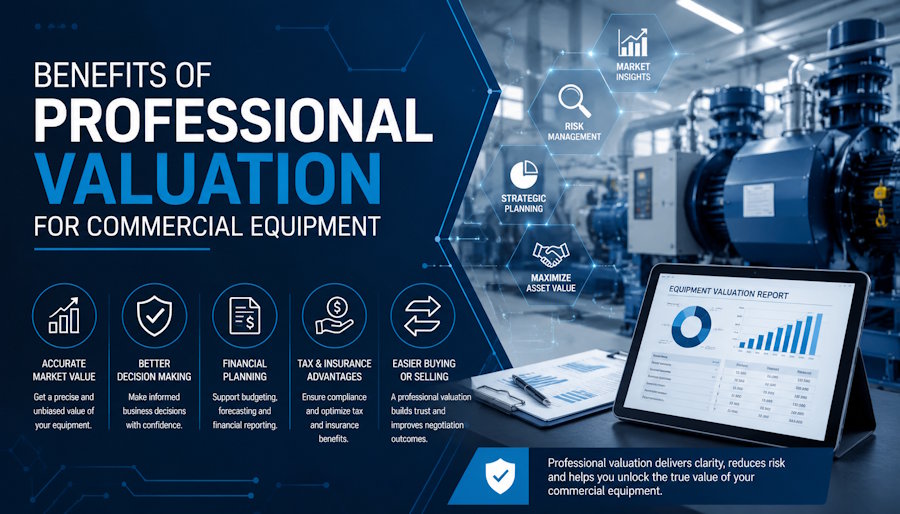
Equipment appraisers are certified professionals who determine the fair market value of machinery and physical assets. Businesses rely on them for lending, legal disputes, mergers, tax filings, and asset sales. A certified appraisal report gives you a defensible, documented valuation that holds up under financial and legal scrutiny.
Most business owners don't think about asset valuation until they absolutely have to. A bank asks for documentation before approving a loan. A merger falls through because both parties can't agree on what the equipment is worth. A divorce settlement gets complicated by shared business assets. Suddenly, knowing the true value of your machinery matters — a lot.
That's where professional equipment appraisers come in. Whether you run a manufacturing plant, a restaurant, a farm, or a construction company, understanding what your physical assets are worth is a fundamental part of sound business management.
What Is an Equipment Appraisal?
An equipment appraisal is a formal, documented process that determines the current value of a business's machinery and physical assets. The result is a certified report — prepared according to established industry standards — that outlines what your equipment is worth and why.
These reports are used across a wide range of business situations, including:
- Asset-based lending — Lenders often require certified valuations before approving loans secured by equipment.
- Mergers and acquisitions — Buyers and sellers need an objective third-party valuation to negotiate fairly.
- Liquidations — Knowing market value helps businesses maximize returns when selling off assets.
- Legal proceedings — Courts and attorneys rely on certified appraisal reports during disputes and divorce cases.
- Tax and insurance purposes — Accurate valuations support proper depreciation schedules and insurance coverage.
A well-prepared appraisal report doesn't just give you a number. It provides useful life analysis, market trend data, and the documented evidence decision-makers need to move forward with confidence.
What Standards Do Certified Appraisers Follow?
Reputable equipment appraisers operate under strict professional guidelines. The two most widely recognized frameworks in the U.S. are USPAP (Uniform Standards of Professional Appraisal Practice) and IFRS (International Financial Reporting Standards).
Certified appraisers typically hold credentials such as the CMEA (Certified Machinery and Equipment Appraiser) or the GPPA (Graduate Personal Property Appraiser). These designations require passing rigorous training programs and maintaining ongoing education — which means the professionals holding them stay current with market conditions and industry best practices.
When you receive a USPAP-compliant report, you're getting a document that meets the standards required by banks, the IRS, the SBA, and the courts. That compliance matters when the stakes are high.
Onsite vs. Desktop Appraisals: What's the Difference?
One of the most common questions businesses have is whether they need an appraiser to visit in person. The answer depends on the scope and purpose of the appraisal.
Onsite appraisals involve a certified professional visiting your facility to physically inspect the equipment. This approach is often preferred for larger, more complex asset collections or when the appraisal will be used in legal or regulatory proceedings.
Desktop appraisals are conducted remotely using documentation you provide — such as asset lists, photos, maintenance logs, and depreciation schedules. They cost less and can often be completed faster, making them a practical option for straightforward valuations.
Both methods, when conducted by qualified equipment appraisers, can produce certified, compliant reports. The right choice depends on your timeline, budget, and the intended use of the report.
How to Prepare for an Equipment Appraisal
Getting ready for an appraisal doesn't have to be complicated. A little preparation goes a long way toward keeping the process fast and accurate. Here's what most appraisers will ask for:
- Documentation — Gather purchase receipts, depreciation schedules, and any other records related to your machinery and equipment.
- Maintenance and repair logs — Service history, records of major upgrades, and recent rebuilds all affect value.
- Clean and accessible assets — Make sure data plates are visible and equipment is accessible for inspection.
- Operational status — Confirm that equipment can be powered up during an onsite visit.
- Purpose of the appraisal — Let your appraiser know upfront whether the report is for lending, tax, a merger, or another specific need. This helps them target the exact valuation standard required.
Providing this information upfront typically speeds up the entire process. Many firms can deliver a completed report within three to five business days for small to medium-sized jobs.
Which Industries Rely on Equipment Appraisals?
Asset valuation is relevant across nearly every sector of the economy. Some of the industries that most commonly require certified appraisals include:
- Manufacturing — Large, complex machinery with long useful lives requires precise documentation.
- Construction — Heavy equipment fleets are often used as collateral for project financing.
- Agriculture — Farm equipment valuation supports estate planning, lending, and asset transfers.
- Restaurant and food service — Commercial kitchen equipment is frequently appraised for resale or business transitions.
- Medical and healthcare — Specialized medical devices require appraisers with sector-specific knowledge.
Regardless of industry, the goal is the same: an accurate, defensible number backed by thorough documentation.
Why Getting the Right Valuation Matters
An incorrect valuation — in either direction — can create real problems. Overvalued assets can inflate loan collateral beyond what lenders will accept. Undervalued assets can cost you money in negotiations or settlements. And without a certified report, you may not have the documentation needed to satisfy regulatory requirements at all.
Professional equipment appraisers bring both technical knowledge and market insight to the process. They analyze comparable sales data, account for depreciation, factor in useful life, and apply the appropriate valuation standard for your specific situation. The result is a report you can stand behind.
Making the Most of Your Assets
Understanding the value of your equipment isn't just a box to check for a bank or a lawyer. It's useful information for running your business well — knowing when to reinvest, when to sell, and how your assets hold up against your liabilities.
If you've never had a formal appraisal done, or if your last one is more than a few years old, it may be worth scheduling a consultation. The process is straightforward, the timeline is manageable, and the documentation you receive can serve your business across a wide range of future decisions.
Frequently Asked Questions
How much does an equipment appraisal cost?
Costs vary based on the number of assets and the scope of work. Most appraisal firms provide a quote quickly — often within an hour. Entry-level appraisals typically start around $600.
How long does an appraisal take?
For small to medium jobs, most firms deliver a completed report within three to five business days after collecting all necessary data or completing the inspection.
Do appraisal reports meet SBA and IRS requirements?
Yes, provided the report is prepared by a certified appraiser following USPAP or IFRS guidelines. Always confirm compliance before ordering a report for regulatory purposes.
What's the difference between fair market value and liquidation value?
Fair market value reflects what a willing buyer would pay a willing seller in an open market. Liquidation value is typically lower, reflecting a quicker, more pressured sale. The intended use of your appraisal determines which standard applies.
Can I get an appraisal done remotely?
Yes. Desktop appraisals are a cost-effective option when you can provide sufficient documentation. Your appraiser will guide you through what's needed.

