


Artificial foliage has improved enough that a good panel passes inspection from three feet away. Poor quality panels announce themselves from clear across the lobby. Price rarely explains the difference, since plenty of expensive panels use the same moulds as cheap ones with slightly better packaging. What separates them is leaf variety, density, finish, and whether the manufacturer thought about how light hits the surface. Buyers across the United States order these panels for cafes, clinics, offices, patios, and rented photo backdrops, and each of those settings rewards a different choice.
Matching Panel Choice To The Actual Room
Room type drives the decision far earlier than aesthetics do. Consider a dental office corridor that sees no direct sunlight and gets brushed by passing shoulders all day. Durability matters a great deal there, and UV treatment does not. Rooftop bars in Phoenix face exactly the opposite situation instead. Event rental companies need panels that survive repeated mounting and dismounting onto plywood frames without shedding leaves. Deciding the setting first narrows the catalog by half before you compare a single product photo.
Leaf Variety Sells The Illusion Convincingly
Nothing gives away artificial greenery faster than one leaf shape repeating in a visible grid. Real hedges contain several leaf sizes, several shades of green, and occasional darker or yellowing sections.
- Look for at least three tones of green within a single panel, including one noticeably darker shade.
- Check for mixed foliage such as boxwood, fern, and ivy instead of a single stamped shape.
- Hold the panel at an angle and watch for plastic sheen, which reads as fake under overhead lighting.
- Confirm the backing grid disappears completely when the panel is viewed straight on.
Suppliers such as Green Warehouse publish leaf mix and density details on individual listings, which makes honest comparison possible. Buyers furnishing interiors often start with indoor artificial hedge panels and add textured or flowering sections later once the base wall is up.
Sun Exposure Narrows Your Options Quickly
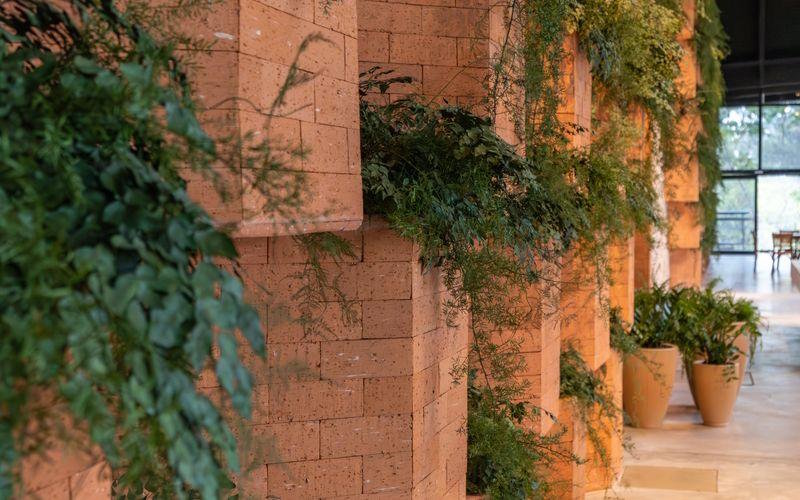
Ultraviolet light destroys untreated polyethylene foliage faster than most buyers expect. Panels without UV inhibitors drift toward yellow within a single summer on a Texas patio or a Florida terrace. UV-stabilized panels hold color outdoors for years, though they carry a higher cost per square foot. Green Warehouse separates indoor and UV-protected lines for that reason, and mixing the two correctly across a project keeps the budget sensible. Covered patios still count as outdoor, since reflected light reaches foliage under an awning for most of the day.
Measuring And Ordering Without Wasting Panels
Panel arithmetic trips up first time buyers ahead of every other part of the process. Measure the wall in inches, calculate total square inches, then divide by the square inches of one panel.
- Measure at three heights across the wall, since older buildings rarely run perfectly square.
- Note every outlet, switch plate, and vent, because each one costs you part of a panel.
- Decide your finished edge treatment early, whether trim, a wooden frame, or a clean cut line.
- Add roughly ten percent to your total, since trimming around outlets and corners always wastes material.
- Order a single sample panel first and hold it against your own wall under your own lighting.
- Buy one spare panel beyond your calculation, because dye lots shift slightly between production runs.
Green Warehouse ships in common sizes such as twenty-four by sixteen inches and forty by forty inches, which keeps that arithmetic simple enough to do on a phone.
Seeing The Wall Before You Commit
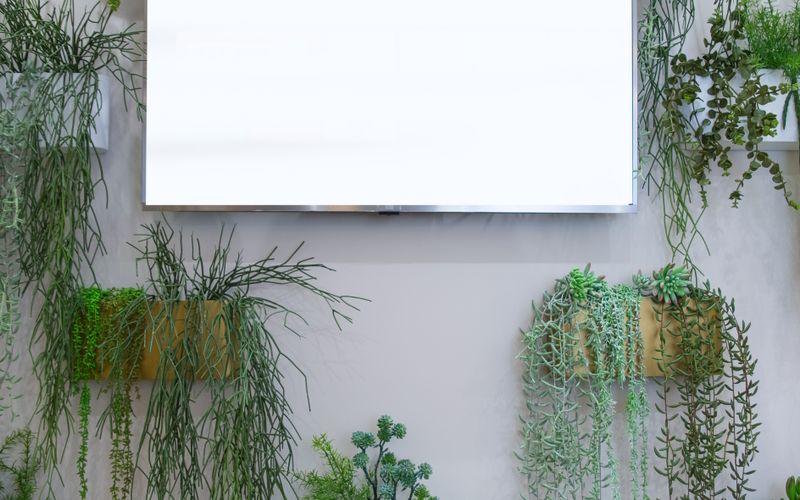
Nobody should spend four figures on a feature wall based purely on imagination. Green Warehouse sends individual sample panels for this reason, and installers almost always order one before committing to a full wall. Photograph the empty wall, then hold your sample panel in frame to judge tone against your existing paint and flooring. Some suppliers now generate room previews from a single photograph of your space. Anyone curious about how those images get produced will find this comparison of photo based and description based visual generation genuinely useful. Seeing a rough preview beats trusting a mental picture every time.
Maintenance Amounts To A Damp Cloth
Upkeep is where artificial panels quietly win against living walls. Living installations need irrigation checks, fertiliser, pruning, grow lights, seasonal replanting, and a technician on retainer. None of that applies to an artificial wall at any point. Dust settles on horizontal leaf surfaces over several months, and a damp cloth or compressed air handles it in minutes. Green Warehouse and similar American suppliers ship direct, which shortens waiting times against imported alternatives. Choose carefully once, install properly, and the wall keeps looking the same in year five.

