

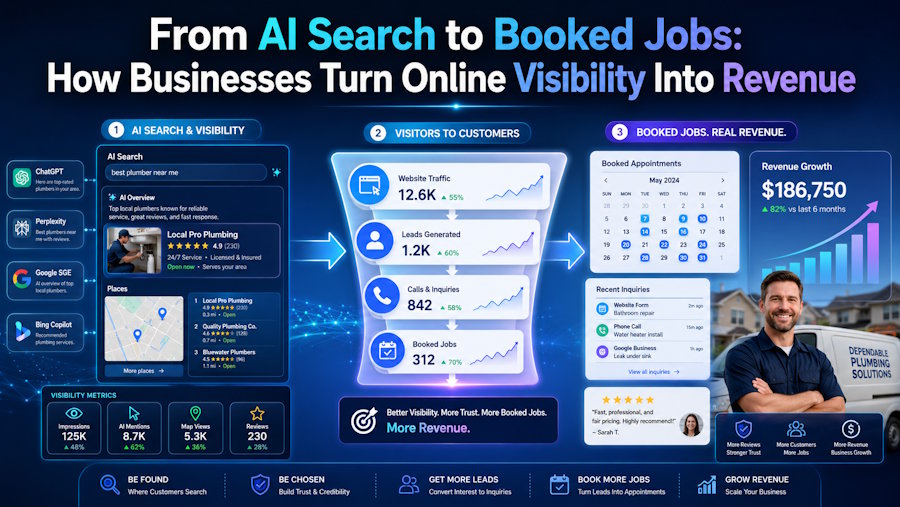
The way people discover businesses online is changing quickly. Search engines still matter, but they are no longer the only starting point. More people are turning to AI-powered search tools to ask questions, compare options, research services, and narrow down their choices before ever visiting a website.
That shift creates a new challenge. Being visible online is no longer just about earning a high position on a traditional search results page. The growing focus on AI search visibility at https://www.zeroclicklabs.ai reflects this change, as businesses also need to make their information easy for AI systems to understand, interpret, and potentially recommend.
The opportunity is significant, but visibility alone is not the end goal. The real value comes from turning that visibility into qualified inquiries, booked appointments, and ultimately revenue.
How the customer journey is changing with AI search
The traditional customer journey often involved typing a short phrase into a search engine, opening several results, and comparing different pages manually.
AI search can compress much of that process.
Someone can now ask a detailed question about what they need, describe their situation, and receive a summarized answer with suggested solutions. Instead of examining ten separate pages, they may begin their research with only a handful of recommendations.
That changes where businesses need to compete for attention.
A potential customer may form their first impression before reaching a website at all. If an AI system understands what a business offers, who it serves, and why its information is useful, that business has a greater chance of becoming part of the research process.
Why being visible is no longer just about rankings
Traditional SEO often focuses heavily on rankings, clicks, impressions, and organic traffic. Those metrics remain useful, but AI-driven discovery introduces another layer.
A page can provide valuable information even when the user does not immediately click through to it. Content may help shape an AI-generated answer, support a recommendation, or establish relevance around a particular topic.
This means businesses need to think beyond simply targeting search terms.
The information itself must be clear. Services need to be described accurately. Important questions should receive direct answers. Pages should demonstrate genuine subject knowledge rather than repeating broad statements that could apply almost anywhere.
The objective is to make the content understandable not only to people, but also to the systems organizing and interpreting that information.
What makes a business more likely to appear in AI answers
There is no single switch that guarantees AI visibility. Instead, it comes from building a stronger overall information footprint.
Well-structured content is a major part of that process. Clear headings, useful explanations, logical page organization, and direct answers make information easier to interpret.
Original insights also matter. Content becomes more useful when it contains specific expertise, observations, research, comparisons, or explanations rather than simply rewriting information that already exists elsewhere.
Technical elements can support that work too. Structured data can provide additional context about a page, while consistent information across the web helps reinforce what a business actually does.
Topical depth is another important factor. A website that thoroughly covers the questions surrounding its core services can establish stronger relevance than one that publishes disconnected articles purely to target individual keywords.
Fun Fact. AI search often changes the order in which people research a purchase. Instead of discovering a business first and asking questions later, users can ask detailed questions first and only investigate individual providers after they have already narrowed down what they want.
AI visibility needs to attract the right prospects
More visibility is useful only when it reaches people who may realistically become customers.
A thousand appearances for broad informational questions may be less valuable than a smaller number of appearances for searches made by people actively comparing solutions or preparing to make a decision.
That is why AI visibility should connect closely with customer intent.
Content can address early research questions, but it should also support prospects as they move toward a purchase. Comparison topics, pricing considerations, common concerns, process explanations, FAQs, and decision-making guides can all help a business become more relevant during the moments that matter most.
The strongest strategy is not simply about becoming visible everywhere. It is about becoming visible at the right point in the buying journey.
What happens after the lead finds you
Getting discovered is only the first half of the process. Once someone submits an inquiry, requests a quote, calls, or asks for an appointment, the experience that follows can determine whether that visibility produces revenue. This becomes particularly important for service-based businesses managing multiple appointments, repeat customers, quotes, follow-ups, and field teams at the same time. Leads can easily disappear inside spreadsheets, inboxes, missed calls, or disconnected scheduling systems. A centralized CRM can help organize new inquiries, track conversations, automate reminders, manage customer information, and move prospects from initial contact toward a confirmed booking. Businesses looking to streamline that process can reach out to The Cleaning Software to bring lead management, customer communication, and scheduling into a more organized workflow. Faster responses also reduce the chance that an interested prospect simply moves on to another option. When lead management and scheduling work together, marketing stops being measured only by how many inquiries arrive and starts being measured by how many actually become customers.
The real goal is a connected path from discovery to revenue
AI search is creating new ways for potential customers to discover and evaluate businesses, but appearing in those conversations is only valuable when the rest of the customer journey works.
Strong content can create visibility. Clear positioning can attract better prospects. An organized sales process can then turn those prospects into booked work.
The businesses that benefit most from AI-driven discovery will likely be the ones that connect all three stages rather than treating them separately.
Being found is important. Being understood is even better. But turning that attention into measurable revenue is where the real value begins.

