

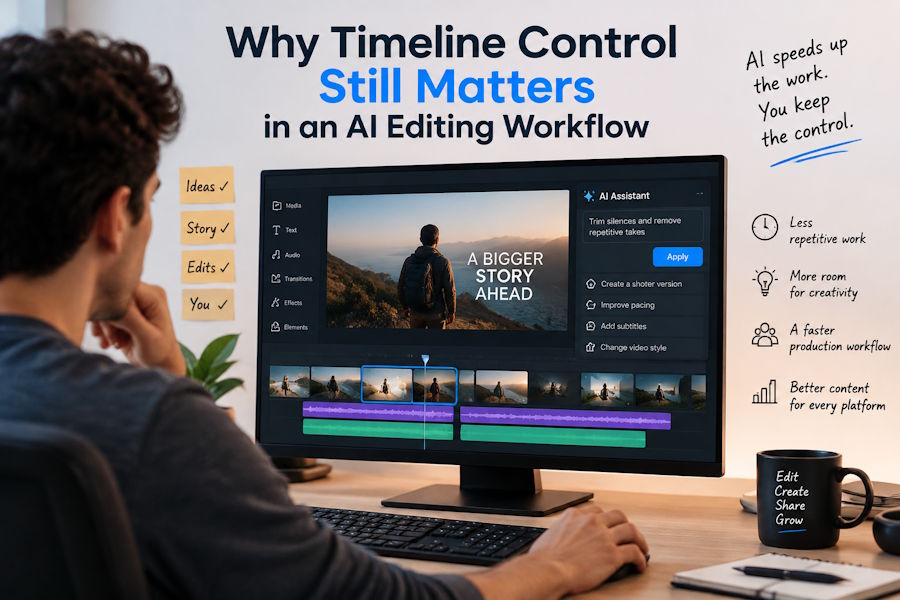
Video editing has always involved a balance between automation and creative control. While traditional editing software gives creators complete control over every frame, it also requires them to manually handle repetitive tasks such as sorting footage, trimming unwanted sections, arranging clips, and preparing different versions.
Artificial intelligence is changing this process by helping creators complete these tasks faster. Modern AI editing workflows can analyse footage, suggest changes, and assist with parts of the production process that previously required significant manual effort.
However, faster automation does not remove the need for control. For professional creators, editors, and production teams, the timeline remains one of the most important parts of the editing workflow.
The timeline is where creative decisions happen. It determines how scenes connect, how a story develops, and how the final video feels to the viewer.
The Importance of Timeline Control in Video Editing
A video timeline is more than a place where clips are arranged. It is the workspace where editors shape the structure of a project.
Every decision made on the timeline affects the final output. The placement of a cut, the timing of a transition, the balance between audio and visuals, and the order of scenes all contribute to the storytelling process.
Even when AI helps with repetitive tasks, creators still need the ability to review and adjust the results. A fully automated output may save time, but without timeline control, editors have limited ability to refine the details that make content unique.
This is why AI-powered editing workflows are moving toward collaboration between automation and human decision-making rather than replacing the editing process completely.
Why AI Editing Needs Human Control
AI can analyse large amounts of footage and identify patterns quickly. It can help find important moments, remove unnecessary sections, and create an initial structure for a video.
However, editing decisions often depend on context. A pause may be removed in one video but kept in another because it creates a specific emotional effect. A particular camera angle may be important for storytelling even if an automated system considers another clip technically better.
Human editors understand these creative choices.
A strong AI editing workflow should handle repetitive execution while allowing creators to review, adjust, and refine the final result.
This approach gives creators more flexibility because they spend less time performing manual tasks and more time focusing on the creative direction of the project.
How AI Agents Are Supporting Timeline-Based Editing
Modern AI tools are moving beyond simple automation. Instead of only applying individual commands, AI agents can support connected editing tasks across the workflow.
For example, creators working with long recordings often need to review hours of footage, identify usable sections, remove repeated takes, and prepare a first version before refining the final edit.
Invideo editor combines a professional editing timeline with AI editing agents that can handle these repetitive parts of production. Creators can provide direction, work with their footage, and receive assistance with tasks such as footage review, section selection, removing unnecessary parts, and preparing an editable base cut.
This type of workflow is useful for interviews, podcasts, tutorials, documentaries, and other projects where managing large amounts of footage can become time-consuming.
How Invideo Editor Keeps the Editing Process Flexible
One important part of AI-assisted editing is keeping the project editable after automation.
Instead of creating a fixed final output, Invideo Editor allows creators to continue working with the timeline, review changes, and make adjustments based on their own creative decisions.
The workflow focuses on assisting with execution while keeping the creator responsible for the final direction. AI agents can help organize footage, prepare a starting point, and reduce repetitive work, but editors can still adjust pacing, replace clips, and refine the overall structure.
This makes AI assistance more useful for professional workflows where flexibility and control are essential.
The Role of AI in Faster Video Production
Content creators and businesses are producing more videos than ever. Social media platforms, online education, marketing campaigns, and digital platforms all require regular video production.
The challenge is not only creating videos but also maintaining consistency without increasing production workload.
AI editing workflows help solve this problem by reducing the time required for operational tasks. Instead of spending hours organising footage or creating initial cuts, creators can focus on improving storytelling, adding creative elements, and preparing content for different audiences.
For teams producing multiple videos, this can make the entire workflow more efficient.
Choosing AI Editing Tools With the Right Balance
When selecting an AI editing solution, automation should not be the only factor to consider.
Creators should also look at:
- Editable workflows: The ability to review and modify AI-assisted changes.
- Timeline access: Direct control over the structure and arrangement of the project.
- Footage understanding: Support for working with real recordings instead of only generating new content.
- Collaboration features: Options for teams to review and refine projects together.
- Creative flexibility: The ability to combine AI assistance with manual editing decisions.
The best tools are not those that remove creators from the process. They are the ones that reduce repetitive work while keeping creative control available.
The Future of AI-Assisted Video Editing
AI will continue to improve how creators approach video production. As these systems become better at understanding footage and editing instructions, more production tasks will become easier to manage.
However, timeline control will remain important because editing is not only about completing technical tasks. It is about making decisions that influence storytelling, pacing, and audience experience.
AI can help creators work faster, but the final creative direction still depends on human input.
Conclusion
AI is changing video editing by reducing repetitive work and helping creators manage complex production workflows more efficiently.
From organising footage to preparing initial cuts, AI assistance can save time during different stages of production. Tools like invideo editor show how AI-powered workflows can support creators by handling repetitive editing tasks while keeping the timeline editable and under their control.
However, maintaining control over the timeline remains essential for creating polished and meaningful content. The future of video editing will likely combine AI-powered assistance with human creativity, allowing creators to work faster while keeping control over the final result.

