

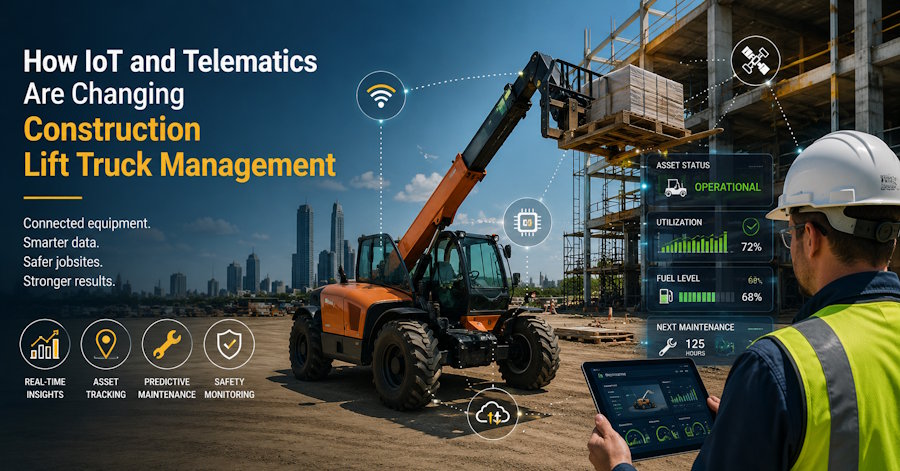
Construction sites are getting connected and one of the greatest changes is in the equipment management. Traditionally, construction lift trucks were maintained by a combination of periodic inspections, paper logs, operator inputs and basic fleet tracking. These techniques are viable, but are not always a good indicator of what equipment is doing between inspections.
The combination of the Internet of Things (IoT) and telematics is changing that model. By leveraging connected sensors, GPS, machine data, and cloud-based platforms, managers can gain real-time data on equipment location, operating condition, utilization and maintenance needs. This enables construction companies to decide based on real-time data, not assumptions or late reports.
What IoT and Telematics Bring to Construction Equipment
The Internet of Things (IoT) is a network of devices that gather and share data. In construction equipment, sensors can track aspects like engine performance, operating hours, fuel usage, temperature, hydraulic status, and equipment motion.
This data is combined with communication and location features through telematics. A telematics system can provide data from a machine to a central location where a manager can view machine activity remotely.
This means that lift truck operations are constantly generating information. Managers can identify which machines are in use, their location, the duration of use and if there are signs that need attention.
This means it's part of a larger construction technology shift in the direction of real-time visibility. Construction technology platforms and IoT devices are becoming more prevalent for tracking assets, optimizing resource usage, and enabling quicker decisions.
Real-Time Equipment Tracking
The most basic use of telematics is GPS equipment tracking. Lift trucks can be working on various construction sites, yards or temporary work areas. Manual or phone calls may be needed to find a specific machine if there is no connected tracking.
Through telematics, the position of machinery can be seen in one place. Fleet managers can find out where each truck is going, and if equipment has been taken outside of an approved area.
An additional layer of control can be added with geofencing. Managers can set virtual walls within a construction site or storage area, and get alerted when equipment moves in or out of the boundaries.
This information can also assist in arranging. Managers don't have to assume they will need to hire or buy more lifting equipment for one project, since if so, they can discover alternative machines at other sites.
Integrating Machine Data into the Maintenance Process
Connected technology can also have a significant impact on maintenance. Preventive maintenance programs are typically scheduled by calendar periods or operating hours. While scheduled maintenance is necessary, telematics can inform you more about what equipment is actually being used.
Engine hours, operating conditions, fault codes, and more can be monitored using sensors. If abnormal behavior is detected, the system may be able to warn maintenance personnel before the problem escalates to a bigger trouble.
This helps to maintain a proactive maintenance approach. As opposed to waiting for the equipment to fail, managers may investigate the warning signs and schedule equipment services when it's more convenient to the project.
Predictive maintenance is already a huge advantage of connected fleet technology as telematics can track a vehicle's performance, fuel consumption, and behavior to detect potential issues before they occur.
Improving Equipment Utilization
A construction company can have a number of different lift trucks both owned and rented, but not all these models are used to the same extent. Partially, equipment can be idle for long periods of time while other equipment is used to its full capacity.
Managers can use IoT utilization data to gain insights into these trends. They are able to look at machine operating hours, idle time, location and usage can be compared across machines.
If a lift truck has been idle for a number of weeks the company may choose to transfer it to a different project. On the other hand, if the equipment is consistently utilized to a high level, then it might suggest the firm requires more capacity.
This can help to minimise the unnecessary expenditure of equipment and thus maximise the use of existing fleet.
Supporting Safer Operations
Proper operation, inspections, training and site procedures are essential to construction equipment safety. These fundamentals cannot be replaced by connected technology, but can be complemented by additional information for safety management.
Excessive idling, harsh movement, unauthorized use and operating outside designated areas can be detected with telematics. These patterns can be used to enhance training and operating practices by managers.
Understanding operating conditions is especially critical for equipment that is lifting personnel and/or material. It is still vital to choose the right machine for the job. An aerial boom lift can offer the reach and positioning needed for certain applications, and connected monitoring can give fleet managers visibility into the condition and use of equipment, for elevated-access tasks.
The technology is therefore not intended to replace the judgement of the operator or existing safety practices but rather to be part of a wider safety system.
Integrating Data from Equipment with Construction Management
The greatest opportunity could be when equipment information is integrated with other construction management systems.
Digital scheduling, the use of mobile apps, cloud-based platforms, and real-time collaboration tools are already employed in modern construction operations. The challenge is to get information from various systems to play nicely together.
The information from equipment utilization may be compared to project schedules to find conflicts, for instance. Service workflows might be associated with maintenance alerts. Information about location may be useful to job site managers for coordination of equipment transfer between job sites.
Our Code World has been documenting this larger trend towards connected construction technology, from real-time data, digital platforms, IoT devices to integrated project management tools.
With the equipment data included in the overall project information system, managers have a more detailed view of field operations.
Minimizing Downtime and Maximizing Productivity
When equipment is unexpectedly taken out of service, it can throw off construction schedules. If a critical machine goes down, crews might have to wait for it to be available, the work might have to be rescheduled, or replacement equipment might have to be located fast.
IoT and telematics can mitigate this risk, if used, by giving earlier insight into the condition and use of equipment. Machines that are displaying warning signs can be prioritized for maintenance teams and managers can be able to find alternative equipment when it is needed.
It's not just about gathering more data. The true power lies in the use of this data to make meaningful decisions.
What Is the Future Like?
Construction lift truck management is shifting from the "reactive" phase of fleet control to connected and data-driven operations. IoT sensors, GPS, telematics, cloud platforms and analytics are enabling much better understanding of equipment performance.
As these systems grow in complexity, construction firms can increasingly leverage machine data to automate alerts, forecast equipment usage, implement predictive maintenance, and allocate equipment smarter.
Not all companies that will benefit will be the ones that gather the most data. They will be the ones who relate to real-world considerations of equipment information for maintenance, safety, scheduling and productivity.
So, for construction fleets, IoT and telematics are more than tracking technologies. They are now playing a crucial role in a smarter equipment management strategy throughout the project lifecycle.

