

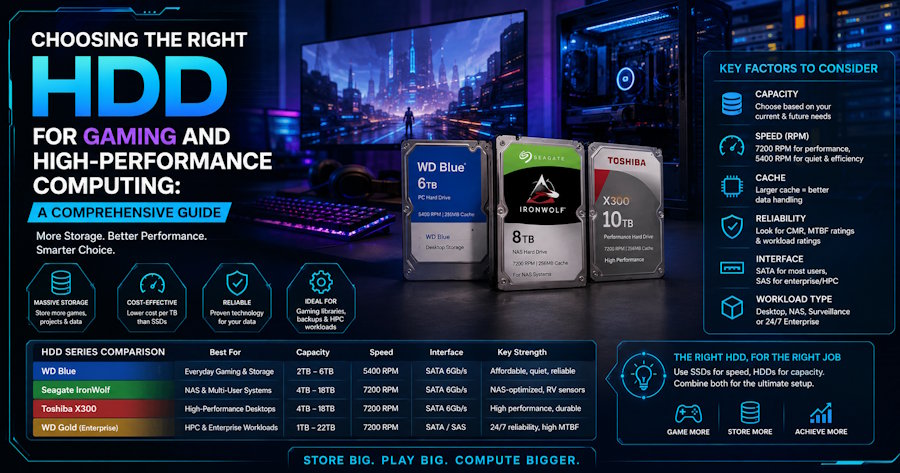
In the realm of gaming and high-performance computing, selecting the appropriate storage solution is crucial for optimal system performance. While solid-state drives (SSDs) have gained popularity for their speed, hard disk drives (HDDs) remain a viable option for users requiring larger storage capacities at a more affordable price point. This guide aims to provide an in-depth understanding of how to choose the right hdd hdd for gaming and high-performance computing applications.
Understanding HDD Technology
Hard disk drives store data magnetically on rotating platters. The speed at which these platters spin, measured in revolutions per minute (RPM), directly impacts data access times and overall performance. Common RPM ratings include 5400, 7200, and 10,000 RPM, with higher speeds generally offering faster data transfer rates.
Key Factors in Selecting an HDD
When choosing an HDD for gaming or high-performance computing, several factors must be considered. These include storage capacity, RPM speed, cache size, interface type, and reliability.
Storage Capacity
Gaming and high-performance computing often require substantial storage space due to large game files, software, and data sets. HDDs typically offer capacities ranging from 500GB to several terabytes, making them suitable for users needing extensive storage without the premium cost of large-capacity SSDs.
RPM Speed
The RPM speed affects how quickly data can be read from or written to the drive. A 7200 RPM drive is generally recommended for gaming and performance tasks as it provides a good balance between speed and cost. Drives with 10,000 RPM are faster but tend to be more expensive and generate more heat and noise.
Cache Size
The cache is a small amount of high-speed memory on the HDD that stores frequently accessed data. Larger cache sizes can improve performance by reducing the time the drive spends accessing data from the platters. For gaming and high-performance computing, a cache size of 64MB or higher is advisable.
Interface Type
SATA III is the most common interface for HDDs, offering data transfer rates up to 6Gb/s. For high-performance systems, ensuring the HDD supports SATA III is essential to avoid bottlenecks. Some enterprise-level HDDs may use SAS interfaces, but these are typically unnecessary for gaming purposes.
Reliability and Durability
Reliability is paramount, especially when handling critical data. Look for HDDs with good reviews and manufacturer warranties. Features such as shock resistance and error recovery controls can enhance durability and data integrity.
Comparing HDDs and SSDs for Gaming
While SSDs offer superior speed and reduced load times, HDDs provide a cost-effective solution for mass storage. A common approach is to use an SSD as the primary drive for the operating system and frequently played games, while utilising an HDD for storing larger files and less frequently accessed data.
Optimising HDD Performance
To maximise the performance of an HDD in a gaming or high-performance setup, regular maintenance is necessary. This includes defragmentation to organise fragmented data, ensuring sufficient free space for efficient operation, and keeping the drive firmware updated.
Conclusion
Choosing the right HDD for gaming and high-performance computing involves balancing capacity, speed, and reliability. By understanding the technical specifications and requirements of your system, you can select a hard drive that complements your setup effectively. For a wide range of reliable and high-quality options, consider exploring the selection of HDDs available from reputable suppliers.
Investing time in selecting the appropriate HDD will ensure a smoother gaming experience and efficient handling of demanding computing tasks.

