

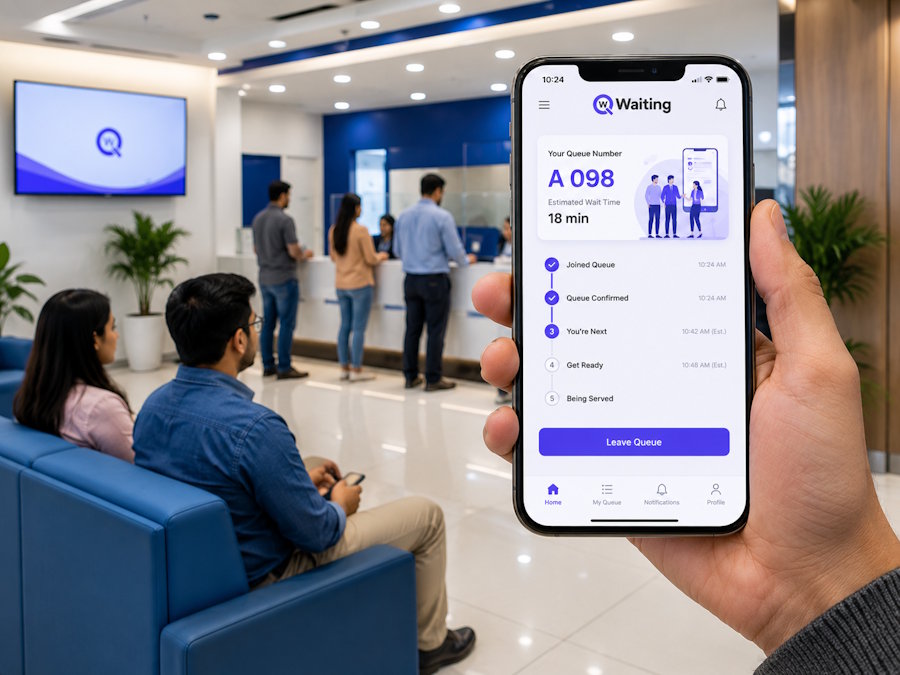
Walk into almost any hospital, bank branch, or government office today, and you'll still find the same paper token machine that's been there for a decade, while every other part of the customer journey has gone digital.
That gap between how customers book flights or order food and how they wait in line is exactly where businesses are quietly losing them.
In the following blog, we will get to know what a virtual queue management system actually is, and what actually separates a platform worth investing in from one that just moves the same chaos online.
The Real Reason Businesses Are Losing Customers Before They Even Get Served
Most walkouts never get reported as complaints, they simply stop coming back, and here's exactly why that keeps happening quietly.
What's Actually Happening When Customers "Just Walk Out"
- Customers rarely complain, they just don't come back, so the real loss stays invisible on paper
- A ten minute delay feels like thirty when there's no visibility into how long the wait will actually take
- Front desk staff absorb the frustration first, which drives burnout long before it ever shows up in CSAT scores
- Branch managers often don't find out a problem exists until footfall or revenue drops months later
Where Manual and On-Premise Systems Are Quietly Failing
- A physical token system has no way to notify anyone if a customer steps away or a counter goes down
- There's no data trail, so leadership ends up making decisions on gut feeling instead of real service metrics
- One system per branch means zero visibility across locations for regional or multi city operations
- Peak hour surges overwhelm the same fixed number of counters every time, with no way to redirect the load
The Different Ways Businesses Are Trying to Solve the Waiting Problem
From paper tokens to cloud platforms, here's a clear breakdown of every approach businesses use to manage customer queues today.
Manual Token and Numbered Ticket Systems
- Low upfront cost, which is exactly why so many branches still run on it by default
- No real time data, no remote monitoring, no way to forecast demand before it hits
- Breaks down completely the moment a business starts operating across multiple locations
- Offers customers zero flexibility, they have to be physically present for the entire wait
Basic Digital Display Boards and Standalone Kiosks
- Improves visibility inside the branch but does nothing for customers waiting outside or at home
- Rarely integrates with appointment booking, so walk-ins and pre-booked visitors still collide at the counter
- Limited reporting means managers see the queue but not the patterns driving it
- Usually built as isolated hardware, hard to update, harder to scale across new locations
Cloud-Based Virtual Queue Management Platforms
- Lets customers join a queue from a phone, kiosk, QR code or WhatsApp before they ever arrive
- Centralizes data across every branch, department and country in one dashboard
- Adjusts in real time as staff availability, service type and footfall change through the day
- Built to scale from a single branch to hundreds of locations without new infrastructure
Inside a Virtual Queue Management System: How It Actually Works
From pre-arrival booking to real-time routing and centralized analytics, here's exactly how a modern queue system operates behind the scenes.
Booking and Check-In Before the Customer Ever Steps Inside
- Customers reserve a slot online, via app or through a QR code, and get a real position before arrival
- Pre-arrival check-in cuts down on walk-in surges during predictable peak hours
- Automatic reminders keep no-shows and late arrivals from throwing off the entire line
- Reduces the physical crowding that makes waiting rooms and branches feel chaotic in the first place
Real-Time Routing That Matches Customers to the Right Counter
- Routes each visitor to the counter or agent best suited to their specific request
- Rebalances the queue instantly if a counter closes or a staff member steps away
- Cuts average handling time by matching request complexity to staff skill level
- Gives floor managers a live view of exactly where bottlenecks are forming
Reaching Customers Wherever They Actually Are
- Customers check their position and estimated wait from a kiosk, mobile browser, app or WhatsApp
- Self-service kiosks handle routine check-ins without adding a single extra staff member
- Biometric and face recognition check-in speeds up identity heavy processes like banking or government services
- SMS and WhatsApp alerts let people wait nearby instead of standing in a physical line
Turning Every Queue Into Data Leadership Can Actually Use
- Centralized analytics show wait times, service speed and staff performance across every branch
- Multi-location reporting makes it possible to compare regions and spot underperforming branches early
- Historical data helps forecast staffing needs before the next peak season instead of reacting to it
- Feedback captured right after service closes the loop on what's actually driving CSAT up or down
Why This Is the Investment That Pays for Itself
From early results to the long-term costs of waiting, here's exactly why this investment earns its return faster than expected.
What Businesses Typically See in the First Few Months
- Noticeable drop in average wait times once pre-booking and routing absorb peak hour pressure
- Fewer no-shows and walkouts once customers can see real-time updates instead of guessing
- Staff spend less time managing crowd frustration and more time actually serving people
- Leadership gets a live, branch by branch view instead of waiting on monthly reports
What It Actually Costs to Wait Another Year
- Lost customers rarely show up as a line item, they just quietly stop coming back
- Staff burnout from managing unmanaged crowds tends to show up as turnover a few months later
- Competitors who've already digitized their service flow are capturing the customers who walk out on you
- The cost of switching only grows as more branches, staff and customer data pile up on the old system
What to Actually Check Before Choosing a Vendor
- Can it run across multiple branches, cities and countries from one central dashboard
- Does it support the channels your customers actually use, kiosk, WhatsApp, app, QR code, not just one
- How deep does the analytics go, real-time only, or historical trends and forecasting too
- What does onboarding and support actually look like once the contract is signed
Conclusion
A virtual queue management system doesn't just move lines online, it gives leadership real visibility, gives staff room to actually do their jobs, and gives customers a reason to stay instead of walk.
If long queues are quietly costing you customers you'll never get an explanation for, it might be time to see what Qwaiting actually looks like in action. Book a free demo and watch your first branch go live in days, not months.

