

Marketing a 3PL is not particularly complicated in theory. The challenge is that logistics is a relationship-driven business, and the companies you want to reach are not always actively looking for a new provider.
A good marketing strategy therefore has to do two things at once. It needs to capture companies that are already looking for logistics help, while also putting your 3PL in front of potential customers before they are ready to make a change.
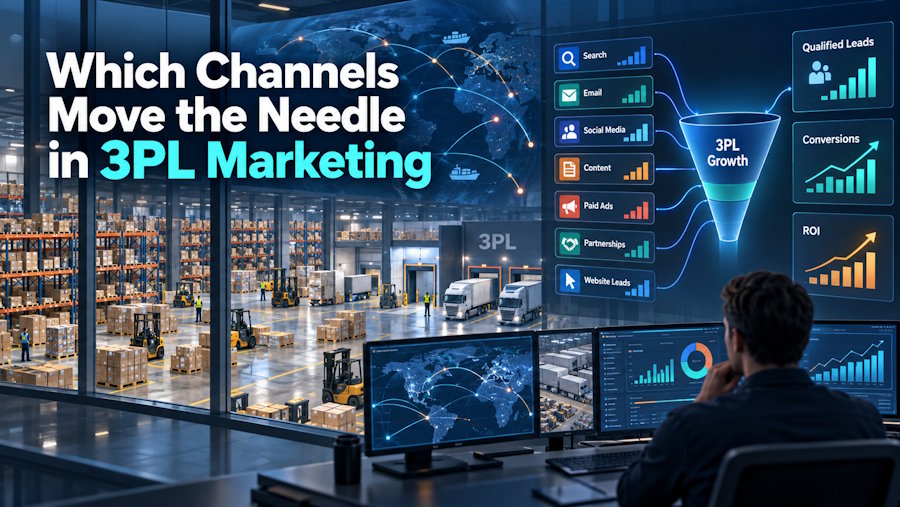
That means there is no single marketing channel that does everything. Marketing for 3PL companies needs to be holistic. SEO, paid advertising, outbound sales, referrals, trade shows, content, LinkedIn, and email all play different roles. The strongest 3PL marketing strategies use them together.
SEO Should Capture Commercial Demand
SEO is one of the most valuable long-term marketing channels for a 3PL company like River Plate Inc. because it allows you to reach people who are already searching for a solution.
A company searching for "3PL fulfillment services," "third party logistics company," or "third fulfillment in California" has very different intent from someone casually reading about supply chains. They may already be comparing providers or actively looking for somewhere to move their logistics operation.
That means a 3PL's SEO strategy should focus heavily on commercial searches.
The website should have dedicated pages for important services such as fulfillment, warehousing, freight management, inventory management, cross-docking, returns, or cold storage. It can also target the industries and locations the business genuinely serves. A 3PL specializing in wine logistics, for example, has an opportunity to build around searches related specifically to wine warehousing, transportation, and fulfillment.
There is also value in content aimed at people earlier in the buying process. Topics such as 3PL pricing, switching providers, reducing fulfillment costs, or comparing in-house fulfillment with outsourcing can attract potential customers before they are ready to request a quote.
The goal, however, should not simply be traffic. A 3PL does not need thousands of people reading logistics articles. It needs the right people finding the company when they have a problem it can solve.
A Website Has to Build Trust
SEO can get someone to your website, but the website itself has to convince them to keep going.
That is especially important for a 3PL because the buying decision involves a lot of trust. A customer may be handing over valuable inventory, fulfillment operations, transportation, and ultimately part of their customer experience.
A professional website helps establish basic credibility, but it needs to do more than look good. It should make it immediately clear what the company does, who it serves, where it operates, and why someone should choose it.
This is also where many 3PL websites fall short. Generic claims such as "comprehensive supply chain solutions" or "reliable end-to-end logistics" do very little to help a prospective customer evaluate the business.
A strong website answers the questions prospects actually have. What industries do you serve? What services do you provide? Where are your facilities? What happens during onboarding? What technology do you integrate with? Can you handle their type of product? What kind of volume can you support?
Customer logos, testimonials, case studies, performance figures, certifications, facility photos, and other evidence can make those claims more believable.
The website should also make the next step obvious. Whether that means requesting a quote, speaking with a logistics specialist, or scheduling an assessment, there should be a clear path from interest to conversation.
Paid Advertising Can Create Faster Opportunities
Paid advertising can be worthwhile for a 3PL, but the economics need to work.
Google Search is usually the logical place to start because it puts the company in front of people who are actively searching for a provider. Someone searching for "3PL warehouse in Texas" or "ecommerce fulfillment company" is potentially much closer to a buying decision than someone simply seeing a logistics ad while browsing another website.
The challenge is avoiding irrelevant traffic. Broad campaigns can attract people looking for jobs, courses, software, trucking services, or information rather than a 3PL. Good targeting, negative keywords, useful landing pages, and accurate conversion tracking are therefore essential.
LinkedIn can play a different role. Rather than waiting for someone to search, you can target specific decision-makers at companies that fit your ideal customer profile. That can be particularly useful for account-based marketing, where the goal is to win a relatively small number of high-value accounts.
Retargeting can also help. A prospect might discover your company through search, a referral, or a sales email, browse the website, and leave without making contact. Staying visible while they evaluate their options can keep your company in consideration.
The important metric is not how many clicks an ad generates. It is whether the resulting leads turn into qualified opportunities and profitable customers.
Outbound Sales Put the Right Companies in Front of You
Unlike SEO and search advertising, outbound does not wait for demand to appear.
You identify the types of companies you want to work with and reach out to them directly. That might involve cold email, LinkedIn outreach, calling, or targeted direct mail.
For a 3PL, this can be particularly effective because the ideal customer is often quite specific. You may want to work with growing e-commerce brands, manufacturers, retailers, or companies in a particular industry and revenue range.
The more specific that profile becomes, the more useful outbound can be. You can also make the message more relevant by focusing on operational problems the prospect is already experiencing, such as warehouse constraints, rising fulfillment costs, or reducing repetitive work through better coordination and automation.
The messaging also matters. A generic introduction about being a "leading third-party logistics provider" does not give a prospect much reason to care. A message tied to a recognizable challenge, such as rapid growth, warehouse constraints, expansion into a new region, or rising fulfillment costs, gives the conversation a reason to exist.
Referrals and Partnerships Build on Existing Trust
Logistics is a relationship-driven industry, which makes referrals particularly valuable.
A freight forwarder may know a company that needs domestic warehousing. A packaging company may work with brands that have outgrown their current fulfillment operation. A supply-chain consultant may have clients looking for a new logistics provider.
These relationships can send highly qualified opportunities because the initial introduction already carries some level of trust.
For that reason, partnerships should not be treated as an afterthought. A 3PL can actively build relationships with complementary businesses and make sure those partners understand exactly who the company serves and what problems it solves.
Trade Shows Still Have a Place
Trade shows can be expensive, but they remain useful when the event attracts the right audience.
Their value is less about collecting the largest possible number of leads and more about having meaningful conversations with prospective customers and industry partners.
The mistake is treating the event itself as the marketing strategy. The real opportunity often comes from what happens before and after it. Identify the companies you want to meet, arrange conversations in advance, and follow up consistently afterward.
A good trade show interaction can also become the beginning of a much longer relationship.
Content Marketing Builds Expertise and Familiarity
Content marketing is sometimes treated as an SEO tactic, but it has another important job for a 3PL: building trust.
A potential customer may not be ready to switch providers the first time they encounter your company. Useful content gives them a reason to keep paying attention.
Articles, guides, case studies, and industry insights can demonstrate that you understand the problems your customers face. Content about fulfillment costs, peak-season planning, inventory management, warehouse strategy, or industry-specific logistics shows expertise without simply telling people that you are an expert.
Case studies are especially useful because they combine expertise with evidence. Saying that you reduce fulfillment costs is one thing. Showing how you helped a customer improve a specific part of its operation is much more convincing.
Over time, this content also creates familiarity. When that prospect eventually does need a new 3PL, your company is no longer completely unknown to them.
LinkedIn Supports Both Marketing and Sales
LinkedIn works best for a 3PL when it is treated as a relationship and prospecting channel rather than a place to chase viral engagement.
Company leaders and sales teams can use it to connect with operations executives, supply-chain leaders, e-commerce decision-makers, and other people involved in logistics decisions.
Regular posts can reinforce expertise, highlight customer success, explain operational challenges, and share useful industry observations.
At the same time, the platform can support direct outreach to specific prospects. That combination of visibility and one-to-one communication makes it useful for longer B2B sales cycles.
Email Keeps Relationships Alive
Email marketing plays a slightly different role.
It can be used for outbound prospecting, but it is particularly valuable for nurturing relationships. A company that makes an inquiry today might not need a new 3PL for another six months.
Rather than losing that prospect completely, email gives you a way to stay relevant. Useful insights, case studies, company updates, and industry information can keep the relationship warm until the timing changes.
It can also be used to re-engage old leads, communicate with referral partners, and introduce existing customers to additional services.
That makes email more than a lead-generation tool. It becomes a way to maintain relationships over time.
The Strongest Strategy Uses the Channels Together
The biggest mistake a 3PL can make is looking for one marketing channel that will solve everything.
SEO captures people who are already searching. Paid search can accelerate that demand. Outbound puts your company in front of specific prospects. Referrals borrow trust from existing relationships. Trade shows create opportunities for face-to-face conversations. Content demonstrates expertise. LinkedIn supports visibility and prospecting. Email keeps relationships alive.
And the website ties much of it together.
Someone might discover your company through Google, hear about you from a partner, meet your team at a trade show, receive a sales email, or see one of your LinkedIn posts. Eventually, many of those people will visit the website and make a judgment about the business.
That is why 3PL marketing works best as a connected system rather than a collection of isolated tactics.
The goal is not to generate the most traffic, followers, clicks, or email subscribers. It is to consistently put your company in front of the right businesses, establish enough credibility to earn their trust, and turn that trust into conversations and long-term customer relationships.

