

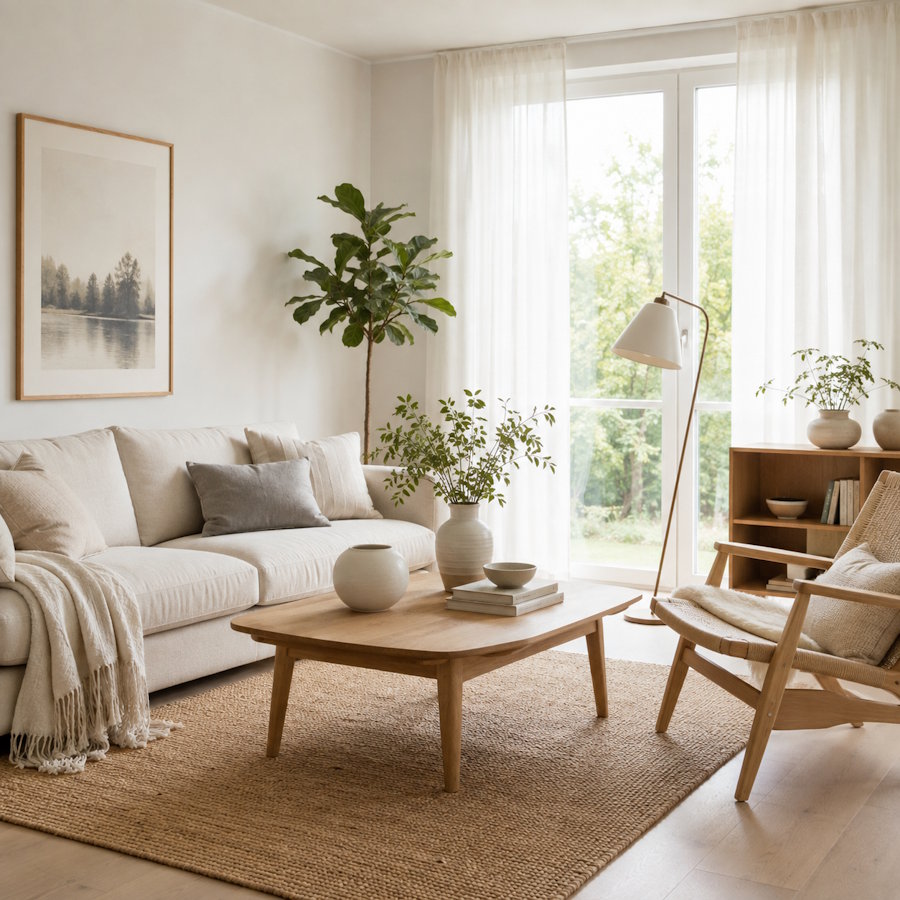
Finding interior design inspiration has never been difficult.
A quick search can bring up hundreds of beautiful kitchens, bedrooms, living rooms, and home offices in almost every style imaginable. The harder part is deciding which ideas will actually work in your own home.
A warm minimalist living room may look perfect in a large, bright space but feel flat in a smaller apartment. Dark cabinetry can create a sophisticated kitchen in one home and make another feel noticeably smaller. Even furniture that looks well proportioned in a reference image may not suit the dimensions of your room.
This gap between inspiration and reality is where AI can be particularly useful.
Instead of simply collecting more design references, homeowners can use AI to explore different visual directions, compare styles, test color combinations, and narrow down ideas before spending money on furniture or renovation work.
Turn Inspiration Into Something More Specific
Most homeowners begin with relatively broad preferences.
You might know that you want a room to feel:
- warm and comfortable;
- clean and modern;
- natural and relaxed;
- elegant but not overly formal;
- minimal without feeling empty.
The problem is that these descriptions can lead to very different interiors.
A "warm modern" living room could use light oak, cream fabrics, and soft lighting. It could also combine walnut, stone, darker upholstery, and brass details.
Neither interpretation is necessarily wrong.
What matters is discovering which version feels right for your space.
Using an interior design AI free without login tool can make this early exploration easier by allowing different design directions to be visualized before any major decisions are made.
Instead of trying to imagine how separate ideas might work together, you can compare complete concepts and quickly identify which elements are worth developing further.
Compare Styles in the Same Type of Room
One of the best ways to understand your preferences is to compare several clearly different styles.
For example, the same living room could be explored as:
- Scandinavian;
- Japandi;
- contemporary;
- industrial;
- farmhouse;
- modern luxury;
- traditional.
Looking at these styles side by side can reveal more than browsing unrelated inspiration photos.
You may discover that you like the simplicity of Scandinavian interiors but prefer the warmer materials associated with Japandi design. Or you might like the polished appearance of a luxury interior but want to avoid oversized furniture and highly decorative finishes.
The goal does not have to be choosing one strict design category.
In many homes, the most successful interiors combine ideas from several styles while maintaining a consistent overall direction.
Test the Big Decisions First
When exploring interior design ideas, it is tempting to focus on small details such as cushions, artwork, lamps, or decorative objects.
Those elements matter, but they rarely determine whether the room works.
Start with the larger decisions.
Color palette
Consider whether the room should feel light and airy, warm and earthy, dark and dramatic, or somewhere in between.
Materials
Think about the balance between wood, stone, metal, glass, textiles, and painted surfaces.
Furniture style
Decide whether the room needs visually light furniture, larger statement pieces, curved forms, or more traditional shapes.
Lighting
Consider whether the atmosphere should feel bright and functional or softer and more relaxed.
Once these major choices are clear, smaller decorative decisions become much easier.
Design Around the Room You Actually Have
A common mistake is falling in love with a design without considering why it works in the original space.
An interior shown online may have:
- much higher ceilings;
- larger windows;
- more natural light;
- different flooring;
- wider walls;
- fewer doors;
- more open floor space.
These architectural differences affect the final result.
For example, a dark green wall may look balanced in a room with large south-facing windows but feel much heavier in a small room with limited daylight.
Likewise, a large modular sofa may create a relaxed luxury look in an open-plan home while taking up too much space in a compact apartment.
Good interior planning therefore starts with the room itself.
Before making visual decisions, consider the existing dimensions, windows, doors, flooring, fixed storage, and any furniture that will remain.
AI-generated ideas become much more useful when they are treated as inspiration that must fit these real-world constraints.
Experiment With Color and Material Combinations
Choosing one attractive material is easy.
Making several materials work together is harder.
A room may include flooring, wall finishes, cabinetry, upholstery, curtains, rugs, lighting, and decorative accents. Each individual choice affects the others.
For example, you might compare:
- light oak with warm white walls;
- walnut with cream upholstery;
- beige stone with natural wood;
- soft gray with black metal details;
- warm neutrals with muted green accents.
The value of visual experimentation is seeing the combination as a whole.
A flooring sample may look beautiful on its own but clash with the cabinetry. A paint color may seem neutral until it is placed beside a cooler floor finish.
Testing these relationships earlier can help homeowners avoid buying materials that do not work together once installed.
Make Sure the Layout Supports the Design
Interior style and room layout are closely connected.
A room can have beautiful materials and furniture but still feel uncomfortable if the arrangement is wrong.
Before deciding on the final visual direction, check where the largest pieces need to go.
In a living room, this usually means the sofa, television or focal wall, storage, and occasional seating.
In a bedroom, it means the bed, wardrobes, bedside furniture, and possibly a desk.
In a dining area, the table itself is only part of the space requirement. Chairs also need enough clearance to be used comfortably.
A free floor plan AI tool can help test these relationships before the room is developed visually.
This separates two decisions that are often mixed together:
Will the room work well?
and
Will the room look the way I want?
Ideally, the answer to both should be yes.
Pay Attention to Furniture Proportion
Furniture does more than fill a room. It affects how large, open, balanced, or crowded the space feels.
This is particularly important when buying furniture online.
A sofa photographed in a large studio can appear relatively compact. Once placed in a smaller living room, it may dominate the entire space.
The same applies to dining tables, beds, wardrobes, coffee tables, and armchairs.
When evaluating furniture, consider not only whether it technically fits but also how much space remains around it.
Ask questions such as:
- Is there enough room to walk naturally?
- Can doors and drawers open fully?
- Can dining chairs be pulled back comfortably?
- Does one piece overpower everything else?
- Is there enough visual breathing room?
A well-designed room often depends as much on empty space as on the furniture itself.
Use a Focal Point to Keep the Design Cohesive
Rooms often feel more organized when there is one clear visual focus.
In a living room, the focal point could be a fireplace, large window, media wall, artwork, or statement sofa.
In a bedroom, it is usually the bed.
In a dining room, it may be the dining table combined with a pendant light.
Once the focal point is established, other elements can support it rather than compete with it.
This is another area where AI experimentation can help.
You can compare versions where different features become the visual center of the room and see which arrangement creates the strongest balance.
Avoid Generating Too Many Options
AI makes it easy to create more ideas, but more ideas do not automatically lead to better decisions.
After a certain point, dozens of similar designs can create more uncertainty rather than less.
A better approach is to compare a small number of clearly different directions.
For example:
- a light and natural option;
- a warmer, richer option;
- a darker contemporary option.
Then compare them based on practical criteria.
Which one works with the existing flooring?
Which one suits the available natural light?
Which requires fewer expensive changes?
Which feels most comfortable for everyday life?
This turns AI from an endless inspiration generator into a more useful decision-making tool.
Use AI as a Starting Point, Not a Final Specification
AI-generated interiors can be highly useful for visual exploration, but they should not automatically be treated as exact renovation plans.
A generated image may include furniture that is not available in the required dimensions. Materials may appear different in real lighting. Architectural details may not match the actual structure of the room.
For this reason, it is better to extract useful ideas from the image rather than reproduce everything exactly.
You might keep:
- the overall color palette;
- a furniture arrangement;
- the relationship between wood and stone;
- a lighting concept;
- the general mood of the room.
Those elements can then be adapted using real measurements, available materials, and realistic furniture options.
A Practical AI Interior Design Workflow
A simple process can prevent design exploration from becoming overwhelming.
- Define the purpose of the room
Understand how the space needs to function before deciding how it should look.
- Identify the fixed elements
Review dimensions, windows, doors, flooring, and anything that will remain unchanged.
- Compare several design directions
Choose a few distinct styles rather than generating endless variations.
- Narrow the color and material palette
Focus on combinations that work with the existing room.
- Check furniture placement and scale
Make sure the visual concept still leaves enough room for comfortable everyday use.
- Save the strongest references
Use selected images as guidance when shopping, decorating, or discussing the project with a professional.
This approach keeps the process focused and makes each AI-generated idea serve a clear purpose.
Final Thoughts
The hardest part of interior design is often not finding inspiration. It is deciding which ideas are worth bringing into your own home.
AI can make that process more practical.
Instead of relying entirely on imagination, homeowners can compare styles, explore colors and materials, test furniture arrangements, and gradually narrow a large collection of ideas into a more coherent design direction.
The goal is not to let AI make every design decision.
It is to use visualization to answer important questions earlier, when changing your mind is still easy.
The best result is usually not the most impressive image generated on screen. It is the design that fits the room, supports everyday life, and still feels right once the initial excitement of renovation has passed.

