

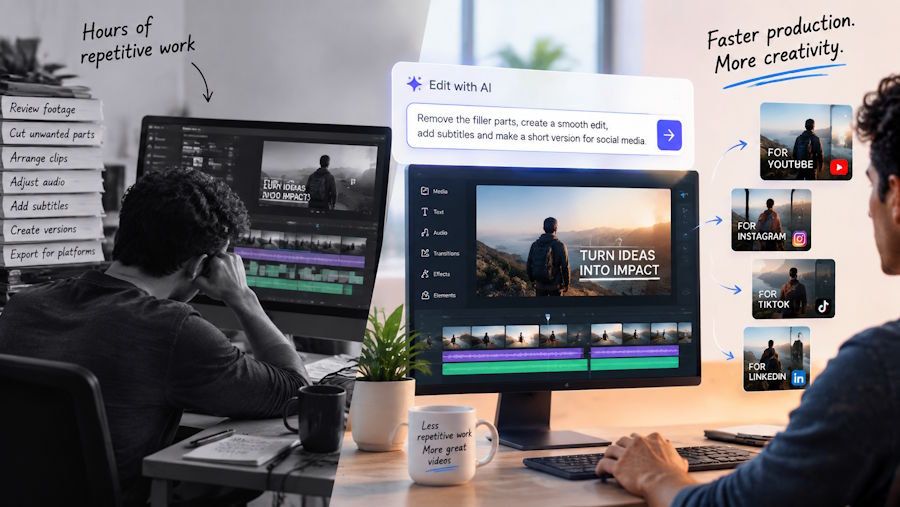
Video production has always involved a mix of creative decisions and repetitive tasks. Planning a story, choosing the right visuals, and shaping the final message require human creativity. However, many production steps involve repetitive work, such as reviewing hours of footage, removing unwanted sections, organizing clips, adjusting formats, and preparing multiple versions.
As businesses, creators, and marketing teams produce more video content than ever, managing these tasks manually can become time-consuming. A single project may require multiple edits for different platforms, audiences, and campaigns, increasing the workload for creative teams.
Artificial intelligence (AI) is changing how video production workflows are managed. Instead of only helping with individual tasks, modern AI tools are becoming part of larger production systems. They can assist creators with planning, editing, organizing content, and handling repetitive processes while allowing humans to maintain control over the creative direction.
This shift is helping teams spend less time on manual operations and more time focusing on storytelling and strategy.
The Growing Need for Efficient Video Production Workflows
Video has become an important format for businesses, developers, educators, and content creators. Companies use videos for product demonstrations, tutorials, advertisements, training materials, and social media content.
However, producing videos consistently requires more than recording footage.
A typical production workflow includes:
- Planning the video structure
- Organizing recorded footage
- Reviewing multiple takes
- Selecting usable clips
- Editing scenes together
- Improving audio quality
- Adding subtitles and visual elements
- Creating different versions for different platforms
For small teams, completing all these steps manually can slow down production. Even experienced editors spend significant time handling operational tasks before focusing on creative improvements.
This is where AI automation can help by reducing the amount of repetitive work involved in the production process.
How AI Automation Is Changing Video Production
AI automation is helping video creators improve different parts of their workflow.
Some common applications include:
Faster content organization
Large video projects often contain hours of footage that need to be reviewed before editing begins. AI tools can analyse content, identify important sections, and make footage easier to search.
For example, creators working on interviews or podcasts can quickly locate specific conversations, speakers, or topics instead of manually watching every clip.
Automated editing assistance
Editing requires many small decisions, from removing unnecessary sections to arranging clips in a logical order. AI can support these processes by identifying repetitive parts, suggesting edits, and helping create initial versions of a project.
This allows editors to spend more time refining the creative aspects of a video.
Content adaptation for multiple platforms
Modern creators rarely produce only one version of a video. A single project may need versions for YouTube, social media platforms, advertisements, and websites.
AI-powered workflows can help transform existing content into different formats, making it easier to create multiple outputs from the same source material.
Improving production speed
By handling repetitive steps, AI allows teams to move faster from raw footage to finished content. This is especially useful for businesses that need regular video production but do not have large creative departments.
From AI Assistance to AI-Powered Workflows
Traditional video editing software has focused on giving creators more control over individual editing actions. Users still perform most tasks manually, including searching footage, selecting clips, and assembling timelines.
AI automation introduces a different approach. Instead of only providing tools for creators to operate, AI systems can assist with parts of the workflow itself.
The goal is not to remove human creativity. Story decisions, visual style, and final approval still require human input. Instead, AI helps reduce the operational workload that can slow down production.
For example, creators can provide direction about the type of edit they want, while AI systems help complete repetitive preparation work.
The Role of AI Agents in Modern Video Production
Video editing often involves several repetitive tasks that take up a significant amount of production time. Reviewing hours of footage, finding usable sections, removing repeated parts, and preparing an initial timeline can slow down the creative process.
Invideo Editor helps simplify this workflow by combining a professional editing timeline with AI editing agents. Creators can work with their footage, provide direction, and use AI assistance for tasks such as reviewing material, selecting useful sections, removing unnecessary clips, and preparing an editable base cut.
For creators working on interviews, tutorials, podcasts, documentaries, or long-form videos, this approach reduces the time spent on manual preparation while keeping the editing process flexible. They can review the changes, make adjustments, and continue refining the project based on their creative decisions.
As video production workflows become more complex, agentic video editing is becoming a useful approach for managing repetitive editing work. Instead of only completing individual commands, AI agents can understand instructions, work through footage, support timeline creation, and help move projects from raw recordings to editable cuts while keeping creators in control.
The advantage of this approach is that AI handles more of the repetitive execution, allowing editors to spend more time focusing on storytelling, pacing, and the overall creative direction of the video.
The Role of Human Creativity in AI-Assisted Production
Although AI can automate many production tasks, creative decisions remain important.
A successful video still depends on:
- Understanding the target audience
- Creating a clear message
- Choosing the right storytelling approach
- Maintaining brand identity
- Making final creative decisions
AI works best as a support system that helps creators manage production complexity.
Editors and content teams can use AI to reduce repetitive tasks while continuing to guide the overall direction of the project.
Practical Examples of AI Automation in Video Production
AI-powered workflows can support different types of video projects.
Marketing videos
Businesses can create promotional videos faster by using AI to assist with scripting, editing, and content variations.
Educational content
Teachers and organizations can organize lessons, add subtitles, and prepare multiple learning formats more efficiently.
Social media content
Creators can transform longer videos into shorter clips designed for different platforms.
Product demonstrations
Companies can produce product videos by combining existing assets with AI-assisted editing workflows.
Internal business communication
Organizations can create training videos, updates, and presentations with less manual production effort.
Reducing Repetitive Work Without Losing Control
One concern with automation is whether creators lose control over the final result.
Modern AI video workflows are designed to address this by keeping human input involved throughout the process.
Invideo Editor focuses on maintaining an editable timeline where creators can review changes, adjust sequences, and continue working on the project. Instead of replacing the editing process, AI helps reduce the amount of manual execution required.
This approach allows teams to benefit from faster workflows while maintaining creative ownership.
The Future of AI Automation in Video Production
As video demand continues to grow, production teams will need more efficient ways to manage increasing workloads.
AI automation will likely become a bigger part of creative workflows by helping teams organize content, speed up editing, and manage multiple production requirements.
The future of video production will not simply be about creating videos faster. It will be about creating better workflows where technology handles repetitive operations and humans focus on creativity, strategy, and storytelling.
Tools like invideo Editor show how AI-assisted workflows can help creators move from raw footage to refined content more efficiently.
Conclusion
AI automation is changing video production by reducing the repetitive tasks that often slow down creative workflows.
From organizing footage and selecting clips to preparing multiple versions of content, AI tools are helping creators and businesses produce videos more efficiently.
The biggest impact of AI is not replacing creative professionals. It is giving them better ways to manage production challenges and focus on the decisions that require human judgment.
As AI technology continues to improve, video production workflows will become faster, more flexible, and easier for teams of all sizes to manage.

