

Productivity is often treated as a matter of controlling distractions. Block social media, restrict certain websites, close unnecessary tabs, and limit access to anything that might interrupt your work. While these methods can be useful for some people, they do not always address the reason distractions happen in the first place.
A different approach is to understand your digital behaviour before trying to change it. By learning to understand digital distractions, understand browsing habits, and recognise when your attention starts to drift, you can make more informed decisions about how you work.
This is the idea behind an awareness-based approach to productivity: instead of forcing yourself to avoid distractions, first make your behaviour visible.
Your Browser Can Reveal More Than You Think
A typical work session can involve dozens of tabs, frequent searches, email checks, messaging platforms, research pages, and occasional visits to unrelated websites. Individually, these actions may seem insignificant. Together, they can reveal useful patterns.
When you track browsing habits, you can start to see how your time is actually distributed across different types of websites and activities. You may discover that you spend more time switching between tabs than expected, or that certain types of websites tend to interrupt periods of concentrated work.
The goal is not to label every non-work website as bad. Some websites are essential for research, communication, or taking a short break. The important question is whether your browsing behaviour supports what you intended to accomplish.
Tab Switching and Lost Attention
One of the clearest signs of fragmented attention is frequent tab switching. Moving between a document, search results, email, social media, and several other pages can make it difficult to maintain a consistent train of thought.
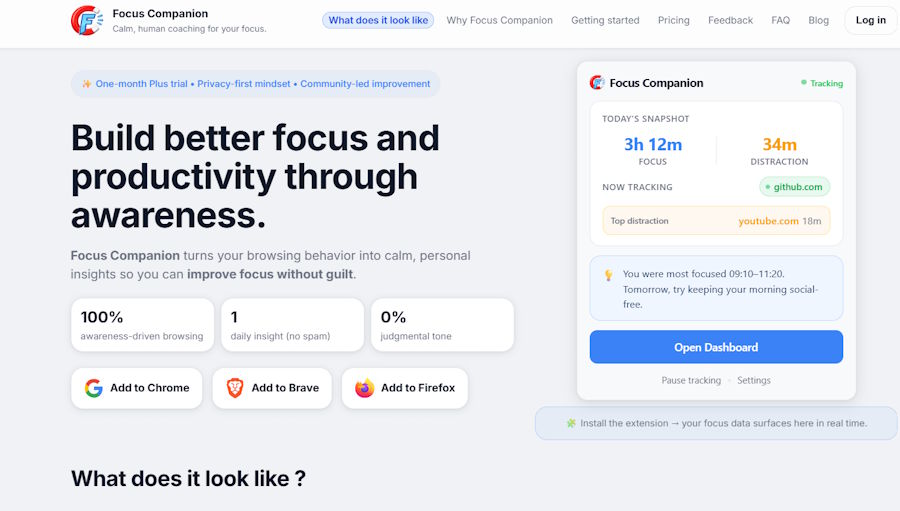
A browser focus tracker can help make this behaviour easier to recognise. Instead of relying entirely on memory, you can look at your browsing patterns and identify how often your attention moves away from the task at hand.
This can be particularly useful when you are trying to track distractions while working. The information does not necessarily tell you what you should block. Instead, it gives you something more useful: evidence about your own working habits.
Not Every Website Is a Distraction
A major problem with traditional website-blocking approaches is that they often treat websites as permanently distracting or productive.
Real work is rarely that simple.
A video platform might be distracting during an accounting task but essential when you are researching a technical subject. Social media might interrupt a focused writing session, but it could also be part of a marketing professional's job. Even online shopping could be relevant if someone is researching products for work.
An awareness-based productivity system can therefore be more flexible. Rather than automatically restricting access, users can track browser activity and decide how different websites fit into their own workflow.
This makes productivity without website blocking a realistic alternative for people who need flexibility while working online.
When Do Digital Distractions Happen?
Knowing which websites you visit is useful, but knowing when distractions occur can be even more valuable.
For example, you might notice that you browse unrelated sites whenever a task becomes difficult. Perhaps you check your phone or open another tab when you reach a complicated part of a project. Or maybe your attention declines after working continuously for an hour.
These patterns can help you understand digital distractions at a deeper level.
Instead of simply saying, "I waste too much time online," you can ask more specific questions:
- When do I usually lose focus?
- Which activities tend to interrupt my work?
- How often do I switch between tabs?
- Which websites are genuinely useful for my work?
- Do distractions happen at particular times or during particular tasks?
The answers can provide a much better foundation for improving productivity.
Tracking Browsing Habits Without Blocking Websites
A digital distraction tracker can provide visibility into browsing behaviour without requiring users to completely restrict access to websites.
This is particularly useful for people looking for a website blocker alternative. Rather than preventing access to potentially distracting websites, the focus is on helping users recognise their behaviour and make intentional choices.
This approach supports focus without restrictions. You remain in control of your browser, while information about your activity can help you identify patterns that might otherwise go unnoticed.
For some people, simply becoming aware of how often they leave a task is enough to encourage more deliberate behaviour.
Focus Sessions as a Learning Tool
A focus session does not necessarily need to be a period in which every distraction is blocked.
It can instead be an opportunity to observe how you work.
An awareness-based focus browser extension can help users stay conscious of their behaviour during a focused period. Gentle reminders can draw attention to moments when browsing starts to move away from the intended task, without automatically preventing access.
This changes the purpose of a focus session. Rather than being a test of how long you can avoid certain websites, it becomes a way to learn about your own attention.
Over time, these observations can contribute to a more sustainable form of awareness-based productivity.
What Your Browsing Patterns Can Teach You
Once you begin to track browsing habits, the information becomes more useful when viewed as a collection of patterns rather than individual events.
You might find that:
- Research-heavy tasks naturally involve more tab switching.
- Difficult tasks are more likely to trigger unrelated browsing.
- Certain websites consistently interrupt focused work.
- Your concentration changes throughout the day.
- Short breaks can help you return to a task with greater attention.
- Some activities that appear distracting are actually necessary parts of your workflow.
These insights can help you make practical changes without imposing unnecessary restrictions.
For example, you might decide to work on demanding tasks during the part of the day when you concentrate best. You might also choose to close unnecessary tabs before starting a project or schedule deliberate breaks between longer periods of work.
From Awareness to Intentional Behaviour
The purpose of an awareness-based focus tool is not to make decisions for you. It is to give you better information with which to make those decisions yourself.
That distinction is important.
A productivity browser extension that simply blocks websites may prevent a particular behaviour temporarily. An awareness-based browser productivity tool takes a different route by helping you recognise the behaviour and understand its context.
This can make productivity feel less like a system of restrictions and more like a process of learning.
You do not necessarily need to eliminate every distraction. You need to become better at recognising when your browsing supports your goals and when it takes you away from them.
Building Better Digital Habits
Improving productivity does not always require a stricter digital environment. Sometimes, the first step is simply paying closer attention.
By using tools that help you track browser activity, monitor browsing patterns, and recognise moments of distraction, you can develop a clearer picture of how you actually work.
That information can then guide small, realistic changes.
For people who prefer improve focus without blocking websites, this awareness-first approach offers an alternative to rigid productivity systems. It allows flexibility while encouraging more intentional digital behaviour.
Ultimately, productivity is not just about controlling the websites you visit. It is about understanding why you visit them, recognising when your attention changes, and deciding what you want to do next.
When you can see your digital habits clearly, you have a much better opportunity to change them.

