

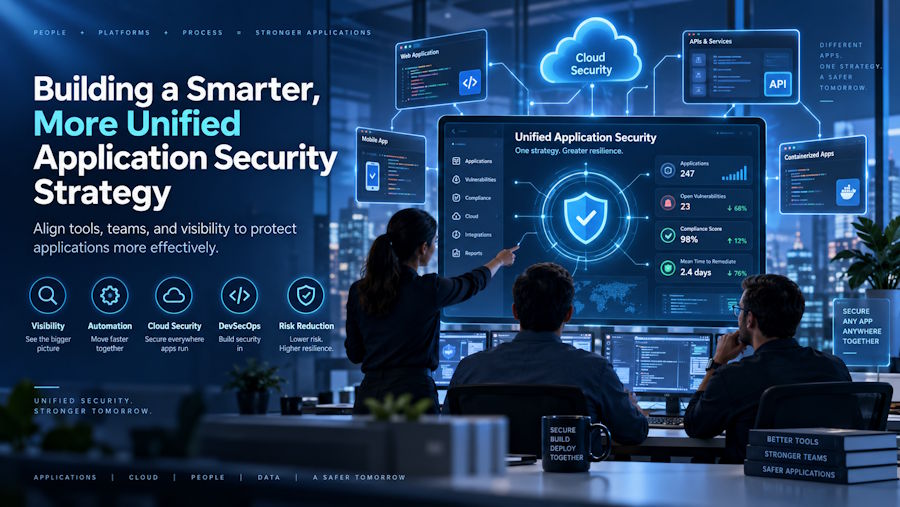
Most organizations didn't set out to build a fragmented application security program. It happened gradually, one tool at a time, as new categories of risk emerged and needed dedicated solutions. Static analysis came first, followed by software composition analysis as open-source use grew, then container security as deployment models shifted, and now AI security as machine learning components work their way into more applications. Each addition solved a real problem, but taken together, these separate tools often leave security teams managing disconnected data sources that don't talk to each other, making it hard to see the full risk picture for any given application.
The Cost of Fragmented Security Tooling
When SAST, SCA, container security, and AI security operate as separate systems, each with its own dashboard, alerting logic, and prioritization scheme, security teams end up doing significant manual work just to understand how risks relate to one another. A vulnerability flagged in a container image might actually trace back to a dependency identified separately by an SCA tool, but if these systems don't share context, that connection has to be made manually, if it gets made at all.
This fragmentation also creates inconsistent risk prioritization. A finding that looks critical in isolation within one tool might actually be lower priority once considered alongside the full context of how that component is used elsewhere in the application. Without a unified view, teams often end up either drowning in alerts they can't effectively triage or missing genuinely important risks buried among less significant findings. Neither outcome serves an organization well, and both tend to worsen as application portfolios grow larger and more complex.
What a Unified Program Actually Combines
A unified application security approach brings static analysis, open-source dependency scanning, container security, and AI-specific security together under a shared framework, rather than operating them as isolated point solutions. This doesn't mean collapsing distinct security disciplines into a single generic tool. Each area still requires its own specialized detection logic, since the vulnerabilities relevant to source code differ meaningfully from those relevant to open-source dependencies, container configurations, or AI models and prompts. What changes is how findings from each area connect to a shared understanding of risk across the application as a whole.
A well-integrated program typically includes a few consistent elements:
- A shared inventory of components, dependencies, containers, and AI assets across the application portfolio
- Consistent risk scoring that accounts for how findings from different tool categories relate to one another
- Centralized visibility that lets security and development teams see the complete risk picture for a given application
- Coordinated remediation workflows that avoid duplicating effort across teams addressing related findings separately
This structure allows an organization to treat application security as a coherent discipline rather than a collection of separately managed tool categories.
Integrating Security Throughout the Development Lifecycle
Unification matters most when it extends across the entire development lifecycle rather than existing only as a final review gate before deployment. Static analysis findings are most valuable when developers see them early, ideally as code is being written rather than after a build has already moved through several stages. Open-source dependency risks similarly benefit from early visibility, since replacing a vulnerable library becomes progressively more disruptive the later it's discovered in the development process.
Container security fits naturally into this same lifecycle-wide approach. Scanning container images before deployment catches configuration issues and vulnerable base images before they reach production, but ongoing monitoring after deployment remains equally important, since new vulnerabilities in existing components get disclosed constantly, independent of when an image was originally built. AI security follows a similar pattern, with model and prompt-level risks needing attention both during development and on an ongoing basis once an AI-enabled feature is live and processing real user input.
Reducing Friction Between Security and Development Teams
One underappreciated benefit of a unified approach is how it changes the relationship between security and development teams. Fragmented tooling often means developers receive security findings from multiple disconnected systems, each with its own format, severity scale, and remediation guidance. This inconsistency creates friction and makes it harder for developers to prioritize their time effectively among competing security demands.
A unified program, backed by consistent risk scoring and centralized reporting, gives developers a clearer, more coherent picture of what actually needs attention and why. Solutions built around this philosophy, such as those offered through Mend.io, aim to reduce this friction by presenting findings across SAST, SCA, container, and AI security categories in a way that developers can act on without needing to interpret four different tools' worth of conflicting guidance. This coherence tends to improve remediation speed simply because developers spend less time figuring out what a finding means and more time actually fixing it.
Measuring the Value of Unification
The practical benefits of a unified program tend to show up in a few measurable ways over time. Mean time to remediation often improves, since developers work from consolidated, prioritized findings rather than switching between disconnected tools to piece together a full picture. Security teams typically report better visibility into overall risk posture, since a unified view surfaces relationships between findings that separate tools would present in isolation. According to general industry observation, organizations that consolidate application security tooling tend to report meaningful reductions in both alert fatigue and remediation timelines, though the specific improvement varies based on the complexity of the application portfolio involved.
These improvements don't happen automatically simply by adopting a unified platform. They depend on the organization actually restructuring workflows around the unified view rather than continuing to operate each security discipline as a separate silo internally, even after the underlying tooling has been consolidated.
Final Analysis
Application security has grown more complex as the categories of risk requiring attention have multiplied, but that complexity doesn't need to translate into fragmented, disconnected tooling. A unified program that brings SAST, SCA, container security, and AI security together, supported by consistent risk scoring and integrated throughout the development lifecycle, gives organizations a genuinely coherent picture of application risk rather than a patchwork of separately managed concerns.
The organizations that benefit most from this approach tend to be those that treat unification as an operational shift, not just a tooling decision, restructuring how security and development teams collaborate around a shared view of risk. As application portfolios continue to grow in size and complexity, that kind of coherence is likely to matter more over time, not less, particularly as new categories of risk continue to emerge alongside evolving development practices.

