

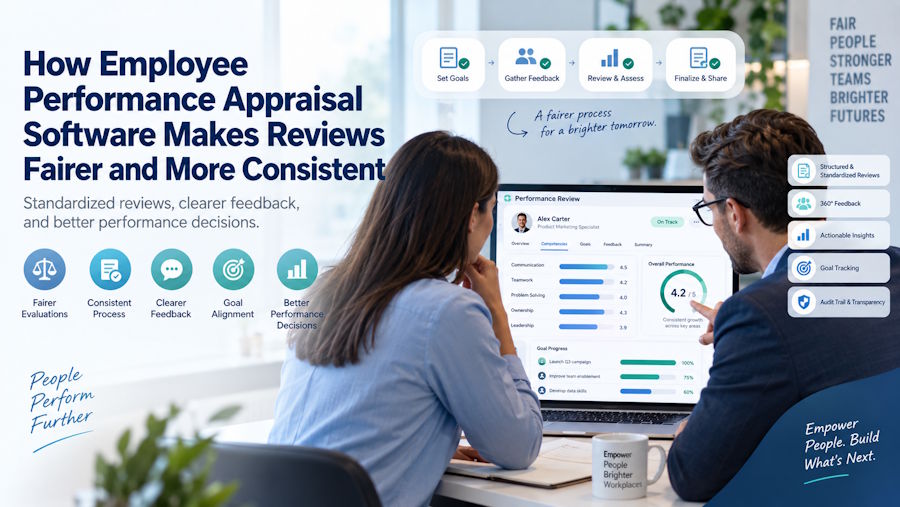
Performance review inconsistency is one of the most persistent complaints employees raise about their workplace, and often for good reason. Two employees doing comparable work might receive noticeably different ratings simply because their managers apply different standards, remember different details, or approach the review process with different levels of rigor. This inconsistency erodes trust in the entire performance management system, and it's precisely the kind of problem that structured appraisal software is designed to address.
The Structural Roots of Inconsistent Reviews
Inconsistency in performance reviews rarely stems from bad intentions. It usually comes from the natural variation that occurs when dozens or hundreds of managers each conduct reviews independently, often using loosely structured templates or, in less mature systems, no consistent template at all. One manager might weight recent performance heavily, while another draws more evenly from the entire review period. One might document feedback throughout the cycle, while another relies mostly on memory when the review deadline arrives.
These variations compound across an organization, producing a review system where an employee's rating depends partly on genuine performance and partly on which manager happens to be conducting the evaluation and how that particular manager approaches the process. This isn't a hypothetical concern. Employees frequently notice these disparities when comparing notes with peers, and that perception of unfairness, whether or not it reflects a specific instance of bias, tends to undermine confidence in the review process as a whole.
How Structured Templates Reduce Variation
Appraisal software addresses this inconsistency largely through standardized templates and evaluation criteria applied uniformly across the organization. Rather than each manager developing their own approach to documenting performance, a structured system ensures every review follows the same format, covers the same competency areas, and uses the same rating scale. This doesn't eliminate a manager's judgment from the process, but it does constrain the ways that judgment gets applied, reducing the wide variation that occurs when reviews are built from scratch by each individual manager.
Consistent structure also makes reviews easier to compare during calibration discussions, where multiple managers or HR leaders assess ratings across a team or department to check for fairness. When every review follows the same format and criteria, these comparisons become considerably more meaningful than when reviews arrive in different formats with different emphases, since calibration participants are actually evaluating comparable information rather than trying to reconcile fundamentally different documentation styles.
Building Transparency Into the Review Process
Transparency matters as much as consistency when it comes to how employees perceive fairness in their reviews. Employees who understand exactly what criteria their performance is being measured against, and who can see how those criteria apply consistently across their team, generally trust the process more than those left guessing at what factors actually influenced their rating. Well-designed employee performance appraisal software supports this transparency by making evaluation criteria visible to employees before the review cycle begins, not just presented after the fact as a rating they have to accept without context.
This transparency extends to goal tracking as well. When employees can see their documented goals, progress notes, and feedback accumulated throughout the review period, the final rating feels like a natural conclusion drawn from visible evidence rather than a surprising judgment delivered at the end of the cycle. A few elements consistently support this kind of transparency:
- Clearly documented evaluation criteria shared with employees before reviews begin
- Ongoing visibility into goal progress rather than only a final assessment
- Accessible records of feedback given throughout the cycle, not just at review time
- Clear explanation of how ratings translate into broader decisions like promotions or compensation
Organizations that build these elements into their review process tend to face fewer disputes and less confusion when review results are finally delivered, since employees have had visibility into the underlying evidence all along.
Supporting Consistency Through Calibration Tools
Even with standardized templates, rating tendencies can still vary between managers, some rate more generously across the board, while others apply consistently stricter standards. Calibration processes exist to catch and correct this kind of systemic variation, and appraisal software generally makes calibration considerably more manageable by aggregating ratings across teams and surfacing patterns that would be difficult to spot manually. A department where average ratings run noticeably higher or lower than the rest of the organization becomes visible at a glance, rather than requiring HR to manually compile and compare individual reviews from every team.
This visibility gives HR leaders a concrete starting point for calibration conversations, one grounded in actual data rather than general impressions about which managers might be rating too generously or too harshly. Addressing these patterns directly, before final ratings are locked in, produces a fairer outcome than discovering the disparity after employees have already received results that turn out to need reconsideration.
Reducing Administrative Burden Without Sacrificing Rigor
A common concern with introducing structure into performance reviews is that it might add administrative burden without delivering proportional benefit. In practice, well-designed appraisal software tends to reduce burden rather than increase it, largely because it eliminates the repetitive manual work of building review documents from scratch, tracking down goal status across separate systems, and manually compiling feedback that was scattered across emails or informal conversations throughout the cycle.
This efficiency matters because managers who find the review process burdensome tend to rush through it, which itself becomes a source of inconsistency and unfairness. A manager working from a streamlined, pre-populated system with goal data and accumulated feedback already organized can spend more of their limited time actually thinking about the evaluation itself, rather than assembling the raw materials needed to write it.
Final Analysis
Fairness and consistency in performance reviews rarely emerge naturally from a loosely structured process spread across many independent managers. They require deliberate structure: standardized templates, transparent criteria, accessible documentation throughout the cycle, and calibration tools that surface rating disparities before they become embedded in final decisions. Appraisal software provides the infrastructure for this structure, turning what would otherwise depend heavily on individual manager habits into a consistent, organization-wide process.
The organizations that get the most value from this kind of system tend to treat it as more than a documentation tool. They use the consistency and transparency it enables to genuinely improve how fairly performance gets evaluated across the organization, recognizing that a well-structured review process benefits not just HR's ability to track outcomes, but the trust employees place in the system that shapes decisions about their careers.

