

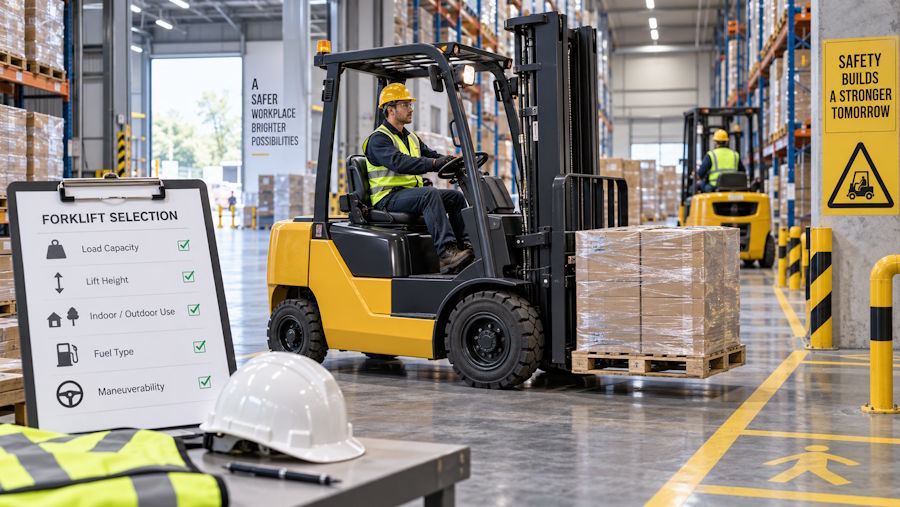
Efficient material movement is essential for warehouses, manufacturing facilities, construction projects, distribution centers, storage operations, and many other workplaces. Businesses often need to move heavy loads, stack products, transport pallets, and position materials in areas where manual handling would be slow or physically demanding. Forklifts provide a practical solution because they are designed to lift and transport substantial loads while improving workflow efficiency. However, selecting the right machine requires more than simply choosing equipment with a high lifting capacity. Factors such as load weight, lifting height, operating environment, aisle width, power source, attachments, rental duration, and operator requirements should all be considered before equipment is arranged. For businesses that need temporary access to lifting equipment, forklift rentals can provide flexibility without requiring a long-term investment in ownership, storage, repairs, and depreciation. A carefully planned approach can help companies choose equipment that meets their operational needs while supporting safe and productive material handling.
Understanding Forklift Applications
Forklifts are available in various configurations, and each type is designed for particular applications. Standard counterbalance forklifts are commonly used for general material movement, while reach trucks may be more suitable for operations involving high storage racks and narrower aisles. Rough-terrain models are designed for certain outdoor environments, while electric machines can be useful for applications where reduced noise and direct emissions are important considerations. Before arranging forklift rentals, businesses should identify the specific materials they need to move, the maximum load weight, the required lifting height, and the conditions in which the machine will operate. The distance between loading and unloading points can also influence equipment selection. Understanding the actual application helps managers avoid selecting a machine that is either unsuitable or unnecessarily large for the task. Careful planning at this stage can improve efficiency and reduce operational complications later.
Advantages of Temporary Equipment
Owning a forklift can make sense for businesses with continuous material-handling requirements, but it may not be practical for companies that only need equipment occasionally. Purchasing machinery involves a significant initial investment and continuing costs for maintenance, storage, insurance, repairs, batteries, fuel, and eventual replacement. Forklift rentals provide an alternative for temporary projects, seasonal increases in demand, facility changes, emergency replacements, and short-term workload increases. Renting allows businesses to obtain equipment for a defined period and return it when the project is complete. It can also provide access to different equipment types when operational requirements change. For example, a company may need one configuration for a warehouse project and another for an outdoor construction task. Rental arrangements can therefore provide greater flexibility than maintaining a single machine for every possible application.
Determining Load Capacity
Load capacity is one of the most important factors when choosing a forklift. Businesses should determine the maximum weight of the materials that will be lifted and transported and ensure that the selected machine is rated appropriately for those loads. The weight alone is not always enough to determine capacity because load dimensions, center of gravity, attachment use, and lifting height can influence the machine's rated capability. Before confirming forklift rentals, managers should provide accurate information about the materials, pallets, containers, or other loads that will be handled. Operators should never exceed the manufacturer's rated capacity, even for short distances or temporary lifting tasks. A machine with insufficient capacity may experience reduced stability and performance. Proper load assessment helps businesses select equipment that can perform the required work without placing unnecessary stress on the machine or creating avoidable operational risks.
Considering Lifting Height
Many workplaces use vertical storage systems to maximize available floor space. As a result, the required lifting height can vary considerably from one operation to another. Some businesses may only need to move materials at ground level, while others need to place pallets on high storage racks. When planning forklift rentals, managers should identify the highest point the equipment needs to reach and compare that requirement with the machine's specifications. Overhead clearance should also be considered because the forklift, mast, and load must have enough space to move safely through doors, aisles, and storage areas. The machine's capacity can also change at greater lifting heights, making it important to review manufacturer specifications carefully. Selecting equipment based on actual lifting requirements helps avoid productivity problems and ensures that materials can be placed where they are needed.
Choosing the Appropriate Power Source
Forklifts can operate using different power sources, and the best choice depends on the work environment and operating requirements. Electric forklifts are often considered for indoor applications where low noise and limited direct emissions are beneficial. Internal-combustion models may be suitable for certain outdoor or demanding applications where longer operating periods and specific performance characteristics are required. When comparing forklift rentals, businesses should consider ventilation, charging infrastructure, operating hours, surface conditions, and the availability of fuel or electricity. Electric machines require suitable charging arrangements and sufficient battery capacity for the planned work period. Fuel-powered machines require appropriate refueling procedures and maintenance. Selecting the right power source can reduce interruptions and ensure that the equipment works effectively within the environment where it is needed.
Evaluating Aisle Width and Maneuverability
Available operating space can significantly affect forklift selection. Warehouses with narrow aisles may require equipment designed for tighter maneuvering, while larger facilities may have enough space for conventional counterbalance machines. Before arranging forklift rentals, businesses should measure aisle widths, doorways, turning areas, loading zones, and other restricted spaces. The overall dimensions and turning radius of the selected machine should be compared with these measurements. Managers should also consider the dimensions of the loads being transported because oversized materials can require additional maneuvering space. Choosing equipment without considering available space can lead to delays and may require changes to storage layouts. Accurate measurements allow businesses to select machinery that combines appropriate lifting performance with practical maneuverability.
Understanding Attachments
Some material-handling tasks require specialized attachments rather than standard forks. Depending on the application, businesses may need equipment designed for drums, rolls, containers, cartons, or other specialized loads. Attachments can improve productivity when they are correctly matched to the machine and the material being handled. However, an attachment can also affect load capacity, load center, visibility, and handling characteristics. Before arranging forklift rentals, businesses should clearly explain any specialized requirements to the equipment provider. The attachment must be approved for use with the selected machine and operated according to manufacturer instructions. Operators should understand how the attachment changes the machine's behavior. Improvised modifications or unauthorized accessories should never be used because they can introduce unnecessary mechanical and operational risks.
Preparing the Work Area
A properly prepared work area can make forklift operations safer and more efficient. Before equipment arrives, managers should inspect travel paths, loading zones, storage areas, ramps, doorways, intersections, and pedestrian routes. Hazards such as debris, uneven surfaces, blind corners, overhead obstructions, and congested areas should be identified and addressed where possible. When using forklift rentals, the operating area should be ready before the machine is delivered so that valuable rental time is not wasted. Traffic routes should be clearly defined, and employees should understand where forklifts will travel. Storage racks should be maintained in suitable condition, and unnecessary obstacles should be removed. Good site preparation helps operators work more efficiently and reduces the chance of unexpected obstacles interfering with material movement.
Operator Training and Authorization
Proper training is essential for anyone operating a forklift. Operators need to understand the controls, steering, braking, load limitations, lifting mechanisms, visibility restrictions, and workplace traffic procedures associated with the equipment. Before using forklift rentals, businesses should ensure that operators receive appropriate training and authorization according to applicable workplace requirements. Training should cover inspection procedures, load handling, pedestrian awareness, ramps, intersections, parking, and emergency situations. Operators should also understand that different models may have different controls and handling characteristics. Experience with one machine does not necessarily mean an operator is fully familiar with another configuration. Appropriate training improves decision-making and helps workers recognize hazards before they become serious problems. Businesses should also provide additional instruction when operating conditions or equipment requirements change.
Completing Pre-Operation Inspections
A forklift should be inspected before it is put into operation. Operators should check important components for visible damage, leaks, wear, and other problems that could affect performance. Depending on the machine, inspections may include tires, forks, mast assemblies, hydraulic systems, steering, brakes, controls, warning devices, safety features, and other relevant components. When receiving forklift rentals, businesses should complete their own inspection rather than assuming the equipment requires no additional checking. Any defect that could affect safe operation should be reported to the responsible provider or maintenance personnel before work begins. Operators should not bypass safety devices or perform unauthorized repairs. Regular inspections provide an opportunity to identify problems early and can reduce the possibility of unexpected downtime during important operations.
Safe Load Handling
Correct load handling is fundamental to forklift safety. Loads should be stable, properly positioned, and within the machine's rated capacity. Operators should avoid sudden acceleration, sharp turns, excessive speed, and abrupt stops that could cause materials to shift. When using forklift rentals, employees should inspect pallets and other load carriers before lifting them. Damaged or unstable loads should be corrected before transportation. Operators should also consider visibility when carrying large or tall materials. If a load blocks the forward view, appropriate workplace procedures should be followed rather than simply continuing without adequate visibility. Loads should be carried in a controlled position during travel, and operators should remain alert to changes in the surrounding environment. Consistent handling practices help protect workers, products, storage systems, and equipment.
Managing Pedestrian Traffic
Many workplaces involve forklifts operating near employees, contractors, visitors, and delivery personnel. Separating pedestrian and equipment traffic can reduce potential conflicts and make movement more predictable. Businesses should establish suitable walkways, crossing points, restricted areas, and communication procedures. When operating forklift rentals, drivers should remain alert to pedestrians and follow workplace traffic controls. Warning signs, mirrors, barriers, alarms, lighting systems, and designated routes may provide additional support depending on the facility. Pedestrians should also understand the equipment's travel patterns and avoid entering operating areas unnecessarily. Operators should never assume that a person has seen the machine. Clear communication between drivers and pedestrians can reduce misunderstandings and help create a more organized working environment.
Maintaining Equipment During Use
Although rental providers generally handle scheduled maintenance, users still have responsibilities while equipment is in their possession. Operators should follow manufacturer instructions, complete required inspections, and report mechanical problems as soon as they are identified. If forklift rentals develop a problem during use, the rental provider or authorized maintenance personnel should be contacted instead of attempting an unauthorized repair. Continuing to operate equipment with a known mechanical issue can increase damage and potentially create unsafe conditions. Businesses should review their rental agreement to understand responsibilities for maintenance, damage, fuel, charging, cleaning, and service calls. Prompt reporting allows problems to be addressed more efficiently and may reduce project downtime. Responsible equipment care also helps ensure that the machine remains in suitable condition throughout the rental period.
Planning the Rental Period
The rental duration should reflect the actual requirements of the project. Renting equipment for too short a period may cause problems if work takes longer than expected, while keeping machinery longer than necessary can increase costs. Before arranging forklift rentals, businesses should consider the complete project schedule, expected workload, staffing, deliveries, construction phases, and possible delays. It can be helpful to understand the rental provider's extension procedures before the equipment arrives. The delivery should also be coordinated with the date when workers are ready to begin using the machine. Proper scheduling reduces idle time and helps businesses get maximum value from the rental period. A realistic schedule provides greater flexibility when unexpected changes occur.
Understanding Total Costs
The advertised rental rate is not necessarily the complete cost of obtaining and using a forklift. Businesses may also encounter charges related to delivery, collection, fuel, charging, insurance, additional rental days, attachments, damage, or other services. When comparing forklift rentals, managers should review the complete agreement and clarify which services are included. Equipment size and specifications can also influence the total cost. A larger machine may have a higher rental rate but could complete the required work more efficiently, while a smaller machine may cost less but lack the necessary capacity. Comparing total value rather than simply choosing the lowest rate allows businesses to make better financial decisions. A clear understanding of costs before signing an agreement can also prevent unexpected charges after the equipment is returned.
Delivery and Transportation
Forklifts can vary significantly in size and weight, so delivery should be planned carefully. The receiving area should provide sufficient space for unloading, and the route from the delivery point to the operating area should be evaluated in advance. When arranging forklift rentals, businesses should communicate relevant access information to the equipment provider. Doorways, ramps, surface conditions, overhead clearances, and turning areas can all affect how equipment reaches its final operating position. Delivery should be scheduled when the worksite is prepared and workers are ready to use the machine. If equipment arrives too early, rental time may be wasted. If delivery is delayed, planned work may be interrupted. Clear coordination can reduce transportation problems and support a smoother start to the project.
Avoiding Common Equipment Selection Mistakes
One of the most common mistakes is selecting a forklift based solely on its maximum lifting capacity. Businesses may overlook lifting height, aisle dimensions, power requirements, load characteristics, attachments, or surface conditions. Another mistake is failing to consider how the machine will actually move through the worksite. Before confirming forklift rentals, managers should create a checklist covering capacity, lift height, machine dimensions, power source, operating environment, attachments, rental duration, delivery, training, and total costs. Reviewing all these factors makes it easier to compare equipment objectively. It also reduces the chance of discovering after delivery that the machine is unsuitable for the intended task. Proper planning before the rental begins is generally much easier than replacing equipment after work has already started.
Improving Operational Productivity
The right forklift can reduce manual material movement and allow workers to transport larger quantities of goods efficiently. However, equipment alone does not guarantee productivity. Businesses should organize storage areas, loading zones, travel routes, and workstations so that material movement is logical and efficient. When using forklift rentals, managers can reduce unnecessary travel by positioning frequently moved materials in accessible areas. Operators should plan movements before starting and avoid unnecessary repositioning. Communication between drivers and ground personnel can also improve workflow. Productivity should always remain balanced with responsible operation. Increasing speed at the expense of safe procedures can create more problems than it solves. Efficient operations come from good planning, suitable equipment, trained operators, and consistent procedures.
Modern Features and Technology
Modern forklifts can include features designed to support efficiency, monitoring, operator awareness, and equipment management. Depending on the model, businesses may find features such as battery monitoring, fleet tracking, impact detection, operator-assistance systems, and performance information. When comparing forklift rentals, managers should determine whether these features provide meaningful benefits for the intended operation. Advanced technology can be useful for larger facilities that need to monitor equipment utilization or improve operational visibility. However, technology should complement rather than replace proper training and established safety procedures. Businesses should focus on features that solve actual operational problems instead of paying for unnecessary capabilities. A practical technology strategy can improve equipment management while keeping operations understandable for employees.
Extending Equipment Reliability
Proper operation and preventive maintenance can help preserve equipment reliability. Operators should avoid overloading, sudden movements, excessive speeds, rough handling, and other practices that place unnecessary stress on the machine. Regular inspections can identify wear and potential problems before they become serious. Businesses using forklift rentals should also treat the equipment responsibly and follow the provider's instructions throughout the rental period. Keeping the equipment reasonably clean and reporting faults promptly can reduce unnecessary downtime. Even though the equipment is temporary, responsible operation remains important. Poor handling can result in damage charges, project delays, or reduced availability. Careful use allows the machine to perform its intended function efficiently throughout the agreed rental period.
Final Thoughts
Forklifts play an important role in modern material handling by helping businesses lift, transport, stack, and position heavy materials more efficiently. Choosing the right equipment requires careful consideration of load capacity, lifting height, operating space, power source, attachments, surface conditions, operator requirements, rental duration, delivery, maintenance, and total costs. Forklift rentals can provide valuable flexibility for temporary projects, seasonal demand, short-term facility changes, and situations where purchasing equipment is not practical. Successful use depends on more than simply obtaining the machine. Businesses should prepare the worksite, train operators, complete inspections, establish traffic controls, handle loads correctly, and communicate effectively with the equipment provider. With appropriate planning and responsible operation, businesses can improve material movement, reduce unnecessary delays, and create a more organized and productive working environment.

