

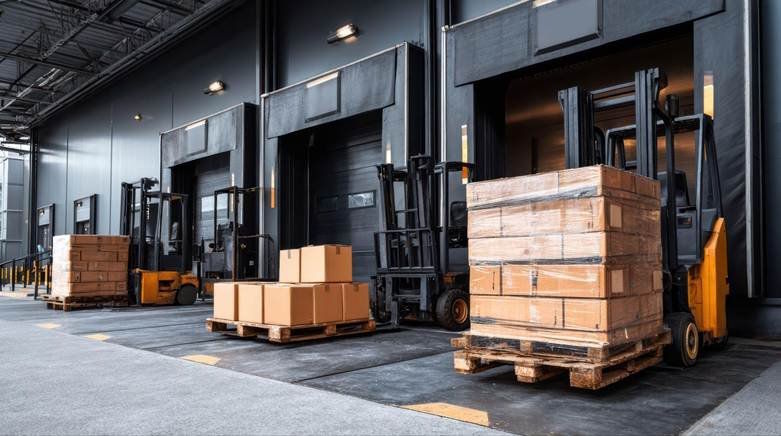
Palletizing can get complicated in no time when your production line handles different box sizes, many product changes, and tight output targets.
Say a new SKU requires a different stacking pattern. Or a poor layout creates unstable loads. If every change means manual robot programming, even what seems like routine work can take more time.
Modern software is here to solve these problems by making case palletizers and robotic systems easier to configure and adapt. It can calculate pallet patterns, plan robot movements, test setups virtually, and connect palletizing equipment with other production systems.
Here’s how these capabilities are changing industrial palletizing (for the better).
Source: Magnific
Palletizing Is Becoming a Software Problem
The mechanical side of palletizing still counts, but much of what determines how a system performs now happens in software.
Forget about programming every movement from scratch when you can use palletizing software to define product dimensions, pallet sizes, stacking patterns, placement order, and production recipes. The software then feeds this information to the robot.
Even when there’s a new box size or product entering production, you can update the recipe instead of rebuilding the entire program.
This change comes as industrial robot adoption stays high. In 2024, manufacturers installed around 542,000 industrial robots worldwide. That was more than double the number installed only a decade earlier.
So, with more automation, software becomes a bigger part of the picture.
No-Code Tools Make Palletizing Easier to Set Up and Change
There was a time when changing a palletizing routine meant calling a programmer or editing robot code by hand. That’s now gone, as newer software gives a more direct way to make changes.
Many of them have no-code and low-code interfaces, which means you can enter details through a graphical screen. The software uses that information to create the pallet pattern and robot sequence. Saved recipes also let you switch back to a previous product without setting it up again.
All of this is especially useful when your facility handles many SKUs or often changes production runs.
Still, no-code software doesn’t necessarily mean you don’t need technical expertise. Initial integration, safety settings, unusual product requirements, and more complex automation can still require an expert.
For day-to-day product changes, though, operators can handle far more of the setup themselves.
Software Can Calculate Better Pallet Patterns
A pallet pattern affects how many products fit on each load and how stable that load stays during handling and transport.
Modern software can calculate these patterns based on the products you need to stack, not by relying on a fixed layout.
You can enter the product and pallet data, and the software evaluates possible arrangements. For mixed-case loads, it can recognize differences between boxes instead of treating every case as identical.
Some platforms can also create a 3D simulation of the proposed pallet and stacking sequence. You can check whether products fit as expected and spot any stability, reach, or collision issues before the robot starts moving the actual cases.
Smarter Motion Planning Helps Robots Work Within Real Production Lines
Building a stable pallet is an important, but not the only part of the job. The robot still needs a safe, simple path from the pickup point to each position on the pallet.
In that case, motion-planning software can calculate those movements while taking into account the robot’s reach, conveyors, nearby equipment, pallet locations, and other limits. More advanced systems can even compare different paths and choose the best one.
It can also support multi-pick operations. When the robot and end-of-arm tooling allow it, the system can decide when two or more compatible cases can be picked at the same time.
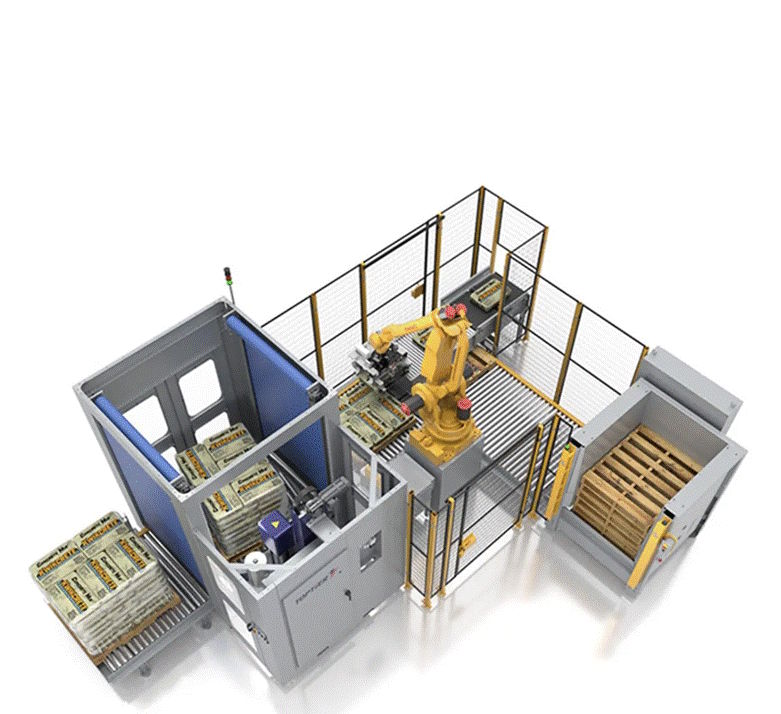
Connected Palletizing Software Turns Robot Data Into Production Data
The best part about a palletizing system is that it doesn’t have to work in isolation. Most systems can connect with your warehouse management system, manufacturing execution system, and other production tools.
This way, production data can influence what happens at the palletizer. For example, a new production order can call up the correct recipe for a specific SKU, which means there’s no need for a person to select settings manually.
The system can also send useful performance data back to your team. Specifics depend on the software, but you might be able to track:
- Cycle times and throughput
- Completed pallets
- Faults and downtime
- Production changes and recipe use
Then, you can see what actually happens on the line. If cycle times increase or the same issue keeps stopping production, you can easily find the cause.
The Real Upgrade Is in the Software
Better palletizing doesn’t mean you need a faster robot. The software behind it can have just as much, if not more, impact on how well the system fits your production needs.
When it’s time to choose a system, look at more than just payload, reach, and cycle speed. Think about how quickly your team can create recipes, test patterns, adjust movements, and connect the system with other software you use.
And what makes a setup right? It should help your team respond to product changes without adding unnecessary work or stops.

