

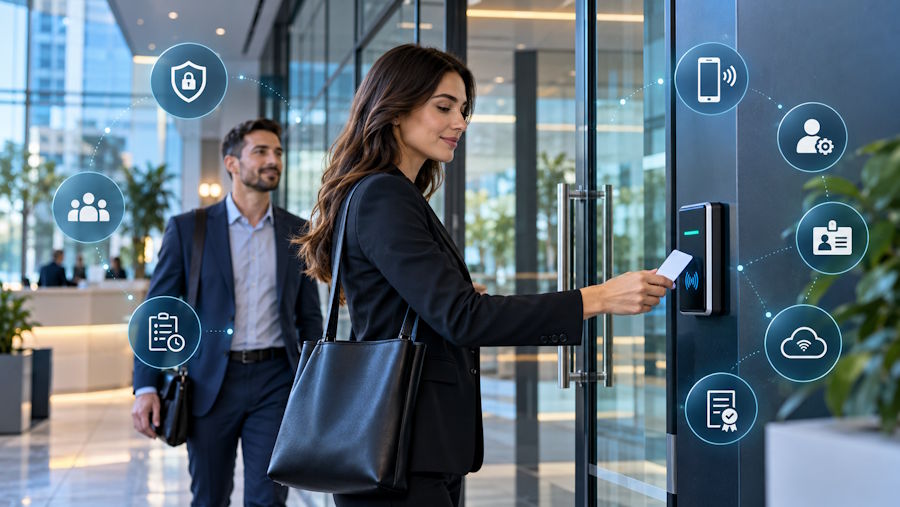
Traditional keys can make business security difficult to manage, especially when employees, visitors, and contractors need different levels of access. An access control system gives businesses greater control over who enters specific areas and when. By combining electronic credentials, centralized management, and activity tracking, it creates a smarter and more reliable approach to commercial security.
What Is an Access Control System?
Controlling who gets into your building—or even just a sensitive back room—comes down to dropping physical keys for smart access systems. People scan keycards, punch in a PIN, or use a mobile app for authentication. Lamarco Systems can help businesses explore security technology designed to manage authorized access more effectively. Behind the scenes, a central controller double-checks their permissions and files away a timestamped log of the visit. If you just need to lock down one storage room, a basic single-door scanner does the job; if you're managing multiple sites, you can wire everything into a unified cloud dashboard to handle security from anywhere.
7 Real Advantages of Upgrading to Commercial Access Control
Relying on old-school deadbolts and brass keys just doesn't cut it anymore if you're trying to protect your staff, gear, and sensitive rooms. Switching over to a digital access system gives you instant eyes on who is coming and going, cutting out the guesswork of physical keys and making site security infinitely easier to run.
1. Strengthens Building Security
You stop relying on physical keys that anyone can copy and start verifying people before a door ever unlocks. Whether your team taps an ID badge, punches in a code, uses their phone, or scans a fingerprint, you choose the exact layer of protection each door needs.
2. Provides Better Access Management
Not every team member needs full-board access to every corner of your facility. You can easily assign entry permissions based on someone's job role, department, or shift time. IT gets into the server room, accountants get into finance, and general staff stay in common areas—without you needing a massive ring of master keys.
3. Creates a Detailed Access Audit Trail
If something goes missing or an incident happens, guessing who was in the building is a nightmare. Digital systems log every single scan, tap, and failed entry attempt with an exact timestamp. You get complete accountability and a clear audit trail ready to pull up in seconds.
4. Reduces Security Risks From Lost or Stolen Keys
When an employee loses a physical key, you're usually stuck calling a locksmith and rekeying every door on the property. With digital credentials, you simply click a button on your computer to revoke that missing card or phone token. You can also hand out temporary, auto-expiring digital passes to contractors and guests without sweating where those passes end up.
5. Improves Employee and Visitor Convenience
Good security shouldn't slow down your daily workflow. Employees tap their smartphone or keycard once and walk right through authorized doors—no fumbling through bulky keychains. Plus, setting up temporary entry for vendors or interviewees takes seconds and keeps your lobby moving.
6. Integrates With Other Security Technologies
Access control works best when it connects with your existing security setup. You can integrate door scanners with security cameras, alarm systems, video intercoms, and fire alarm monitoring solutions. This creates a more coordinated approach to building security and safety, helping security teams respond more quickly when an access breach, alarm, or other emergency occurs.
7. Supports Business Growth and Scalability
As you hire more staff, add doors, or open up new branch offices, a cloud-based access setup scales up smoothly. You won't have to rip and replace hardware every time you expand; you just add new doors to your existing online dashboard and manage all your locations from a single screen.
How Does an Access Control System Work?
An access control system relies on a quick, three-step chain reaction between connected hardware to decide if a door opens or stays locked.
First, a person presents their digital proof—tapping a keycard against a wall scanner, punching a PIN into a keypad, bringing up a smartphone app, or scanning a thumbprint. The reader grabs that data instantly and fires it over to the central controller.
Next, that controller acts as the brain: it checks the incoming code against its active permission lists. If everything checks out, it sends a quick pulse to release the electric lock; if the person doesn't have clearance, the latch doesn't budge.
To wrap it up, the system automatically logs every single attempt—successful or not—creating an accurate, timestamped record that security managers can pull up anytime.
What to Think About Before Getting an Access Control System
Before jumping into installation, take a hard look at your current setup and where your business is heading. Map out how many doors you actually need to lock down and how many people will be coming through them daily, since that drives hardware choices. You'll also want to pick credentials that fit your everyday routine—whether that's simple keycards, phone apps, or biometrics.
Businesses should also review integration needs with cameras, alarms, or other security systems. Cloud-based management can provide convenient remote access, while on-premises systems offer local control. Finally, choose a solution that can support additional users, doors, and locations as the business grows.
Conclusion
An access control system gives businesses a smarter way to protect their people, property, and sensitive areas. It strengthens security while making access easier to manage and monitor. From detailed activity logs to flexible credentials and system integration, these solutions provide valuable control. With the right system, businesses can improve security today while preparing for future growth.

