

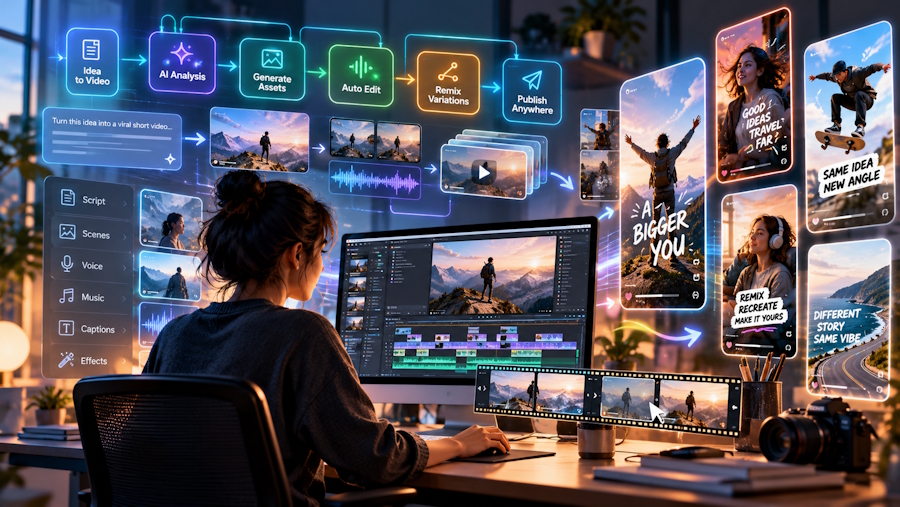
AI video generation has become increasingly accessible. Modern generative models can transform text prompts and reference images into realistic videos within minutes. However, creating a video isn't the same as recreating a specific visual concept.
Consider a common scenario: someone discovers a viral video on TikTok or Instagram and wants to recreate it with themselves, a friend, or a pet as the main character.
The goal is not simply to produce an AI-generated animation. It is to preserve the recognizable movements, visual style, and atmosphere of the original trend while replacing the subject with a personal reference image.
Achieving this result with general-purpose AI video models can be surprisingly challenging. Template-based generation workflows offer a more accessible alternative.
Why Recreating Viral Videos Is Harder Than It Looks
General-purpose AI video generators provide significant creative flexibility. Users can describe scenes, upload images, and experiment with different visual styles.
However, viral video recreation requires a more specific outcome.
A successful recreation should preserve several elements simultaneously:
- Character identity: The person or pet should remain recognizable throughout the video.
- Motion accuracy: Movements should resemble the intended choreography or action.
- Background consistency: The environment should remain visually coherent without unexpected changes.
- Camera composition: Framing and camera movements should match the intended visual style.
These requirements are difficult to communicate through text prompts alone.
A user might request a particular dance movement, only to receive a video with different choreography. A pet photo might produce an animation in which the animal's physical characteristics change unexpectedly.
Although the generated video may look impressive, it might not resemble the original trend closely enough.
The Technical Challenges of Reference-to-Video Generation
Reference-driven generation introduces several technical challenges beyond ordinary text-to-video creation.
Identity Preservation
Maintaining a subject's identity across multiple frames remains one of the most important challenges in AI video generation.
Facial features, hairstyles, clothing, and body proportions can change when a generated character moves or turns. For animals, variations in breed characteristics, facial structure, and body size may be especially noticeable.
Reference-image conditioning provides visual information about the subject, but a single image cannot fully describe every possible angle or movement.
A structured generation workflow can improve consistency by establishing image requirements, using suitable reference conditioning, and limiting unnecessary visual transformations.
Background and Scene Consistency
Another common issue is unwanted background variation.
During video generation, objects may appear or disappear, lighting conditions may shift, or the surrounding environment may change unexpectedly.
For viral video recreation, these inconsistencies can undermine the intended result.
Template-based workflows can reduce ambiguity by defining a consistent scene description, camera framing, and visual style before generation begins.
Motion Fidelity
Many viral trends depend on recognizable movements.
Whether the video involves dancing, dramatic gestures, or a particular camera movement, the action itself often determines whether the result resembles the original trend.
Generic instructions such as "make the character dance" provide considerable freedom to the model.
More structured workflows can use predefined motion descriptions or supported motion-reference capabilities to guide generation toward a specific outcome.
Why General-Purpose AI Video Models Are Not Always Enough
General-purpose models prioritize flexibility. They allow experienced creators to experiment with prompts, references, styles, and generation parameters.
However, this flexibility can introduce unnecessary complexity for users who already know what they want to create.
Someone recreating a viral trend generally does not want to spend time learning prompt engineering, adjusting camera descriptions, or repeatedly experimenting with generation settings.
They want to upload a photo and reproduce a recognizable video concept.
This reveals an important distinction between model capabilities and product usability.
A powerful model provides the underlying generation technology. A well-designed workflow translates that technology into a predictable, task-specific experience.
Rather than exposing every technical parameter, applications can organize their interfaces around the user's intended outcome.
How Template-Based AI Workflows Simplify Video Recreation
An effective AI video template is more than a reusable prompt.
It can represent a structured generation process that combines input requirements, scene configurations, motion instructions, and model settings.
For example, a template-based workflow may include:
- Input validation: Guide users toward reference images with suitable framing, lighting, and subject visibility.
- Predefined scene settings: Establish the desired background, composition, and visual characteristics.
- Motion configuration: Define recognizable actions associated with a particular video trend.
- Generation parameters: Apply appropriate settings without requiring users to configure them manually.
- Simplified output: Allow users to preview and download the generated video through a straightforward interface.
Together, these components transform a complex creative task into a simpler process:
Select a template → Upload a photo → Generate a video.
Platforms such as Flowlio AI apply this template-oriented approach to viral AI video creation, allowing users to recreate popular social media video concepts using their own images.
Instead of manually constructing prompts for each trend, users can start with predefined video effects and creative scenarios.
The primary value is not necessarily replacing the underlying generative model, but making its capabilities easier to use for specific creative tasks.
Turning Viral Trends into Reusable AI Video Templates
Different categories of viral videos introduce different technical requirements.
A single generic workflow may not be equally suitable for dance animations, pet videos, and dynamic vehicle scenes.
Template-based systems can account for these differences by defining generation instructions appropriate to each scenario.
Dance Videos
AI dance recreation requires careful attention to character identity, body proportions, and motion consistency.
A recognizable choreography may involve complex arm movements, body rotations, and camera transitions.
Predefined dance templates provide a clearer starting point than generic prompts, especially for users unfamiliar with motion descriptions or video generation parameters.
Pet Videos
Pet-based viral videos introduce unique identity-preservation challenges.
Users expect their pets to retain recognizable characteristics, including body proportions, facial features, and overall appearance.
A successful pet-oriented workflow should account for these constraints while maintaining the visual style and actions associated with the chosen trend.
Dynamic Action Videos
Action-oriented trends, such as videos featuring moving or jumping vehicles, require a different set of controls.
The generator must balance object appearance, perspective, camera motion, and environmental consistency.
Defining the intended action and visual composition in advance helps reduce the amount of manual experimentation required from the user.
These examples illustrate why workflow design matters: different creative objectives benefit from different generation configurations.
The Future of AI Video Creation Is Workflow-Driven
As generative video technology evolves, access to powerful AI models is becoming less of a barrier.
However, creating a specific, recognizable result still requires more than raw generation capability.
Users need tools that translate their creative intentions into practical workflows.
For developers, this creates an opportunity to build applications around individual use cases rather than simply offering another interface to a general-purpose model.
For everyday users, the benefits are straightforward: fewer technical decisions, less prompt experimentation, and a more accessible creative process.
Template-based AI video generation demonstrates how complex model capabilities can be packaged into simple, outcome-focused experiences.
Ultimately, the accessibility of AI video creation depends not only on how powerful the underlying models become, but also on how effectively applications connect those capabilities to what users actually want to create.

