


SPF flattening can be an effective way to overcome the 10-DNS-lookup limit and resolve immediate SPF validation issues. However, while an SPF flattener may provide a quick fix to flatten SPF record configurations, it can create long-term challenges such as stale IP addresses, authentication failures, and ongoing maintenance. This article explains why SPF flattening may not be the best permanent solution and explores more reliable approaches for maintaining accurate SPF records, improving email deliverability, and strengthening email authentication.
What an SPF Flattener Does and Why Teams Use It
Sender Policy Framework (SPF) is a key pillar of email authentication, helping to verify that emails sent from your domain originate from authorized sources. One persistent challenge for domain owners is the SPF lookup limit, imposed by the protocol to cap the number of DNS lookups at 10 per evaluation. As organizations expand their email infrastructure—adding marketing automation, third-party email services like SendGrid, Google Workspace, Office 365, or CRMs—their SPF records grow increasingly complex, often containing multiple include terms and nested SPF records. This complexity regularly pushes SPF configurations beyond the permitted DNS lookup limit.
An SPF flattener—sometimes referred to as an SPF flattening tool or SPF record flattening service—addresses this issue by resolving all include mechanisms and nested records into a single list of IP addresses. A flattened SPF record, then, is simply a static IP list with all possible sending addresses explicitly enumerated, eliminating the need for runtime DNS lookups. Organizations, especially those juggling multiple email sources or verified senders, often turn to SPF flattening to avoid “too many DNS lookups” errors during SPF validation.
Third-party tools like MxToolbox, DMARCDuty, or a free SPF flattening tool help automate the process of generating a flattened SPF record. In theory, this approach streamlines SPF validation and sidesteps the DNS lookup limits that hinder email deliverability.
The Short-Term Benefits: Avoiding SPF Lookup Limits
Immediate SPF Validation Success
The most immediate, tangible benefit of deploying an SPF flattener is resolving DNS lookup limit problems. By constructing a flattened SPF record, organizations can reduce SPF lookups to zero or one per check, since there are no remaining include mechanisms or redirects to evaluate at runtime. This directly mitigates failed SPF checks due to the 10-lookup rule, which can otherwise lead to rejected emails and severe deliverability issues.
Simplified SPF Record and Initial Compliance
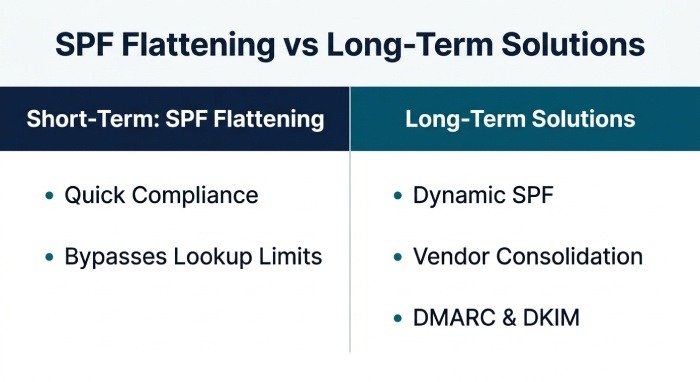
For domain owners with a broad email infrastructure—including marketing, sales, support, and order fulfillment mailboxes—flattening tools offer quick compliance by converting complex, nested SPF records into a single, static IP list. This is particularly attractive to teams who have rapidly onboarded a mix of email services (such as Google, Office 365, or SendGrid) and need to remain within SPF rules and limitations.
Quick Wins for Email Deliverability
With a flattened SPF record, problems linked to “too many DNS lookups” are effectively bypassed, boosting immediate email deliverability. For organizations experiencing SPF failures and rejected emails, SPF flattening tools can produce a rapid turnaround, ensuring their transactional and marketing messages reach inboxes instead of getting blocked by receiving email servers.
Hidden Risks of Flattening: Stale IPs, Broken Authentication, and Maintenance Burden
Stale IP Addresses and Unexpected Failures
While SPF flattening solves the DNS lookup limit problem in the short term, it introduces significant risks long-term. Email services like Office 365, SendGrid, and others rotate and update their sending IP addresses regularly, often without public notification. When the flattened SPF record is based on a static IP list, it quickly becomes outdated. This exposes organizations to SPF failures when legitimate emails originate from new or retired IP addresses not present in the most recent flattened SPF record.
Authentication Breakage and Rejected Emails
A flattened SPF record that is not continuously maintained may break authentication for verified senders and cause legitimate emails to fail SPF validation. Consequently, major mailbox providers such as Google will increase the likelihood of deliverability issues and even blacklisting due to seemingly unauthorized sources.
Maintenance Burden and Manual Update Cycles
Keeping a flattened SPF record accurate requires frequent re-flattening, especially whenever email services alter their IP address ranges. For some teams, this means manually re-running an SPF flattening tool or updating SPF configuration every time a vendor publishes an update. Even when using an automatic SPF tool or cron job, there are risks that a delayed or missed update could lead to email failures.
Overlapping and Conflicting IP Ranges
Another risk is the possibility of overlapping IP ranges between different services, which can result in SPF validation ambiguity and unanticipated SPF failures. With multiple email sources and complex infrastructure, carefully curating a static IP list becomes burdensome and error-prone.
Incompatibility with Dynamic Email Infrastructure
Email infrastructure is often dynamic, with frequent changes in third-party senders, mailbox-related records, and delegated IP addresses. The static nature of a flattened SPF record inherently clashes with environments where IPs change frequently or where new email servers are added on short notice.
Why SPF Flattening Does Not Solve Broader Email Authentication Challenges
Partial Protection Against Email Spoofing
While SPF flattening helps bypass the SPF mechanism limit and DNS server rules, it does not provide full protection against advanced spoofing or phishing attacks. Email security relies on a multi-pronged approach — SPF alone cannot guarantee integrity. Techniques such as SPF macros and dynamic SPF solution evolution exist specifically because static SPF rules are insufficient at scale.
Interplay with DKIM and DMARC
DKIM and DMARC bring additional layers of email validation and policy enforcement, but a flattened SPF record alone does nothing to address these. Broken authentication from a stale flat record can undermine the effectiveness of these more advanced email security protocols, particularly DMARC enforcement and forensic capabilities.
Complexity with Multiple Providers
In organizations leveraging various vendors across sales, marketing, and customer support, maintaining a single, up-to-date flattened SPF record is nearly impossible. The proliferation of include terms, redirect terms, and nested SPF records all contribute to the complexity—making SPF flattening a brittle workaround rather than a robust solution.
Better Long-Term Alternatives: SPF Hygiene, Vendor Consolidation, DKIM, DMARC, and Ongoing Monitoring

Minimizing Include Terms through Vendor Consolidation
Proactive SPF hygiene begins by consolidating third-party senders and reducing the number of services authorized to send on your behalf. The fewer the email services and include mechanisms in your SPF record, the lower the risk of exceeding lookup limits. Auditing all authorized email sources (including sales, support, and order fulfillment mailboxes) and removing unused includes significantly streamlines SPF validation.
Routine Review and Clean-Up
Regularly performing an SPF check with tools like MxToolbox or DMARCDuty ensures your SPF configuration adheres to up-to-date requirements. This audit should include pruning unnecessary include or redirect terms, nested SPF records, and confirming all IP addresses are still actively used.
Dynamic SPF Solutions and Automatic Monitoring
Rather than relying on a static list from an SPF flattening service, deploying dynamic SPF solutions offers real-time adaptability. Platforms like Dynamic SPF automatically update records as services change, avoiding SPF failures linked to stale IPs. Automatic monitoring, perhaps with a cron job or scheduled alerts, ensures that shifts in vendor IP ranges do not catch your organization off-guard. Some email validation vendors now offer no-maintenance, fully managed SPF hygiene solutions that update your DNS records without manual intervention.
Leveraging DKIM and DMARC
Enhancing SPF with DKIM and DMARC provides layered security, further bolstering email deliverability. These records authorize and validate the authenticity of messages, reducing the incidence of rejected emails and deliverability issues beyond what a flattened SPF record can support.
Split SPF Records for Large Organizations
When email infrastructure complexity is unavoidable, consider split SPF records—segmenting SPF rules by subdomain or function (e.g., sales, support). This approach keeps individual SPF records concise and within the SPF record length limit, while distributing the operational load and reducing the risk of void lookups.
Collaborating with Email Security Vendors
Partnering with trusted email security vendors can automate tedious, error-prone processes and provide central oversight for verifying senders and managing SPF configuration at scale. For heavily regulated industries or those with numerous verified email sources, purpose-built SPF solutions can offer real-time IP address management, compliance with DNS lookup limits, and seamless updating of SPF rules and limitations.
Ultimately, while SPF flattening provides an attractive short-term fix for DNS lookup limit issues, its limitations, risks, and maintenance overhead make it ill-suited for long-term enterprise email security and deliverability. The future lies in robust SPF hygiene, automation, and the combined power of SPF, DKIM, and DMARC—far beyond what a simple SPF flattener can offer.

